🏛️ UK Fiscal Buffer Halved as JLR Cuts 4,000 Jobs
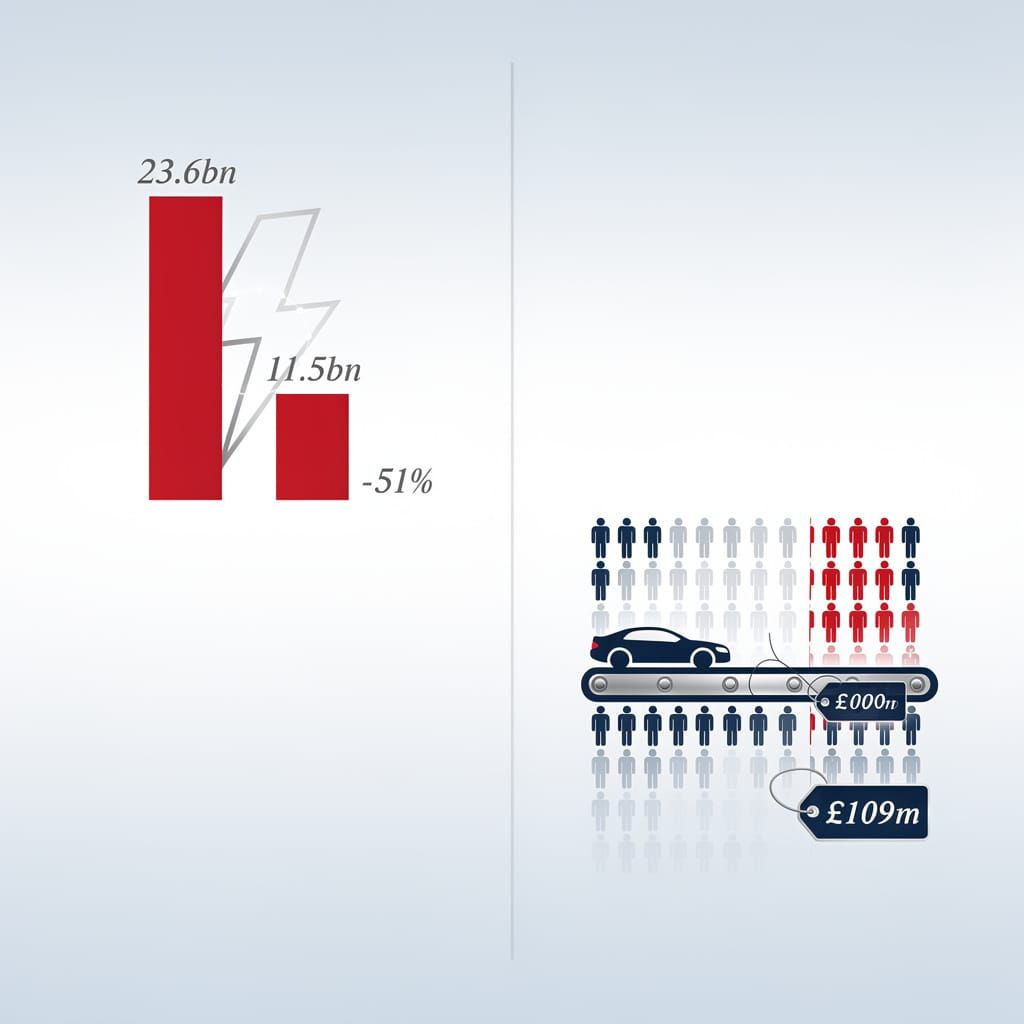
UK fiscal buffer halved from £23.6bn to £11.5bn — a 51% reduction that limits emergency employment support 🏛️ JLR confirms ~4,000 global job cuts after a cyber attack halted production for five weeks and drove pre-tax profit down 68%. Over 12,000 indirect UK supply-chain roles are exposed. 53,756 British firms entered critical financial distress in August — up 9% quarter-on-quarter. Leisure and culture saw a 27% spike. With the 28 October Budget looming and youth NEET already at 1 million, which sectors still offer insulation from the contraction?
On 7 September 2026, two announcements reshaped the UK employment outlook. Chancellor John Healey reported that the government's fiscal reserve had contracted from £23.6bn to £11.5bn, a decline of £12.1bn driven by gilt yield spikes. The Resolution Foundation estimates the buffer could fall further to £8bn if sustained revenue shortfalls persist. Hours earlier, Jaguar Land Rover confirmed roughly 4,000 global job cuts tied to a cyber attack that disrupted operations and contributed to a pre-tax profit drop of over two-thirds to £109m.
These events trace the same causal chain: tightening fiscal space reduces government capacity for stimulus, which in turn amplifies corporate restructuring pressures in capital-intensive sectors. With the fiscal buffer halved, the government cannot deploy emergency employment programmes or sector bailouts at scale. Healey now must secure £4.7bn in extra revenue over four years via windfall taxes on oil firms and banks, alongside £10bn in department cuts, ahead of the 28 October Budget. Meanwhile, 53,756 British firms entered critical financial distress in August 2026 — a 9% quarter-on-quarter jump — driven by consumers slashing discretionary spend. Leisure and culture saw a 27.1% increase in critical cases (to 1,478), while support services, construction, and property services show rising strain. London alone accounts for 204,851 significant distress cases, and HMRC is owed approximately £27bn in overdue tax liabilities, with winding-up petitions rising 15.7% to 6,411.
What the Numbers Indicate
- Fiscal margin: £11.5bn remaining versus £23.6bn at peak — a 51% reduction that limits emergency employment interventions. Potential further erosion to £8bn per Resolution Foundation projections.
- JLR job cuts: ~4,000 positions globally, concentrated in UK engineering and production roles. The company attributed the cuts directly to the cyber incident that halted production for five weeks and caused revenue decline of nearly 10% in Q2. The restructuring targets £1.7bn in savings over two years, aiming for break-even at 300,000 vehicles. A reduction in North American sales of 29% due to US tariffs compounds the pressure.
- Youth unemployment: NEET population reached 1 million in May 2026, with projections indicating 17.8% youth unemployment by 2027 as AI adoption displaces entry-level roles and fiscal constraints limit targeted interventions.
- Business distress: 674,030 firms now in significant financial distress. The leisure and culture sector leads the distress surge, followed by hotels (26.6% increase) and sports clubs (21% increase). Construction, real estate, and support services show sustained strain.
- Consumer spending: Weakened by ongoing cost-of-living strain and energy price surges, reducing domestic demand and slowing hiring in retail and hospitality.
Manufacturers now face dual pressures: supply chain disruptions from cyber events and demand-side weakness from fiscal containment. JLR's cuts demonstrate how a single cyber attack can accelerate headcount reductions that were already probable under tighter credit conditions. The company's restructuring includes voluntary redundancies aimed at simplifying operations and funding the EV transition, though competition from Chinese EVs and the lack of a US manufacturing base compound the vulnerability.
Sector-Level Effects
- Automotive manufacturing: JLR's reduction signals a broader trend. Suppliers to major OEMs will likely trim headcount as order volumes decline. With smaller British automakers facing heightened insolvency risk due to subsidy misallocation and EU-origin tariffs set for January 2027, over 12,000 indirect roles in the UK supply chain are exposed. The government has reduced the EV mandate from 80% to 50% by 2030, reflecting industry pressure but signalling policy uncertainty.
- Infrastructure and construction: Fewer project starts mean slower hiring for engineers, project managers, and skilled trades. Construction and real estate show elevated financial distress.
- Financial and professional services: Tight credit conditions reduce deal flow. Investment banks and consultancies are slowing graduate recruitment cycles. City bosses face additional pressure from proposed windfall taxes on banks and oil firms.
- Public sector: Fiscal constraints mean hiring freezes or attrition-based headcount reduction across Whitehall departments. The £10bn in department cuts compounds this pressure.
Timeline and Forecast
- Q4 2026: The 28 October Budget will determine the trajectory. If Healey secures the £4.7bn revenue target through windfall taxes and gilt yields stabilise below 4.2%, modest stimulus could restore short-term hiring momentum in consumer-facing sectors. Without intervention, business distress pressure will persist through mid-2027.
- Q1–Q2 2027: Automotive sector restructuring likely continues. EU-origin tariffs take effect January 2027, applying 10% duties on 70% of UK battery EV exports — a £1.4bn liability. Expect further announcements from mid-tier suppliers as the sector adjusts. The government's £4bn R&D funding for zero-emission vehicles provides some offset but does not address short-term cost pressures.
- H2 2027: Recovery in manufacturing hiring possible only if the fiscal buffer is rebuilt to at least £18bn and cyber resilience investments reduce operational disruption risk. The cybersecurity skills gap — 48% of breaches now originate from third-party compromise per Verizon DBIR — means firms that invest in operational resilience will face lower disruption risk.
Strategic Implications for Professionals
- Job security: Roles in export-oriented manufacturing remain vulnerable to both cyber risk and fiscal tightening. Diversifying into regulated industries — defence, energy, healthcare — reduces exposure. Regions dependent on automotive and aerospace supply chains (West Midlands, North West, South Wales) face higher concentration risk. The JLR supply chain alone supports 120,000 indirect British jobs.
- Salary negotiation: With 53,756 firms in critical distress, HMRC enforcing £27bn in overdue tax liabilities, and credit conditions tight, employers hold leverage. Benchmark offers against current ONS data rather than pre-2025 peaks.
- Skills investment: Automation and cybersecurity skills carry premium value. The cybersecurity workforce faces acute shortages — 75% of security professionals report that the skills gap impairs their performance, and burnout is driving experienced analysts to consider leaving the industry. Meanwhile, AI adoption is automating vulnerability discovery and attack generation, creating demand for professionals who can manage operational resilience amid rising threat volumes. Cloud security and zero-trust credential management skills show particular demand.
- Geographic mobility: The 204,851 significant distress cases concentrated in London suggest urban professional services are not insulated. Mid-sized cities with diversified employer bases may offer relative stability.
The September 2026 data demonstrates that the UK labour market is not simply slowing — it is restructuring under joint fiscal and operational pressure. For jobseekers and employees, the priority is identifying sectors where government spending, regulatory approvals, or structural demand provide insulation from the broader contraction.
Comments ()