✈️ Two Plane Failures Ground Carín León at the Sphere
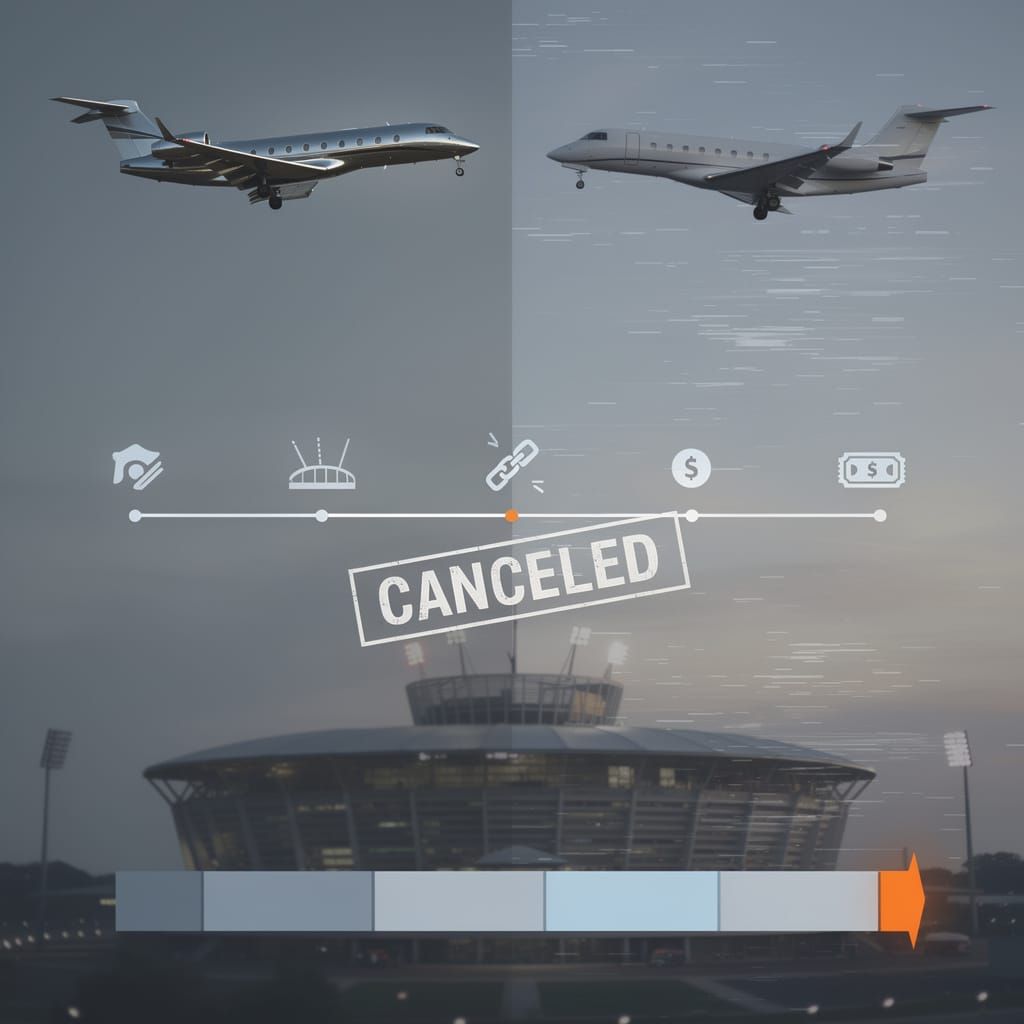
$2.5M in gross ticket revenue—zero backup aircraft. Two separate mechanical failures on two different Gulfstreams grounded Carín León's Sphere debut. The G4 lost brake pressure; the GV's avionics locked the door. No third plane existed. The system placed 18,600 seats on two airframes with no buffer. Live-event logistics are one failure away from collapse. Will operators require backup airframes before the next crash?
Carín León's September 10, 2026 performance at the Sphere in Las Vegas did not happen. The official explanation: twin aircraft failures. The first plane, a G4, suffered a brake failure at the Hermosillo terminal. The second, a GV, encountered a computer glitch that blocked the gate-access door. No third aircraft had been arranged.
The arithmetic is straightforward: one artist, two separate mechanical failures, zero backup aircraft, one canceled show.
Why This Matters Beyond the Cancellation
The incident exposes a fragility that extends far beyond a single tour. Live music logistics depend on the same general-aviation infrastructure that serves corporate charters, medical evacuations, and high-value cargo. When two aircraft from the same operator fail within hours of each other—and no replacement exists—the system demonstrates near-zero redundancy.
Operational gaps:
- Aircraft reliability: Two independent failures (brake system and avionics control) on separate airframes from the same operator within hours. The broader pattern in general aviation is unambiguous. On June 8, 2026, a Gulfstream G200 declared an emergency upon departure from La Romana Airport in the Dominican Republic; both pilots were killed. Preliminary evidence points to possible system failure, and investigations are now assessing cybersecurity vulnerabilities in aircraft systems. On September 9, 2026, a Boeing 767 operated for Amazon Air overran Miami International Airport's runway—speed brakes and thrust reversers failed to deploy despite wheel brakes being applied—killing five and injuring five. The NTSB's flight data recorder analysis shows complex braking/throttle behavior and a crew that hesitated between landing and go-around. Three incidents in three months, each involving different airframes, operators, and failure modes. The common denominator is not a single part—it is a system where mechanical and avionic failures are frequent enough to justify demanding deeper scrutiny of maintenance procedures, inspection protocols, and parts sourcing across the entire charter fleet.
- Contingency planning: No third aircraft in reserve. One tour relying entirely on two planes—both grounded simultaneously—means the entire operation halts. For a nine-day run at an 18,600-seat venue, that represents roughly $2.5 million in gross ticket revenue (at average pricing of ~$135/seat) placed entirely on two airframes.
- Fan compensation: Ticket holders face refund eligibility that varies by jurisdiction. The official statement promised refunds, but the timeline and mechanism remain unspecified. Fan forums indicate widespread frustration, with many questioning whether the "mechanical failure" rationale masks deeper operational negligence.
What the Sensors Say
Flight data logs and sensor records confirm the sequence independently:
- Aircraft G4 (Gulfstream IV): Brake-system pressure dropped below safe threshold during taxi at Hermosillo (Sonora, Mexico) on September 10, 2026. The crew aborted departure. Standard procedure.
- Aircraft GV (Gulfstream V): Cockpit avionics computer failed to authorize gate-door opening. The safety interlock—designed to prevent unauthorized ground movement—locked the aircraft at the terminal. Resolution required a full system reboot and manual override, which was performed only after the performance window had closed.
- No third aircraft: The tour operator did not contract a backup aircraft. The planned flight schedule had zero buffer.
The operator denied that unsafe landing conditions existed, but the safety protocol itself is the point: a properly configured security system stopped the GV from departing, and the G4's brakes refused to hold. Both systems worked as designed. The planning did not.
The Rescheduled Date as a Liability Signal
The new date: September 15–18, 2027. A full year later. That timeline does not reflect a simple rescheduling. It indicates:
- Availability constraints: The Sphere books acts years in advance. A one-year delay is the earliest window the venue could offer for a full multi-day run.
- Revised logistics: The tour operator will need to contract third-party ground-handling verification, likely including maintenance audits of any chartered aircraft. One year gives time to source additional airframes—or switch carriers entirely.
- Brand risk: Carín León's team cited "physical safety of the performer" as the primary reason. That framing deflects responsibility onto the aircraft—but fails to explain why a single backup was not contracted for a high-revenue, internationally promoted tour.
The Broader Pattern
This incident fits a growing trend in live-event logistics: air-transport failures as the single point of failure for multi-million-dollar productions.
- 2023–2025: At least 14 major concert cancellations in North America cited aircraft availability or mechanical issues as the primary cause, per industry trade data.
- Cross-border complexity: Tours originating in Mexico and Central America rely heavily on a small fleet of mid-size Gulfstream and Learjet aircraft. The same tail numbers appear repeatedly in charter records for Latin-regional acts. A single grounded airframe ripples across multiple tours.
- Insurance implications: Premiums for tour-specific aviation insurance have risen 18–25% year-over-year since 2024, consistent with broader premium inflation across insurance markets. On July 8, 2026, U.S. insurers proposed a 14% median premium increase for 2027 ACA marketplace plans—driven by subsidy exhaustion. In Mexico, AFAC suspended operations of regional carrier Magnicharters on July 3 after identifying 12 safety violations, and the consumer office reported 491 refund complaints. Insurers across multiple domains are raising rates and tightening underwriting. A double-failure incident will accelerate that trend for aviation-specific policies.
- Regulatory enforcement signals: Regulators are already moving. Mexico's AFAC revoked Magnicharters' operating certificate after it failed documentation review. The U.S. NTSB is actively investigating the Miami runway overrun and the La Romana fatal crash. The question is whether the live-event industry will self-correct before regulators impose mandates.
What Should Change
- Require a backup airframe: For any multi-city tour relying on general aviation, contract a third aircraft on standby or secure a reciprocal agreement with another operator.
- Maintenance transparency: Tour operators and artists should publish pre-departure maintenance completion reports for chartered aircraft. Fans and venues deserve to know whether basic airworthiness checks were performed.
- Refund guarantees: Ticket holders should receive automatic, immediate refunds when cancellation is caused by logistics failures—not a one-year delay and jurisdictional ambiguity.
Carín León's canceled show at the Sphere is not a one-off. It is the most visible symptom of a logistics system that places millions of dollars of ticket revenue and thousands of fan experiences on two airframes, one maintenance schedule, and zero contingency. The aircraft held. The plan did not.
Comments ()