📉 Ellison Kills His Oracle Exit Plan — After It Was Exposed
Oracle's founder cancelled his own 50M-share sell plan the day after it became public. Larry Ellison quietly authorised a near-doubling of his sell rate in June, then reversed course the moment the market found out. No shares were sold — but the sequence says more than any press release. Cloud revenue doubled to $7.4B. Free cash flow was −$23.7B for the year. $125B in debt, a credit downgrade in July, and a $40B capital raise ahead. The person who built the company set up an exit, got caught, and backtracked. What does that signal actually mean for shareholders?
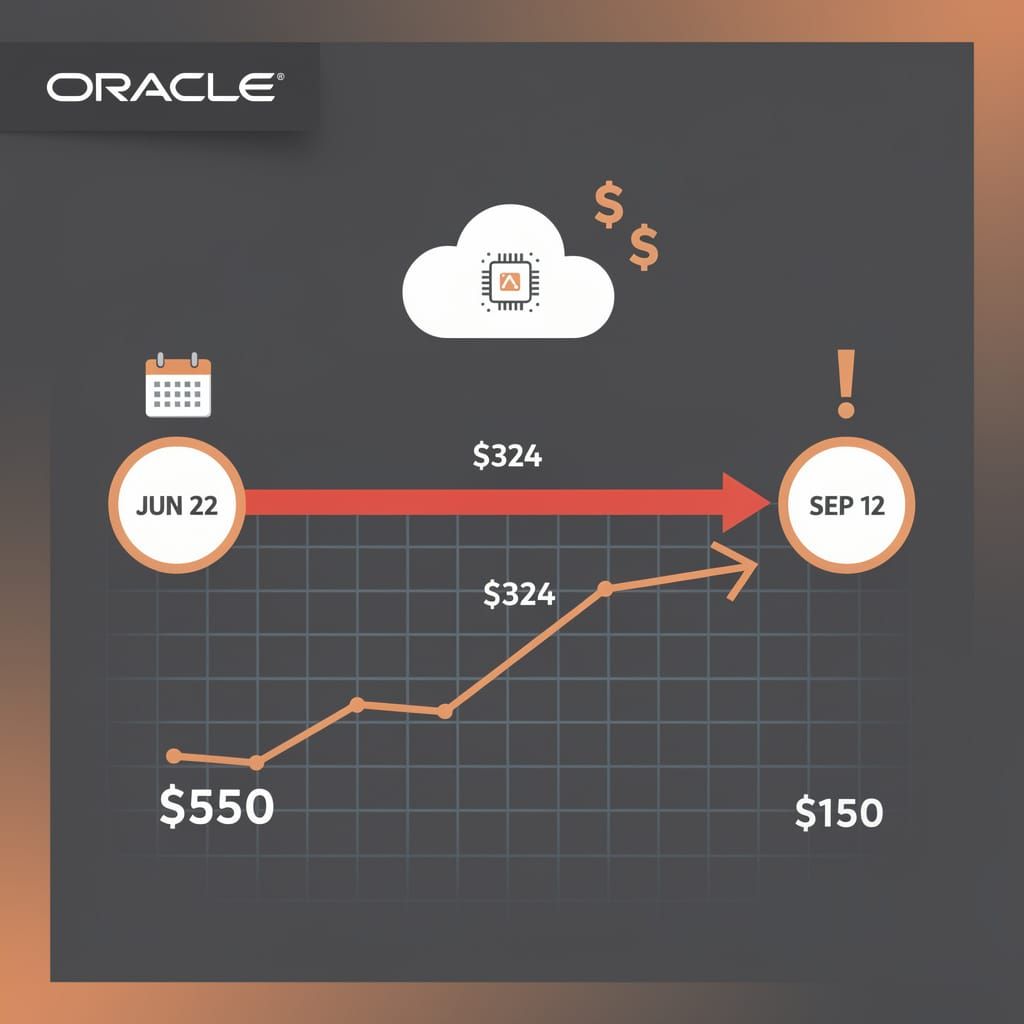
On September 12, Larry Ellison cancelled a Rule 10b5‑1 trading plan that would have let him sell up to 50 million Oracle shares. The plan, adopted on June 22, was set to run until October 24. Then, without explanation, it was gone — one day after becoming public knowledge. So is that confidence in the company, or something else?
What Actually Happened
- August 14–15, 2026: Oracle's stock plunges ~53%. Market cap sheds hundreds of billions after a record $55 billion capex and $23.7 billion net loss driven by AI infrastructure spending.
- June 22 (disclosed September 11): Ellison's trading plan goes live — authorizing what would have been roughly double his typical annual selling volume. Shares valued at ~$8.75 billion at adoption, now worth ~$7.5 billion after the 16% decline.
- September 12: The plan is cancelled. No shares were actually sold. Oracle shares fell 1.7% on Friday.
The company now says it's balancing AI spending against shareholder returns. But the sequence suggests a different story: the plan was exposed, triggered a rapid reversal, and someone decided the optics of a founder dumping stock after a 53% crash were untenable. The fastest reversal of an insider trading arrangement in recent memory doesn't inspire trust — it inspires questions.
The Real Picture
Oracle's cloud revenue beat expectations — cloud infrastructure revenue more than doubled to $7.4 billion (up 121% YoY) in Q1 FY2027. Total cloud revenue hit $11.6 billion, up 62%. Yet the company burned negative free cash flow of $5.4 billion in the same quarter, and posted negative free cash flow of -$23.7 billion for all of fiscal 2026 — the first time in two decades. Capital expenditures reached $55.7 billion last fiscal year. Total liabilities now stand at $218.7 billion. The company plans to raise roughly $40 billion in debt and equity this fiscal year, along with $2.8 billion in restructuring costs. An AI contract with OpenAI is ending, creating a cash-flow gap; non-OpenAI backlog has more than doubled, but conversion rates for remaining performance obligations sit at only ~50%.
- Shareholder trust: When the founder who controls 40%+ of voting power quietly authorizes a near-doubling of his sell rate, then backtracks only after public discovery, the signal is not "I believe in the future." It's "I tried to leave quietly, got caught, and now need a story."
- Revenue vs. financing: Revenue growth remains solid — $19.35 billion in Q1, a 30% YoY increase, net income up 60% to $4.7 billion — yet the company needs borrowed money and equity dilution to fund operations. Free cash flow was -$5.4 billion in Q1 alone. Markets view the $95 billion AI infrastructure bet as a failure unless converted to durable product revenue.
- Governance: The plan's adoption on June 22 means Ellison has been sitting on this exit mechanism for nearly three months before it became public. Under EU Market Abuse Regulation, managers cannot trade within 30 days of reports — and European disclosure rules require publishing transactions within three working days. The US framework permitted the silence. That regulatory gap enabled the optics disaster.
- Price drivers: Oracle's stock trades at ~$150, down 22.75% year-to-date and 53% from $324 peak on September 10, 2025. Analyst consensus targets $244 — implying 57% upside — but stock movements are now driven more by perception risk than fundamentals. Cloud bookings don't matter if the market is asking whether the founder is trying to leave.
What Comes Next
- Short term: The cancellation removes a ~$7.5 billion selling overhang, which could provide a temporary floor. But the August crash wiped 53% of value. No shares were sold — meaning Ellison still holds roughly 1.1 billion shares, and the restriction expires eventually. Hedge fund short interest sits at ~2.8%, suggesting no conviction either way.
- Mid term: Oracle faces a capital allocation test. AI spending demands cash. Shareholder returns demand cash. With $125 billion in debt, a July credit downgrade from S&P, and AAA-BBB debt spreads widening, borrowing costs rise. The $40 billion debt-and-equity raise dilutes EPS just as management reconfirmed a 28% EPS CAGR target through fiscal 2030 — a target that becomes harder to defend with every new share issued.
- Long term: The founder overhang doesn't disappear. Ellison still holds ~1.16 billion shares. His previous largest share sale was 25,000 shares — this plan authorized 50 million. The restriction expires eventually. Remaining performance obligations of $664 billion provide a massive backlog, but conversion rates near 50% mean nearly half that committed spending may not materialize as revenue. Debt load prevails unless the AI bet converts to a durable product stream.
A founder cancelling his own exit plan isn't reassurance. It's damage control. Oracle's cloud numbers hold up — 121% growth in infrastructure, $30 billion in new AI contracts in a single quarter — but the person who built the company quietly set up an exit mechanism three months before it was discovered, then backtracked the moment it hit headlines. That signal doesn't vanish because the plan did.
Comments ()