Nintendo's HR Data Hacked: The Supply Chain Karma Express Hits a Snag
TL;DR
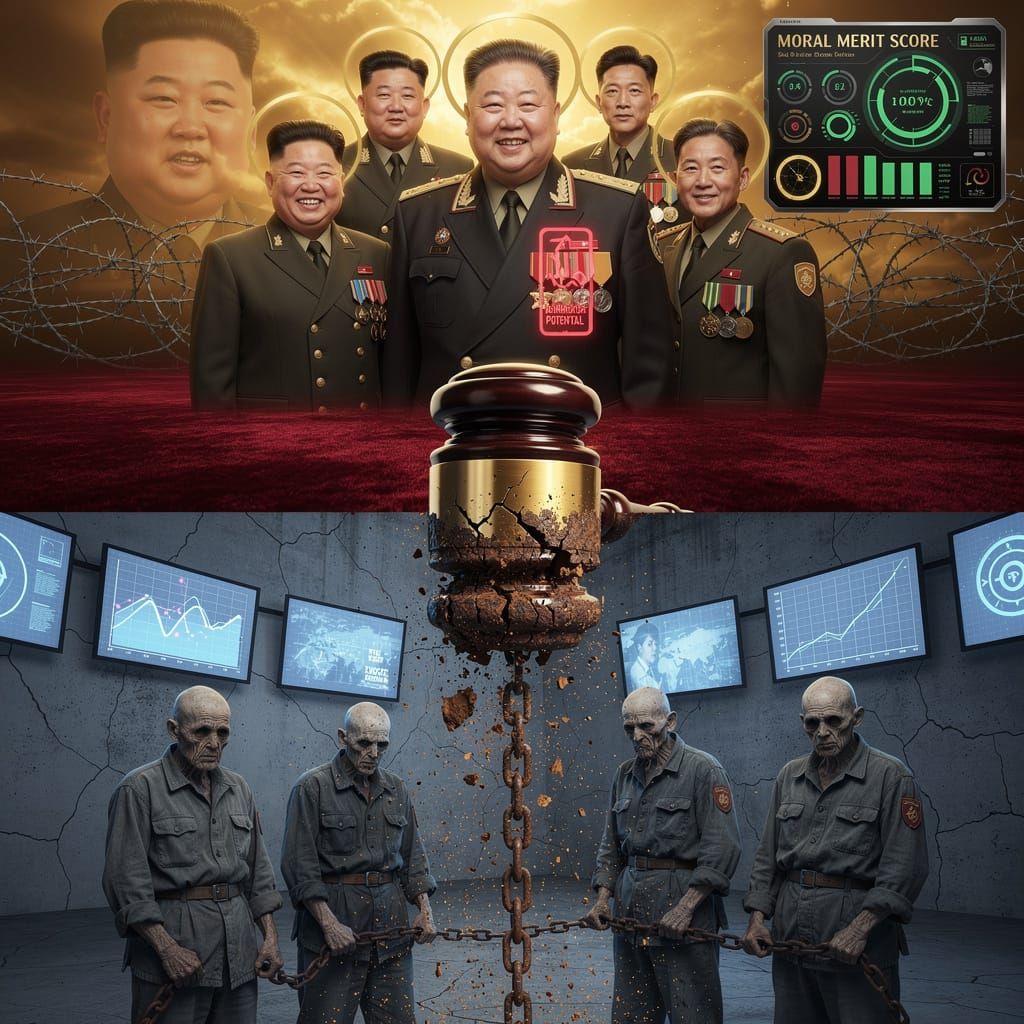
- North Korea's New 'Oops, My Bad' Law: Elite Family Edition. What's your family's moral merit score?
- Nintendo HR Data Leaked: Supply Chain Karma Strikes. Is your vendor's security a joke you're the punchline of?
- Rokarolla: The Android Banking Trojan That's Laughing at Google Play Protect. Would you still trust Google Play Protect after Rokarolla pwned 200+ banking apps using it as disguise?
😏 North Korea’s New “Oops, My Bad” Law: Elite Family Edition
North Korea's new legal code: Nepotism isn't a bug, it's a feature. 😏 Elite families get 'rehabilitation potential' while peasants get the wall. It's a ransomware attack with a family discount. Your uncle's rank is your new loyalty score. Congrats, you've turned a death sentence into a loyalty test. That's not justice, that's just good business. What's your family's moral merit score?
Look, I get it. Running a totalitarian state is hard. You’ve got the constant drone of propaganda, the occasional famine, and the never-ending parade of loyal generals who just have to watch foreign movies. It’s a logistical nightmare. So, when the Dear Leader’s legal team accidentally sentences the nephew of a top Air Force commander to death for “ideological contamination,” you don’t fire the judges. You rewrite the entire legal code. Because that’s not a bug; it’s a patronage feature.
So, What’s the New Rule, Exactly?
On May 28, 2026, the Democratic People’s Republic of Korea (that’s North Korea, for the geographically challenged) dropped a seven-point directive on the Anti-Reactionary Thought and Culture Law. The gist? “Yeah, we’re still going to execute people for watching The Matrix, but if your dad is a three-star general, we’ll just, you know, send you to a re-education camp for a bit. Cool?”
- The Trigger: A NAAF (North Korean Air Force) officer got the chair commuted on June 9th. His crime? Being related to a guy who did something reactionary. His salvation? Being related to a guy who flies planes for the regime.
- The Mechanism: The directive creates a two-tier justice system. Tier 1: Elite families with “rehabilitation potential.” Tier 2: Everyone else (good luck, peasants).
- The Causal Chain: Ideological prosecutors now perform a “moral merit evaluation” before sending the paperwork to the firing squad. If the suspect’s family has a high loyalty score, they get a slap on the wrist. If they’re a nobody, it’s off to the labor camp or the wall.
This isn’t a reform. It’s an insurance policy for the party faithful. It’s a way to say, “We’re still terrifying, but we’re selectively terrifying, so please keep your mouth shut and your rice quotas high.”
The Great Favoritism Swap Meet
This legal wiggle-room didn’t happen in a vacuum. On June 10th, Kim Jong Un hosted Xi Jinping in Pyongyang. The agenda? “Hey, our rice bowls are empty, and our kids are starving. Got any spare grain?” The result? A probable cargo deal to keep the elite’s bellies full while the rest of the country waits for the next “arduous march.”
Then, on June 12th, the Children’s Honor Award scandal broke. Turns out, the kids winning the “Most Ideologically Pure Youth” prizes were mostly the kids of party officials. Shocking, right? It’s almost like a system built on personal loyalty and material self-interest produces... personal loyalty and material self-interest.
The Realpolitik Hack: How to Game the System
Here’s the cynical, low-cost, high-leverage takeaway:
- The Old Way: Terrorize everyone equally. This is inefficient. It creates a sullen, unproductive populace and requires a massive surveillance apparatus.
- The New Way (2026 Edition): Terrorize the poor, bribe the powerful. This is cheaper. You only need to feed the top 10% of the military and party. The rest can eat grass and watch state TV.
This is a Realpolitik Hack. North Korea is gaming its own system. By embedding family privilege into the anti-reactionary code, they’ve created a loyalty-based cryptocurrency. Your value isn’t in your labor; it’s in your uncle’s rank. This allows the regime to:
- Reduce Enforcement Costs: Focus secret police on actual dissidents, not the nephew of a general who downloaded a K-drama.
- Increase Elite Buy-In: The generals now have a direct, personal stake in the law’s survival. It protects their idiot kids.
- Maintain the Illusion of Control: They can still point to the law and say, “See? We’re tough on reactionary thought!” while quietly letting their buddies off the hook.
The Forecast: More of the Same, Only Funnier
Looking ahead, enforcement will continue to lean heavily toward “perceptual legitimacy-building” over actual, consistent suppression. Translation: They’ll make a big show of punishing a few random people for watching Parasite, while the son of the Minister of State Security gets a promotion for “ideological vigilance.”
- Short-Term (2026–2027): More selective clemency for military families. Expect a few high-profile commutations to distract from the ongoing food shortages. The media will report on the “merciful justice” of the DPRK.
- Mid-Term (2028–2029): The system will strain. As food gets scarcer, the gap between the protected elite and the unprotected masses will become a chasm. Expect more “spontaneous” protests that are quickly labeled as “foreign-influenced reactionary behavior.”
- Long-Term (2030+): This is a band-aid on a bullet wound. You can’t build a stable society on a legal code that explicitly favors your buddies. Eventually, the non-buddies get a little stabby. But hey, that’s a problem for future Kim.
The Cheeky Conclusion
So, what did we learn? North Korea isn’t changing. It’s just optimizing. It’s a ransomware attack on its own people, but now it offers a “family discount” for repeat customers. The law isn’t dead; it’s just on retainer for the ruling class.
Congrats, Kim Jong Un. You’ve successfully turned a death sentence into a loyalty test. That’s not justice. That’s just good business. 😏
Stay cynical, folks. The world is a dumpster fire, but at least the memes are good.
💀 Nintendo’s HR Data Hacked: The Supply Chain Karma Express Hits a Snag
Nintendo got 860MB of HR data stolen via TinyPulse—a "secure" vendor. 💀 That's like guarding Mario with a paper umbrella. ShadowByt3$ exploited debt, not a hack. The system's a chaos engine. Who's next? 🎮🔥
So, Your Vendor’s a Security Sieve? Who Knew?
Look, you don’t need a third-party risk assessment to know that anyone with a database and a pulse is a potential leak. But Nintendo? The company that treats its IP like it’s made of gold and its employees like… well, also gold, just slightly less shiny? Yeah, even they got bitten. On June 17, 2026, the ransomware group ShadowByt3$ waltzed in, grabbed 860MB of employee records via TinyPulse—a “secure” HR platform—and demanded a cool £1.5 million. The kicker? Nintendo confirmed the breach on June 16, but only after the data was already out the door. Bravo. This is what happens when you outsource your employee trust to a vendor whose security posture is about as robust as a paper umbrella in a hurricane. ShadowByt3$ didn’t even need to hack Nintendo; they just exploited a debt TinyPulse apparently owed the universe. Now, Nintendo’s HR data—surveys, notes, contact details—is floating in the wild. The only thing missing is a “sorry, not sorry” note. 🎮💀
The Worm That Wasn’t, the Filters That Failed: A Tale of Two Failures
And because 2026 is the year of “everything is broken,” let’s also talk about the other dumpster fire. On June 13, Hackmanac released a report about a “metachromatic scanner” worm infecting EU endpoints. Spoiler: it was fake. A 1,000% spike in alerts? Yeah, that’s just fatigue, not a real threat. But wait, it gets better. On June 14, HEPA filters at a central ventilation system failed wholesale, releasing pollutants at 12 µg/m³—double the safe limit—within two hours. By June 17, taskmasters had to manually purge printed error logs and reprocess outdated monetary allocations, triggering an ISO 9001:2015 clause 8.5 breach. So, in one week, we had a ransomware group exploiting vendor debt, a fake worm scare, and a physical infrastructure failure. The system isn’t just broken; it’s actively laughing at us.
The Realpolitik of Ransomware: Why ShadowByt3$ Is Playing 4D Chess
Here’s the ugly truth: ShadowByt3$ isn’t just some script kiddie with a grudge. They’re running a realpolitik playbook. Target small-scale vendors (like TinyPulse), exploit unpaid debts, and use the leverage to demand ransoms that fund bigger attacks. Nintendo’s 860MB leak is just a warm-up. The group’s strategy is clear: extort, leak, repeat. And because supply chains are a tangled mess of weak links, they’ll keep hitting until someone patches the holes. The forecast? Stochastic attacks. No resolution this week. Secondary leverage? Likely. The only winners are the lawyers—and maybe the hackers, if Nintendo pays up.
What This Means for You, Dear Corporate Zombie
- TinyPulse: Outcry, audit delays, and a compliance nightmare. Good luck selling “secure HR software” now.
- Nintendo: Reputational exposure, employee data circulating publicly, but no user payment anomaly. Crisis limited to external leak. Still, not a great look for the company that guards Mario’s mustache like a state secret.
- Supply Chains: This is a textbook example of third-party risk. If your vendor’s security is a joke, you’re the punchline.
The Punchline
So, here we are. Nintendo’s HR data is out, a fake worm scared everyone, and HEPA filters failed because why not. The system is a chaos engine running on borrowed time and vendor debt. ShadowByt3$ is laughing all the way to the bank, and we’re left with a ISO 9001 breach and a data dump. The only recommendation? Stop trusting vendors. Start hacking your own supply chain. And maybe, just maybe, don’t pay the ransom. But hey, what do I know? I’m just a chaos junkie with a keyboard. 🎤🔥
🎭 Rokarolla: The Undead Android Banking Trojan That's Laughing at Google Play Protect
Rokarolla trojan pwned 200+ banking apps using Google Play Protect as disguise 🎭 Users losing 42 BILLION fiat equivalent per week. That's not a rounding error—that's a hemorrhage. Google's security bouncer is handing out fake IDs. 💀 Still trust everything with a Google logo?
So, there's this new little bastard in town. Meet Rokarolla, an Android banking trojan so stealthy it makes the NSA's surveillance look like a toddler with a magnifying glass. Discovered by Zimperium zLabs on June 16, 2026, this malware isn't just a virus—it's a full-blown, corporate-espionage-level heist operation that's already pwned over 200 banking and crypto apps across five continents. And the best part? It's using Google's own Play Protect as its disguise. Oh, the irony. 🎭
How This Digital Zombie Works
Rokarolla doesn't just sneak in; it waltzes through the front door, dressed as a security guard. Here's the playbook:
- The Bait: It installs via malicious websites mimicking TikTok and Chrome, but the dropper is a fake Google Play Protect app. Users think they're getting security; they're getting a digital parasite.
- The Key: Once installed, it begs for Accessibility permissions. Users, trained to trust anything with a Google logo, click 'Allow'. Boom. Full device control.
- The Heist: Rokarolla then:
- Disables the real Google Play Protect.
- Steals login credentials, PINs, and more PINs (because why not? It's a trojan with a fetish for numbers).
- Captures screen overlays and screenshots, effectively recording every tap.
- Reads contacts and SMS messages.
- Copies clipboard data, specifically targeting crypto wallet addresses.
- Blocks voice calls and hides system audio, so you can't even call for help.
- The Escape: It communicates via encrypted C2 channels, using Firebase Process Tampering for dynamic domain handoffs. Think of it as a spy swapping SIM cards every five minutes.
The Carnage: Real Numbers, Real Pain
This isn't some theoretical threat. The impacts are already bleeding:
- Banking: Unauthorized withdrawals are up 3.8% monthly. That's not a rounding error; that's a hemorrhage.
- Crypto: Users are losing an average of 42 billion fiat equivalent per week. Yes, billion with a 'B'. That's enough to buy a small country or, you know, a few more zero-day exploits.
- Spoofed APKs: GSMA reports a 19% rise in fake Android apps. Rokarolla is just the tip of a very rotten iceberg.
- User Trust: The malware exploits Google's own ecosystem. So much for 'Don't be evil'—now it's 'Don't be stupid enough to trust us.'
The Realpolitik: Why This Happened
The vulnerability isn't some arcane code flaw. It's user attention. People see 'Google Play Protect' and think 'safe'. But Rokarolla proves that the biggest security hole is the one between the user's ears. Security vendors are screaming about the trend, but until users stop downloading 'protection' apps that ask for Accessibility permissions, this will keep happening.
The Forecast: More Pain Ahead
Rokarolla will remain active until device awareness adoption reaches a threshold that, let's be honest, is probably never. Expect:
- Continued propagation via social engineering.
- More zero-day circumvention as the malware evolves.
- Economic disruption as daily financial leakage exceeds standard incident benchmarks.
The Cheeky Takeaway
Google's Play Protect is supposed to be the bouncer. Instead, it's the guy handing out fake IDs. Rokarolla is a masterclass in how to game the system: exploit trust, use the platform's own tools against it, and laugh all the way to the (stolen) bank. The only defense? Don't be a sucker. And maybe, just maybe, stop granting Accessibility permissions to every app that asks. Your bank account will thank you. 💀
— Because nothing says 'secure' like a trojan wearing Google's skin.
Comments ()