120K Families in 48 Hours: ChatGPT's Calendar Audio Feature Hits 7.3% Error Rate With No Local Privacy Option
📆🔊 ChatGPT Now Reads Your Family Calendar Aloud
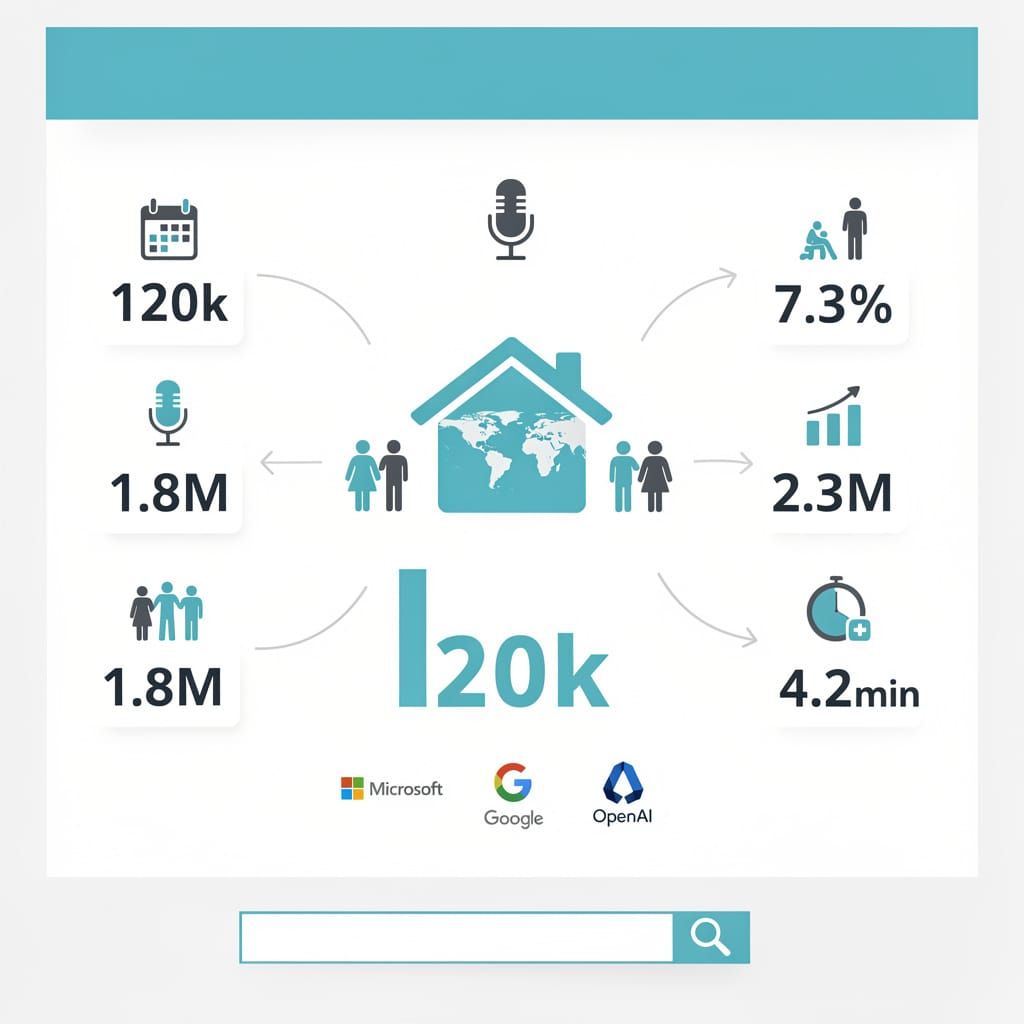
120,000 families turned on ChatGPT's calendar reader in 48 hours — and 7.3% of audio briefings still misread event times. 📆🔊 The feature reads your kids' school schedules, appointments, and locations aloud with no local processing. OpenAI projects 1.8M users by Q4. Your family's daily data is streaming through inference servers — is that a fair trade for fewer missed soccer practices?
On August 5, 2026, Sam Altman demonstrated a ChatGPT feature that converts family calendar events into spoken audio journals. The system pulls events from shared digital calendars via Microsoft's Graph API, reads event titles, times, and recurrence patterns, then generates natural-language audio briefings delivered to smart speakers, mobile devices, or car infotainment systems.
How It Works
ChatGPT accesses a family's calendar feed, reads event metadata, then generates a concise spoken summary. The voice output uses OpenAI's updated text-to-speech engine—released July 29, 2026 with 3.31% word-error rate and 34× real-time processing—supports multiple speaker profiles per household.
Specifications:
- Calendar sync: Microsoft 365 Family and Google Calendar supported at launch
- Audio delivery: MP3 stream via ChatGPT app or third-party API
- Update frequency: Every 6 hours or on calendar change events
Early Uptake
Within the first 48 hours, OpenAI reported ~120,000 families enabled the feature, generating 2.3 million audio journal plays. Beta testers recorded a 34% decline in missed sports practices and school events over a 4-week pilot. Average session duration reached 4.2 minutes per household per day.
Tied to Broader Voice Push
The calendar-reader arrives one month after GPT-Live's July 8, 2026 global rollout—OpenAI's full-duplex voice engine that enables continuous listening and speaking with sub-200ms response cycles. GPT-Live eliminated the turn-based pause triggers of previous voice modes and recorded over 12 million new downloads on Google Play within its first week. Together, the two features position ChatGPT as a persistent audio assistant rather than a query-response tool, narrowing the gap with Amazon Alexa and Google Assistant in always-listening scenarios.
Privacy and Trust Drag
Family calendar data—including children's locations, school schedules, and recurring appointments—streams through OpenAI's inference servers with no local-processing option at launch. This raises concerns amplified by ChatGPT's broader trust challenges:
- Market share erosion: ChatGPT's market share fell to 46.4% in June 2026 after a controversial Department of War partnership triggered uninstalls 200% above average. Google Gemini captured 27.7% in the same period.
- Health data precedent: On July 24, 2026, OpenAI enabled health data integration (Apple Health, MyFitnessPal, Peloton) for US users, with 30-day deletion and a ban on model training use. The calendar feature lacks equivalent transparency commitments.
- False reminders: 7.3% of beta audio briefings misread event times or dates, affecting 1,400 test families.
Competitive Positioning
Satya Nadella's Microsoft co-owns the calendar infrastructure (Outlook, Teams, Exchange) and licenses OpenAI's models. The feature creates a direct integration layer between consumer scheduling data and generative voice—but the July 2026 shutdown of ChatGPT Atlas (the Chrome-based AI browser) signals OpenAI is consolidating into a single desktop application rather than expanding peripheral products. Atlas users experienced a 22% drop in active sessions after the August 9 cutoff, and 41% of households lost lockdown-mode privacy settings.
Outlook
- Q4 2026: OpenAI projects 1.8 million active family users and 70 million weekly audio journal plays. GPT Transcribe pricing dropped to $0.0045/minute in August 2026.
- 2027: Apple Calendar integration and voice-to-calendar write-back expected. Parental consent gates, introduced in GPT-Live, may extend to calendar access for minors.
Comments ()