🔐 New Bank Intrusion and TD Breach Revive Stolen LinkedIn Credential Risk
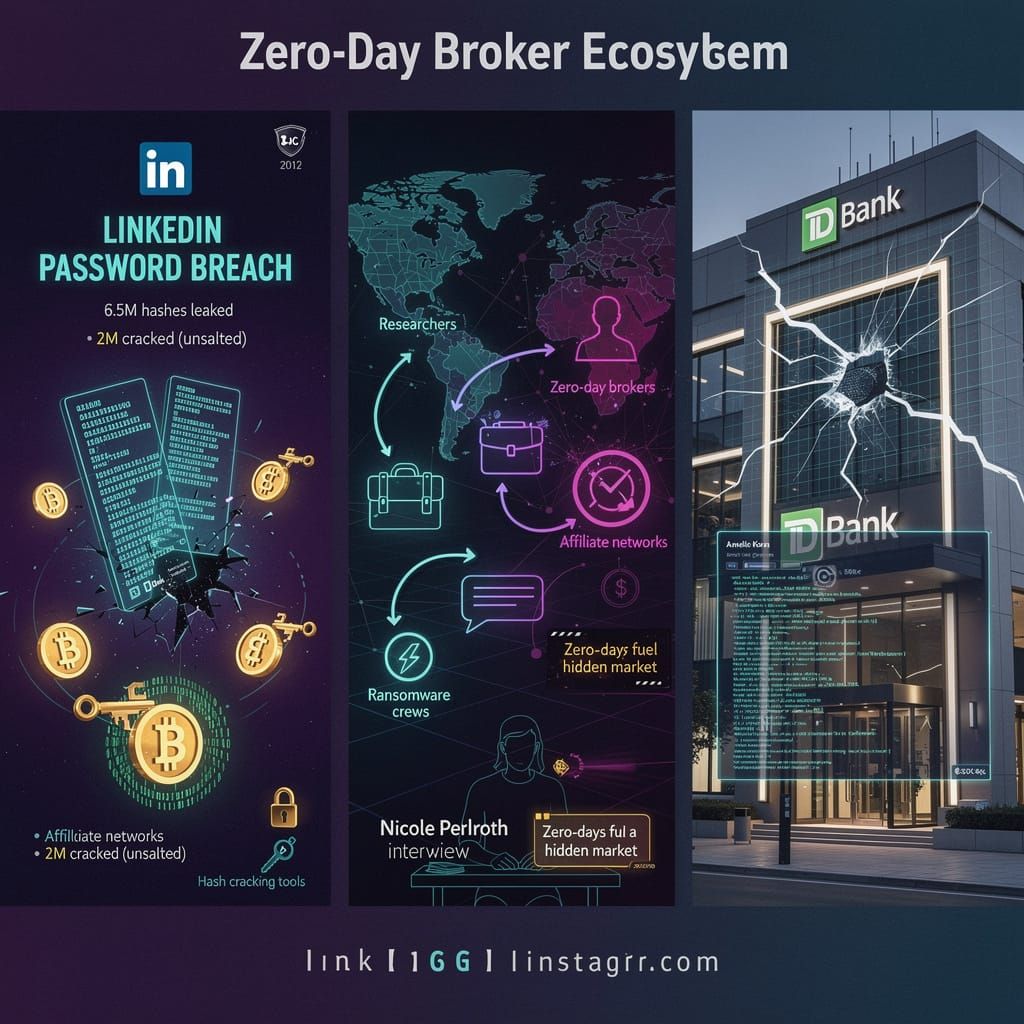
6.5 million LinkedIn hashes went unsalted in 2012; 2 million cracked. The average Facebook identity-theft claim now hits $30,000 📊 Each leaked hash still trades through zero-day brokers. Banks face the tradeoff: rotate credentials fast or widen exposure. Has a recent breach changed how you protect your own logins?
The 2012 LinkedIn breach remains a blueprint for today's credential markets.
An unknown hacker broke into LinkedIn's database in 2012, exfiltrating 6.5 million unsalted password hashes. Attackers cracked 2 million of those hashes with off-the-shelf tools and sold the rest on underground marketplaces. A security team led by Ganesh Krishnan had already deployed salting, yet the breach exposed the older, unsalted system, suggesting a delayed rollout. Affected users absorbed financial losses; a related July 2026 identity-theft exploit on Facebook logins drove average claims to $30,000, indicating systemic fragility. The chain runs from initial compromise, through credential harvesting, to secondary sale via broker intermediaries.
This pattern still drives the threat landscape. A September 14, 2026 episode of Darknet Diaries pairs the LinkedIn story with a look at the zero-day broker ecosystem that keeps the supply chain moving.
Who brokers the zero-day pipeline?
Cybersecurity reporter Nicole Perlroth built a book-length interview program with the people who create and sell zero-day malware. Her findings surface in the podcast: affiliate networks distribute exploits to governments and private companies, and each sale narrows the pool of available vulnerabilities. The brokers profit from scarcity. Their motivation, Perlroth reports, blends criminal economics with quasi-state leverage.
The same episode traces a responsible-disclosure thread. Victor, discloser number 5780, searches web-based vulnerabilities and reports them through the Guild of the Grumpy Old Hackers protocol. ClosedPort by JSCM Group handles the penetration-testing side, while NaviSite absorbs the remediation workload. The three-part series (episodes 86–88) documents the full chain: discovery, reporting, and patching.
What just hit a major bank?
On September 17, 2026, security analyst Amélie Koran (webjedi) logged an unauthorized intrusion attempt on a major bank's network. She was configuring firewalls, reviewing IDS output, and analyzing logs when she flagged the breach. The incident forces a credential-rotation decision and a log-integrity review within days, because the attacker's access window determines exposure scope.
The bank sector has absorbed comparable shocks this year. TD Bank disclosed an internal breach on July 10, 2026, exposing up to millions of U.S. customers' SSNs, addresses, and account details after unauthorized access ran from January 7–30. The firm offered a two-year Fraud–Defender subscription plus closure-and-reopening support, and no external hacking was detected—internal misconduct exploited credentials without a public exploit.
Physical testing adds a second layer
UK-based Cygenta, co-founded and co-run by "Freaky Clown," runs physical penetration tests on occupied buildings. The firm's intrusion drills confirm a simple fact: digital firewalls fail when a bad actor walks through the loading dock. Cygenta's findings feed directly into the same darknet ecosystem that consumes the LinkedIn-style credential dumps.
Outlook
- Short term: Banks and identity providers accelerate credential-rotation cycles after the webjedi and TD Bank incidents.
- Mid term: Regulatory scrutiny targets zero-day broker affiliate networks following Perlroth's interviews.
- Long term: Hybrid digital-physical threat models become standard procurement language, driven by Cygenta-style testing results.
The numbers hold the story. LinkedIn's 2012 breach exposed 6.5 million unsalted hashes; 2 million fell to cracking. Each stolen hash still circulates through broker channels, and the Facebook $30,000 claim spike shows how fast those credentials turn into losses. The bank breach logged September 17 and TD Bank's July disclosure add fresh batches to the pipeline. Until credential markets and zero-day scarcity tighten together, the supply chain keeps compounding.
Comments ()