⚡ EPA Repeals Power-Plant CO₂ Limits, Dropping 90% Capture Rule
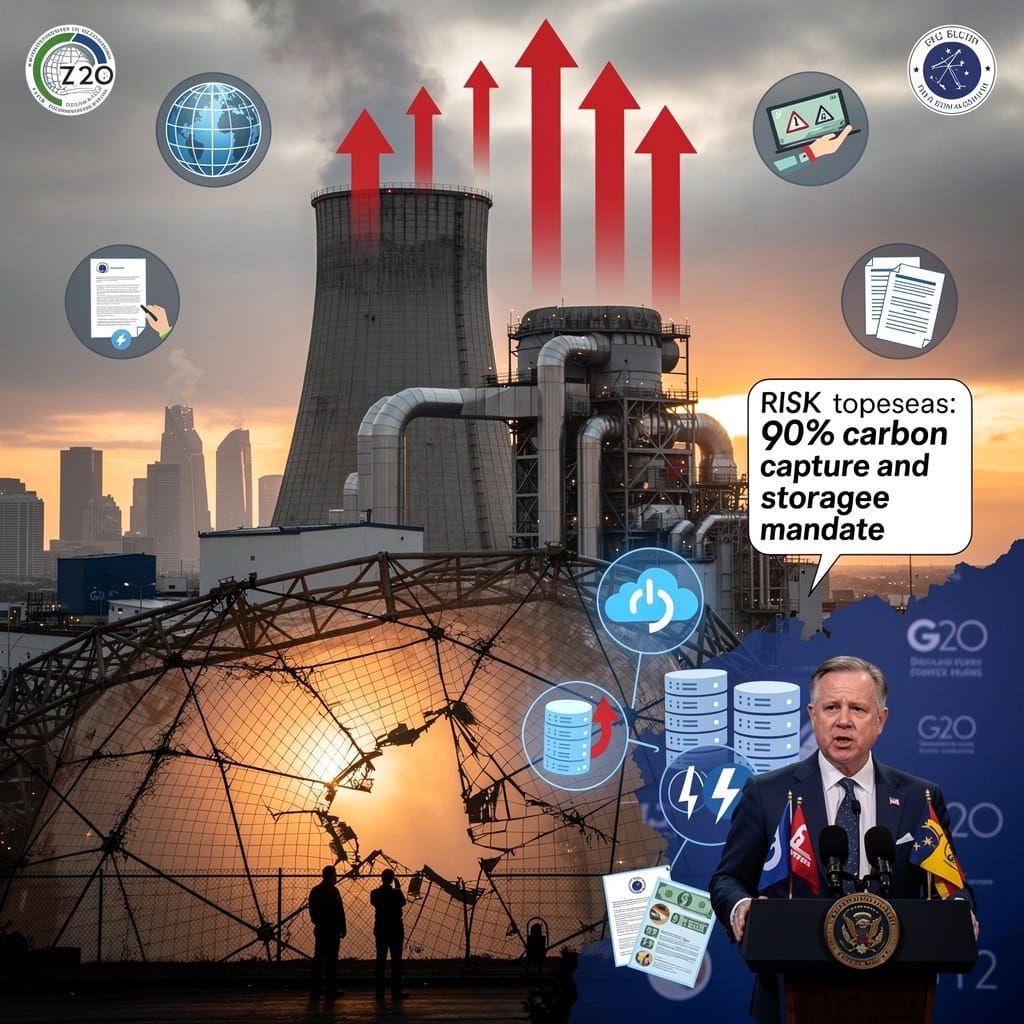
1.38B t of CO₂ no longer capped by federal rule — 90% capture mandate for coal & gas just dissolved. ⚡ Cost and risk shift to operators and utilities. Cheaper near-term, but the endangerment-finding repeal and SCOTUS challenge loom. Co-ops cheer; health advocates count ~1,200 early deaths. Will your state grid fill the gap?
Implication: Removing the 2024 federal standard lifts the 90 % carbon-capture requirement for coal and gas plants, shifting compliance cost and emissions risk back onto operators, utilities, and regional air-quality programs.
Authority, action, and status
On September 13, 2026, EPA Administrator Lee Zeldin announced the repeal of federal CO2 limits for power plants under the Clean Air Act. The repeal targets the 2024 rule that required existing coal units to capture 90 % of carbon emissions by 2032 and new gas units operating above a 40 % capacity-factor threshold to integrate carbon capture or hydrogen fuel. Zeldin proposed the repeal in June 2025; a "Carbon Pollution Standards Repeal" rule went to OMB in May 2025 before the administration finalized the action at the G20 energy ministers' meeting in Houston. A separate rule to overturn the 2009 "endangerment finding" remains in drafting. The repeal takes effect September 2026.
Scope and timeline
- 2024 – Biden administration finalizes rule mandating CCS deployment and phased retirements by 2039.
- June 2025 – Zeldin proposes repeal; the Carbon Pollution Standards Repeal rule enters OMB review.
- 2026-06-28 – DOE issues an emergency order under Section 202(c) extending operation of the Craig Unit 1 coal plant in Colorado past its planned 2025 retirement, driven by grid instability and surging data-center load.
- 2026-08-20 – Nonprofit electric cooperative CEOs, representing roughly 60 % of the US cooperative network, urge EPA to rescind the 2024 standards, citing data-center load growth and CCS commercial-viability concerns.
- 2026-09-13/14 – Zeldin announces repeal at the G20 meeting in Houston.
- 2026-09-17 – Trump confirms plans to revoke the rules, including the hydrogen requirement for new gas plants.
- 2032–2039 – Compliance windows under the original rule; now lifted pending judicial review.
Transmission path to operators
The repeal eliminates the primary federal mechanism forcing capital-intensive CCS installation across the sector's largest GHG source. EPA projects the 2024 rules would cut CO2 emissions by 1.38 billion metric tons over two decades and prevent roughly 1,200 premature deaths and 360,000 asthma cases by 2035. With those mandates lifted, utilities and generators can operate coal and gas units without integrating capture systems. The DOE's emergency extension of Craig Unit 1 in June 2026—held open beyond its 2025 retirement under Section 202(c) amid grid stress from data-center demand—demonstrates that operators already rely on short-term orders to keep aging coal plants running, a pattern the repeal extends into a standing regulatory posture. Electric cooperatives—including Basin Electric and Oglethorpe Power, which cover about 60 % of the cooperative family—frame the 40 % capacity-factor threshold and 90 % capture requirement as "untenable" for meeting surging data-center electricity demand. NRCAA CEO Jim Matheson and NRECA leadership tie repeal to planning and investment confidence for gas-fired plants. In exchange, the sector loses federal pressure to retire plants, extending coal-plant lifespans while the Edison Electric Institute has sued over the 2024 rules.
Settled versus open
Settled: The repeal of the 2024 CO2 standard; removal of the 90 % CCS mandate; elimination of the hydrogen requirement for new gas plants.
Open: A second, separate rule to repeal the endangerment finding remains in drafting. Judicial review is expected given Supreme Court precedents affirming EPA's GHG authority. The agency's claim that power-plant GHGs have "virtually no benefit" to the global climate has not been formally tested in court.
Conditions to watch
- Near-term: Whether the separate endangerment-finding repeal is filed before the next congressional session, potentially limiting a future administration's ability to re-impose standards.
- Contingent: The outcome of any Supreme Court challenge to the Clean Air Act authority question; a ruling could invalidate the repeal or narrow it to specific plant types.
- Observable: Grid-operator filings on reliability reserves in the 2027 planning cycle, which will indicate whether the removed CCS mandates had already altered siting and retirement decisions.

Comments ()