graphql-go v0.8.1: Three Unpatched DoS Exploits — Process Crash, 8.49s Query Latency, 55s CPU Burn
TL;DR
- graphql-go v0.8.1: Three Unpatched Flays — Silent Crash, 54s CPU Burn, No Security Docs. Is your GraphQL API running on vibes and prayers right now?
- Android 17 Kills ISP Metadata Surveillance: ECH Encrypted by Default. When's Apple scrambling to catch up with Android 17's default ECH?
☠️ graphql-go v0.8.1: Your API Now Runs on Vibes and Prayers
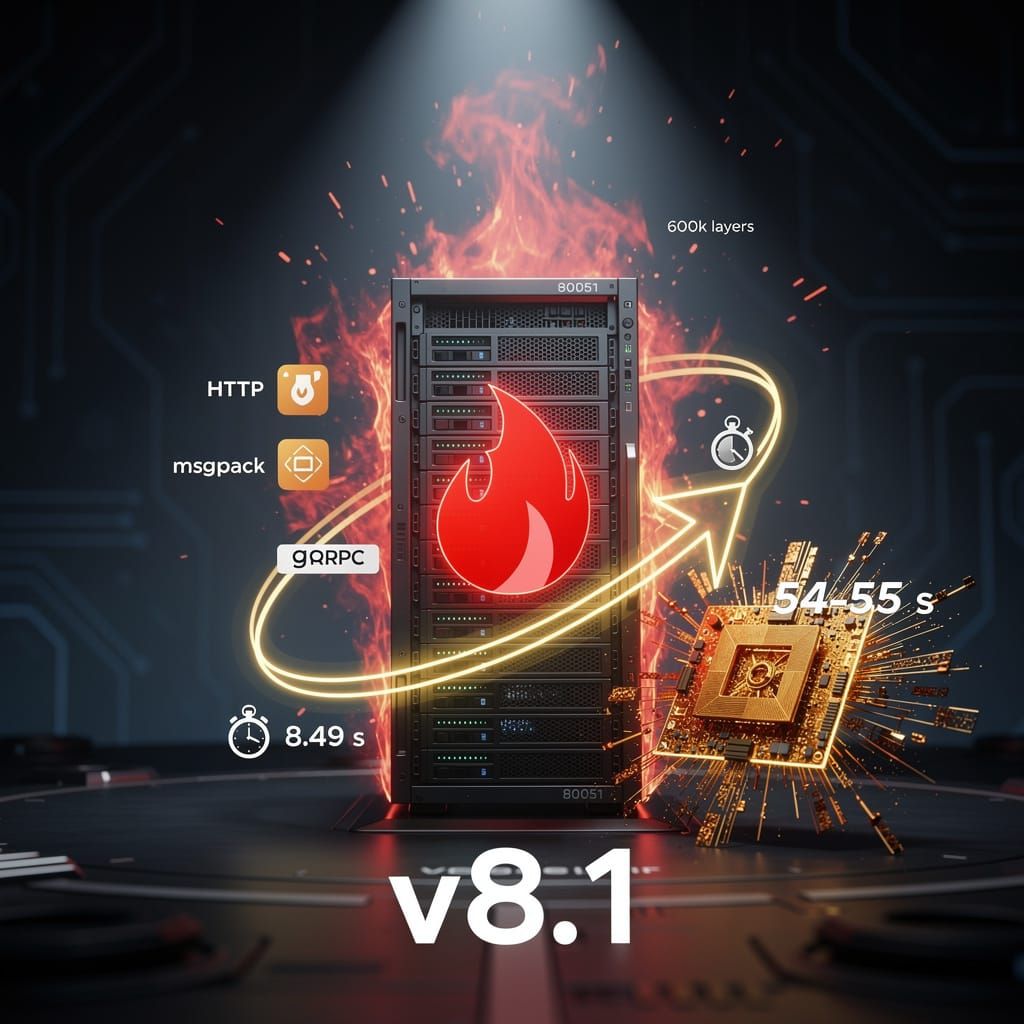
graphql-go v0.8.1 drops your API with a single malformed request via stack overflow — 600k nesting levels and your process just vanishes. No logs, no alerts, just a silent corpse ☠️ Flaw two: 8.49 seconds per query at N=2000 because GetLocation recompiles a regex per error call. Concurrent requests saturate workers, users cry. Flaw three: 54–55 seconds of CPU burn from a 200KB syntax error via naive string concatenation loop. No auth needed. Three exploits, zero security docs, no patch, no fix window, no SECURITY.md, no reporting channel. You're on your own, champ. Who's still shipping this garbage to prod? 🫠
William Carrier kicked the tires on graphql-go/v0.8.1 and—surprise—it's a dumpster fire with three distinct accelerants and zero security documentation to report any of them. 🫠
The Part Where Your Server Dies Quietly
CVE-2026-80051 covers the first gem: coerceString and coerceBool accept any type via fmt.Sprintf fallback instead of enforcing GraphQL spec Section 3.5. An attacker injects a deeply nested value—roughly 600,000 levels—the stack overflows, the process terminates, and your API goes dark. No alerts. No logs. Just a null pointer and a shrug.
Terminal outage: one malformed request → process termination via stack overflow. Silent. Remote. Works over HTTP/JSON and msgpack, gRPC, or any non-JSON transport.
The Part Where It Doesn't Die, But You Wish It Did
Flaw two is the slow roast, and it gets worse with a 300+ type schema. The GetLocation function recompiles a regex and rescans the entire source document per error call. Measured at N=2000: 8.49 seconds for a single query. Concurrent requests saturate your worker pool, and your users see spinning wheels until they cry.
Lateral denial: aggregate resource drain enables denial-of-service without any single alarming metric.
The Part Where It Also Doesn't Die, Just Burns CPU
Flaw three is the cherry on top: the highlightSourceAtLocation function uses naive string concatenation in a loop — O(C²) behavior. One unterminated string literal with a 200KB payload consumes ~54–55 seconds of CPU. The same payload size concurrently sends your server into a coma. No auth required. No schema dependency. Just a syntax error and a prayer.
The Numbers That Bite
- Single query execution time at N=2000: 8.49 seconds (GetLocation O(n²))
- CPU burn from single 200KB syntax error: ~54–55 seconds
- Process termination: guaranteed via stack overflow on ~600k nesting levels
- Detection: all three exploits leave zero distinguishable indicators over HTTPS
- Attack surface: HTTP/JSON + msgpack + gRPC — all transports affected
- Schema amplification: 300+ types magnify every unknown-type-name query
The Outlook
All versions ≤v0.8.1 host all three defects. No patch exists. No fix window committed. The project ships zero security documentation — no SECURITY.md, no reporting channel, no escalation chain. So even if you found these yourself, you'd be shouting into the void. Version 0.8.2 is the earliest possible fix. Your move, maintainers. 🫠
😏 Google Finally Makes ISPs Cry: Android 17 Kills the Metadata Gravy Train
Android 17 ships ECH on by default. Your ISP now sees encrypted nothing where it used to see every hostname you visited. 😏 Google's Jigsaw team baked it into OkHttp 5.5.0 — the library powering most Android apps. GREASE randomization masks metadata even on unsupported sites. 2G is dead by default too. Enterprise audit compliance just exploded. Network-level surveillance? Gone. Infosec teams lost their favorite spying tool. ISPs lost the metadata they actually monetize. Your OS now lies to your ISP about where you go — no VPN required. The surveillance economy running on stolen handshake data just got a polite, encrypted "go fuck yourselves." 💅 Enjoy your privacy while the enterprise suits cry into their compliance binders. When's Apple scrambling to catch up?
Listen up, you privacy-starved zombies. On August 27, 2026, Google flipped the biggest middle finger to your ISP since… well, never. Android 17 ships with Encrypted Client Hello (ECH) baked into the OS, and it's not some half-assed opt-in nerd toggle. It's on. By default. For everyone. 😏
How It Works (No, You Don't Need a CS Degree)
Every time your phone pings a website, it previously screamed the hostname in plaintext across the network. Your ISP, the coffee shop Wi-Fi, and that creepy guy in the van all saw exactly where you were going. ECH wraps that handshake in encryption using secret keys known only to the destination site. The server name, the negotiation, the handshake — all locked. Google also enables ECH GREASE by default, which sends randomized fake ECH extensions to unsupported sites, masking their metadata uniformly. ISP visibility of HTTP hostnames drops to zero. Connection timing and volume metadata? Gutted.
Google's Jigsaw team led the integration via an OkHttp 5.5.0 upgrade — the networking library powering most Android apps. Shuaibo Huang and Bram Bonné contributed to the rollout, which also includes Certificate Transparency enforcement by default and a Local Network Protection block on silent Wi-Fi scans. Android 17 even shuts down 2G by default, killing SMS blaster attack vectors from rogue base stations. It's a stack-wide privacy punch.
The Punchline That Hurts
Here's the dark comedy: enterprise audit compliance just exploded. Corporations that rely on network-level monitoring to enforce acceptable-use policies now see encrypted nothing. No hostnames, no destinations, no visibility. Partial mitigation efforts are underway, but you can't patch a broken surveillance model with a Band-Aid. 🫠
What This Actually Means
- For users: Anonymous browsing that isn't hostage to a VPN subscription. The OS itself now lies to your ISP about where you're going.
- For enterprises: Your infosec team just lost its favorite spying tool. Time to invest in endpoint-based controls instead of network-layer panopticons.
- For ISPs: Reduced metadata access on connection timing and volume — the two metrics they actually monetize. Kentik Detect and similar big-data monitoring platforms just had their data diet slashed.
The Outlook (Short, Because Plans Change)
- 2026–2027: Broad OS-level privacy expansion across secure applications. Expect Apple to scramble a similar implementation within 12 months. Meanwhile, Google itself is busy bleeding AI talent — four senior DeepMind researchers (Dean, Ghemawat, Le, Vinyals) exited in August to found an independent studio — and fighting SEO-poisoning crawlers that ran up $600 in AI Studio fees from a single Hacker News clone hitting infinite query loops.
- Immediate: Android 17 adoption wave. Google's model — "we ship, you adapt" — means ECH becomes the new baseline for mobile network security. Full protection depends on widespread site/app ECH support, but GREASE masks the gap. The same week, Google's internal "slop" practice generated fake intellectual-sounding search summaries, undermining trust in the same search infrastructure ECH now protects.
All it took was one update. One OS release. And suddenly the entire surveillance economy running on stolen handshake data gets a polite, encrypted "go fuck yourselves." 💅
Enjoy your privacy while the enterprise suits cry into their compliance binders.



Comments ()