Germany's €5B Pension Patch: Widow's Pension Scrapped, 54% Contribution Rate Still Coming by 2050
🎪 Germany's Pension "Reform": A Cynical Shell Game
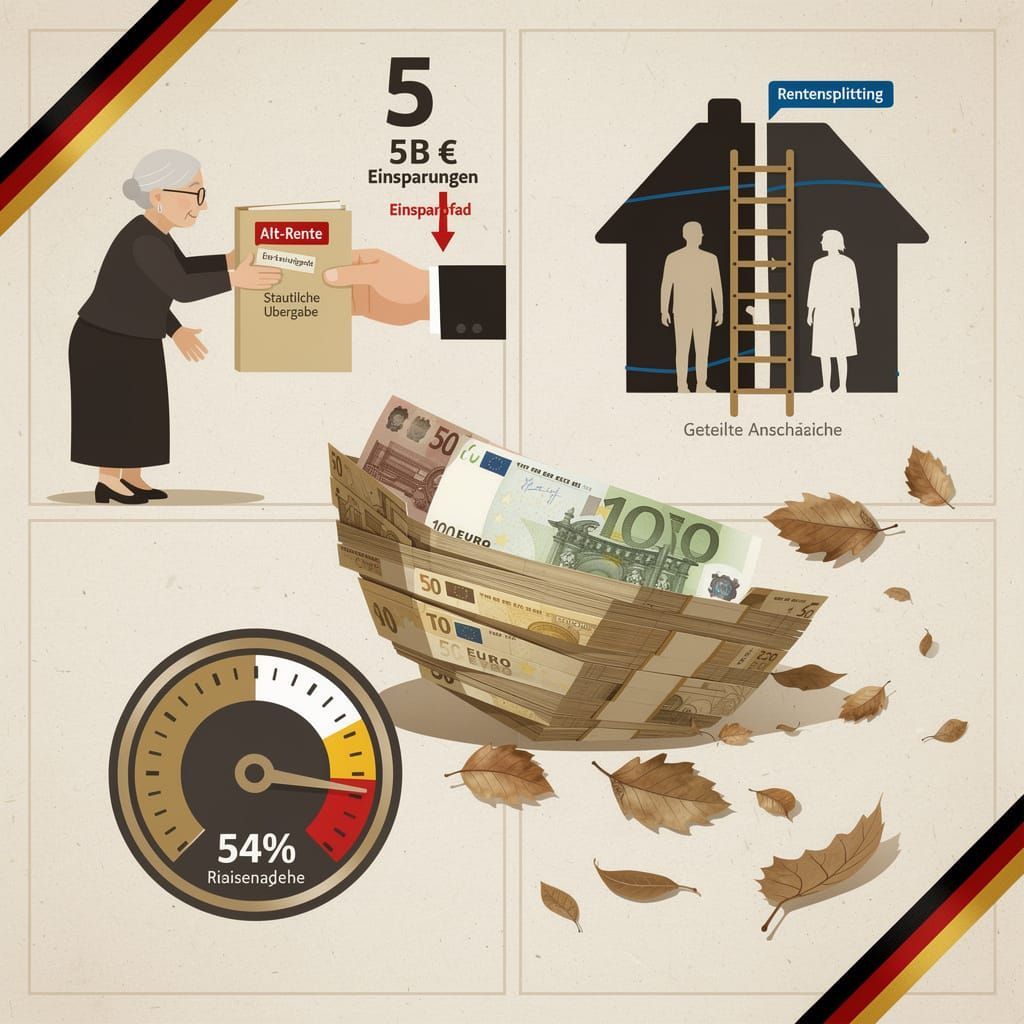
Germany scraps widow's pension to save €5B/yr — while its total pension bill runs €400B+. That's a 1.25% haircut on a hemorrhaging system 🎪 Rent-splitting just shifts risk onto households: a stay-at-home parent whose partner falls ill inherits grief + a smaller check. 54% contribution rate by 2050. Still coming. Who's really getting "reformed" here?
By the time you read this, the numbers have already moved. On August 8–9, 2026, economist Martin Werding unveiled his masterstroke: scrap the widow's pension—a €50 billion annual liability, roughly one-eighth of total state payouts—and replace it with a "rent-splitting" mechanism that redistributes accrual points between spouses. The goal: immediate cost reduction. The logic: a textbook example of treating symptoms while ignoring the disease.
The arithmetic is brutal. Without changes, Germany's social contribution rate barrels toward 54% by 2050. Cutting one program saves perhaps €5 billion annually. That is not reform. That is a bandage on a hemorrhage. Werding's own projections show the savings get eaten by higher contribution burdens down the line. The proposal accelerates cuts today, then punts the bill to tomorrow's workforce. Meanwhile, the standard pension rose 4.24% for 21 million beneficiaries starting July 2026—funded through institutional compliance, not structural adjustment. The system can find money for benefit increases. It cannot find money for honesty.
The politics are even uglier. On July 30, Minister Katharina Reiche rejected faster pension cuts outright, citing East-West tensions that remain raw three decades after reunification. Her opposition means legislation stalls until late 2027 at the earliest. Meanwhile, Friedrich Merz eyes the fiscal room for tax cuts—a maneuver that would boost short-term consumption while the pension system's structural deficit deepens.
The causal chain is damning:
- Immediate: €5 billion in annual savings from widow's pension elimination → marginal relief to contribution rates. But the June 12, 2026 Grundsicherung mechanism already guarantees basic security for non-workers who never qualified for pensions—meaning the state subsidizes one hand while cutting the other.
- Medium-term: Rent-splitting introduces administrative complexity and does nothing for the 2.3 million widows currently drawing benefits. Meanwhile, the July 2, 2026 coalition tax reform raises the basic allowance to €12,348 and splits the rich-tax threshold into 45% up to €250k and 47% beyond €280k—redirecting revenue upward while pension liabilities remain untouched.
- Long-term: Projected tax rates still hit 50%+ by 2050 → union cohesion fractures, regional disparities between east and west widen, early retirees face reduced unemployment support. By 2027, tax brackets on pension income will range from 32.5% to 82.5%, effectively reducing net pension cash flow before any structural fix takes hold. Voluntary pension point purchases, touted as tax relief, lock high earners into lifelong higher monthly obligations—trading today's deduction for tomorrow's burden.
Werding's scheme achieves exactly one thing: it shifts liability from the state to households. The widow's pension, for all its flaws, provided a fixed, predictable benefit. Rent-splitting ties benefits to a spouse's earnings trajectory—meaning a stay-at-home parent whose partner falls ill or loses work inherits both grief and a smaller check. The July 18, 2026 anti-tax-evasion action plan, targeting €1–200 billion in potential recovery, demonstrates the government can chase revenue when motivated—just not for pension sustainability.
The market implications are straightforward. If pension costs don't fall meaningfully, bond markets will eventually demand higher yields on German Bunds to compensate for unfunded liabilities—a dynamic mirrored in France's sovereign risk premium, which exceeded 80 basis points over German benchmarks on July 9, 2026, after Le Pen's conviction triggered fears of fiscal slippage. If pension costs fall too fast, consumer spending among retirees contracts, dragging consumption-driven GDP components. The €10 billion reform package approved July 2 offers tax rebates but zero structural pension adjustment—a stimulus bandage on a hemorrhaging entitlement system.
What Germany needs is a system that reduces the dependency ratio through higher labor-force participation, not an accounting trick that swaps one form of payout for another and then taxes the replacement at 82.5%. Until policymakers confront the demographic arithmetic—fewer workers, more retirees, stagnant productivity—every "reform" is just rearranging chairs on a sinking fiscal ship.



Comments ()