$110B Paramount-WBD Merger: Approved, Delayed, and Costing $2.6B a Year in Legal Limbo
📉⚖️💸 The Paramount–WBD Merger: A Masterclass in Paying More to Delay the Inevitable
$110 billion merger approved. $2.6 billion/year in delay penalties. $31/share — but you'll wait until June 2027 to see it. That's not a buyout. That's a patience tax on shareholders who watch quarterly earnings erode while lawyers bill by the hour and 12 states hold the line. Media consolidation: lower quality, higher prices, and a legal bill that could fund a small country. Still think bigger is better? 📉⚖️💸
August 8, 2026
The European Commission blessed Paramount's acquisition of Warner Bros. Discovery on July 22—at $110 billion, not $31 per share—and the market reacted with all the enthusiasm of a shareholder watching their buyout price get nibbled away by legal fees and quarterly payments.
The Numbers That Matter
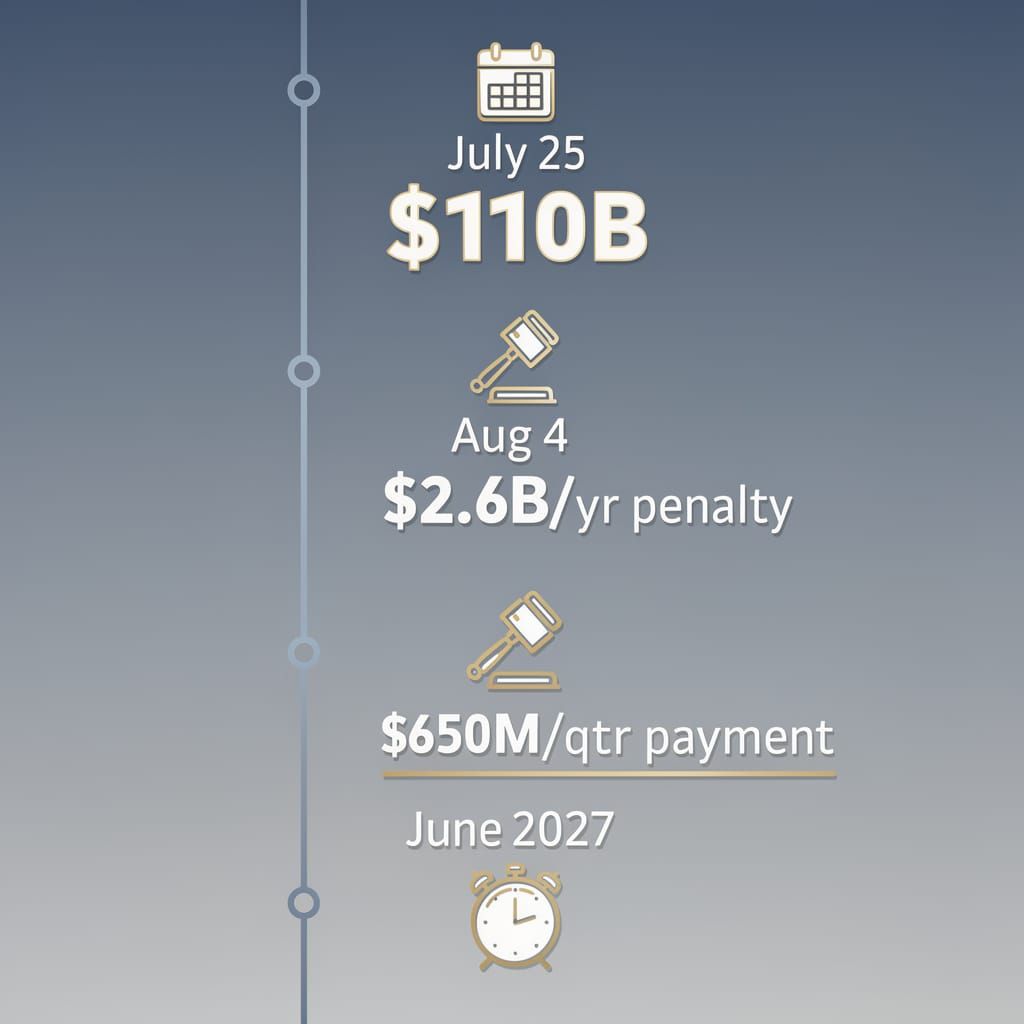
Paramount will pay $31 per share for WBD—or, more accurately, will eventually pay that, assuming the courts stop playing procedural keep-away. On July 25, the company formally delayed the acquisition pending legal challenges from twelve US states and scriptwriters, citing competition risks and media diversity concerns. That same day, Paramount offered $650 million quarterly payments to Warner shareholders while the deal sits in limbo. That is not interest. That is a patience tax.
The Regulatory Maze
- June 12: Justice Department clears the deal as non-competitive under Section 7(a)(2). Paramount signs a $111 billion agreement. Regulators found no substantial lessening of competition among major content providers—an assessment that ignored that eight of the ten top-rated cable channels in North America now answer to one owner.
- July 13: California AG Rob Bonta files suit. Delaware courts approve the acquisition anyway; Paramount also signs an $800 billion debt agreement with sovereign wealth funds. The math: ~$31 per share plus seven times that in borrowed money.
- July 21: A federal judge issues a preliminary injunction halting the acquisition. The legal profession thanks both sides for the billable hours.
- July 22: EU Commission approves—with conditions. Paramount must exit European film distribution and relinquish its UIP stake within ten years. The price of regulatory clearance: one continent's worth of distribution rights.
- July 24: The court extends the injunction until August 17, 2026. The $110 billion clock keeps running.
- July 25: Twelve US states and scriptwriters formally oppose the deal. Paramount announces the delay and the $650 million quarterly payment structure. The deal may now conclude by June 1, 2027.
- August 4: Paramount revises Q2 guidance upward—EPS improved, but below analyst expectations. Streaming revenue climbed 9% on UFC rights and FIFA World Cup expansion. Linear TV declined 9%. The company added 2 million subscribers but watched overall profit drop from $57 million to $41 million.
Weighing the Winners and Losers
Shareholders: $31 per share looks fine—if you don't mind waiting until June 2027 and watching $650 million per quarter exit the building before you see a cent.
Paramount: Acquiring a media conglomerate while paying $2.6 billion annually in delay penalties. A strategy that demonstrates either patience, poor legal forecasting, or both.
WBD: Collects $31 per share plus $650 million quarterly. The closest thing to passive income in modern M&A—assuming you ignore the CNN editorial independence concerns raised by twelve state attorneys general.
The Media Sector: Prices increased on the assumption that consolidation reduces competition. History suggests it mainly reduces service quality, but markets are optimists.
The Real Outlook
Forecast models project a post-July 2026 close—now likely June 2027—unless judicial outcomes intervene. The transaction remains practically assured, but shareholders should expect paperwork, fees, and the unique pleasure of watching a $31 floor price erode at a pace of $650 million per quarter.
This merger demonstrates that even when regulators approve, courts and state coalitions find reasons to bill you for the privilege of waiting. Twenty-five dollars a day may not move markets. Two-point-six billion a year, however, builds character and a very expensive legal department.
Comments ()