$111 Billion Merger, Zero Legal Safety: How Paramount Bought WBD Before the Lawsuits Landed
🚩 Paramount Buys WBD. The Market Cheers. You Might Want to Sit This One Out.
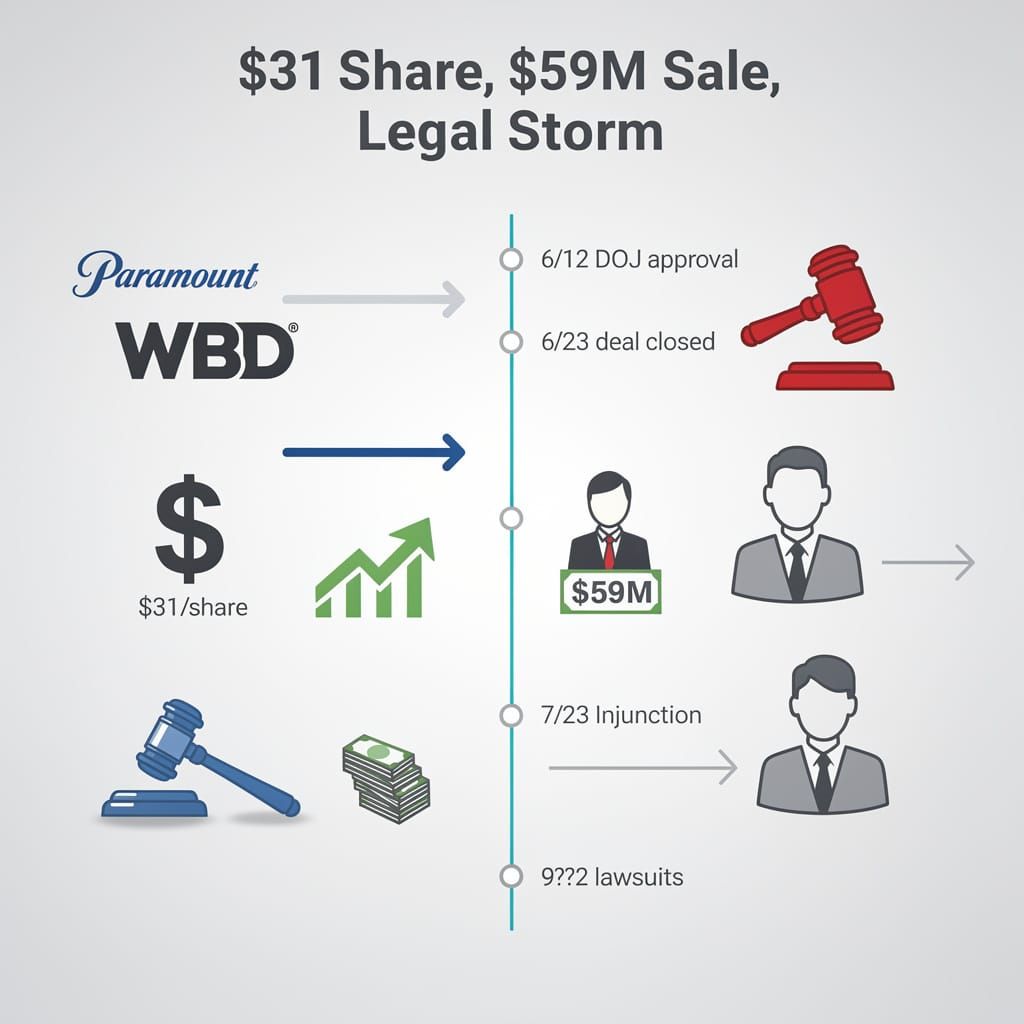
Paramount paid $31/share for WBD. The stock jumped. Analysts cheered. Here's what the headlines skipped: David Zaslav sold $59.47M in WBD stock 3 weeks after closing. The CEO who knows the balance sheet best is cashing out. 🚩 A federal court just halted Nexstar-Tegna after DOJ approval. Same DOJ that cleared this deal. State attorneys general are suing to unwind it. Federal clearance ≠ legal safety. Wall Street calls this a merger. It's a distressed asset sale that closed before the lawsuits landed. $31/share looks like a win. But you're buying litigation risk, not strategic value. Just because the stock went up doesn't mean you should. 🤨
Another Media Megamerger Closes. The Math Doesn't Add Up.
On June 12, the Justice Department cleared Paramount Skydance's $111 billion acquisition of Warner Bros. Discovery as non‑competitive under Section 7(a)(2) doctrine. Twenty-one days later, the deal closed. The stock jumped. Analysts typed furiously. The narrative wrote itself.
Let's check what the narrative skipped.
Paramount paid $31 per share for WBD. The transaction closed on June 23—sealing ownership before any state lawsuit could block it. That sequencing matters: the deal is done, but the legal war is just starting. A coordinated state lawsuit led by California's Rob Bonta and New York's Letitia James is advancing through the courts, leveraging First Amendment and privacy statutes to halt operations. The same week the DOJ signed off, a federal court granted an injunction halting the Nexstar-Tegna station merger—despite DOJ and FCC approval. Precedent suggests approval does not equal safety.
What the merger math shows:
- Shareholder payout: $31 per share, locked in.
- Legal overhang: State attorneys general are litigating to unwind or restrict the deal. Settlement costs not included in the $31.
- DOJ greenlight, states redlight: Federal clearance means nothing when state consumer-protection suits target the merged entity for potential breach claims.
- Synergy promises: Standard integration rhetoric. No binding targets filed.
- Insider signal: On July 13, WBD CEO David Zaslav sold $59.47 million in WBD stock. That move—days after the deal closed—signals financial caution from the person who knows the balance sheet best.
The media sector rallied on the news. Indexes treating this as a clean victory ignore the mechanics. This is a distressed asset sale that closed before the lawsuits landed, priced at a premium that reflects litigation risk, not strategic value.
The Real Timeline
- 2026-06-12: DOJ clears the merger. Paramount signs the $111 billion agreement.
- 2026-06-23: Deal closed. States begin preparing lawsuits.
- 2026-07-04: Paramount confirms no plans to alter CNN after the takeover. Trump's campaign had pledged network transformation contingent on deal closure—political catalyst, not corporate strategy.
- 2026-07-13: Zaslav sells $59.47 million in WBD shares.
- 2026-07-23: Federal court halts Nexstar-Tegna post-approval—signals risk for Paramount.
- 2026-08: All international regulators approve. China grants unconditional clearance.
- 2026-09: State lawsuits filed. Outcome determines whether merger holds.
Who Wins, Who Loses
WBD shareholders: $31 cash now beats uncertain independent future. Clear short-term win.
Paramount's balance sheet: Acquired a company while multiple state investigations advance. The same projection models that convinced antitrust lawyers to sue haven't changed. Cable broadcasters already report slight increases in average monthly fee hikes post-merger. HBO and Paramount+ revenues project modest subscription declines within six months. Zaslav's stock sale reinforces the caution.
The market: Priced the merger as a clean finish. The Nexstar-Tegna injunction shows post-approval does not mean post-risk.
Consumers: Fewer independent studios, higher subscription bundling, and the same pricing power that state attorneys general cited when they decided to sue.
The Bottom Line
Wall Street treated this as a closing. It was a commencement. Federal clearance came through. State litigation is coming through. The Nexstar-Tegna injunction confirms that DOJ approval offers no shield against state consumer-protection actions.
Some mergers create value. This one creates legal fees, a coordinated multi-state lawsuit, a CEO cashing out $59 million in shares within three weeks of closing, and analyst reports that confuse regulatory approval with legal finality.


Comments ()