Commodity Stampede 2026: Investors Flee Equities Into Already-Priced 'Safety'
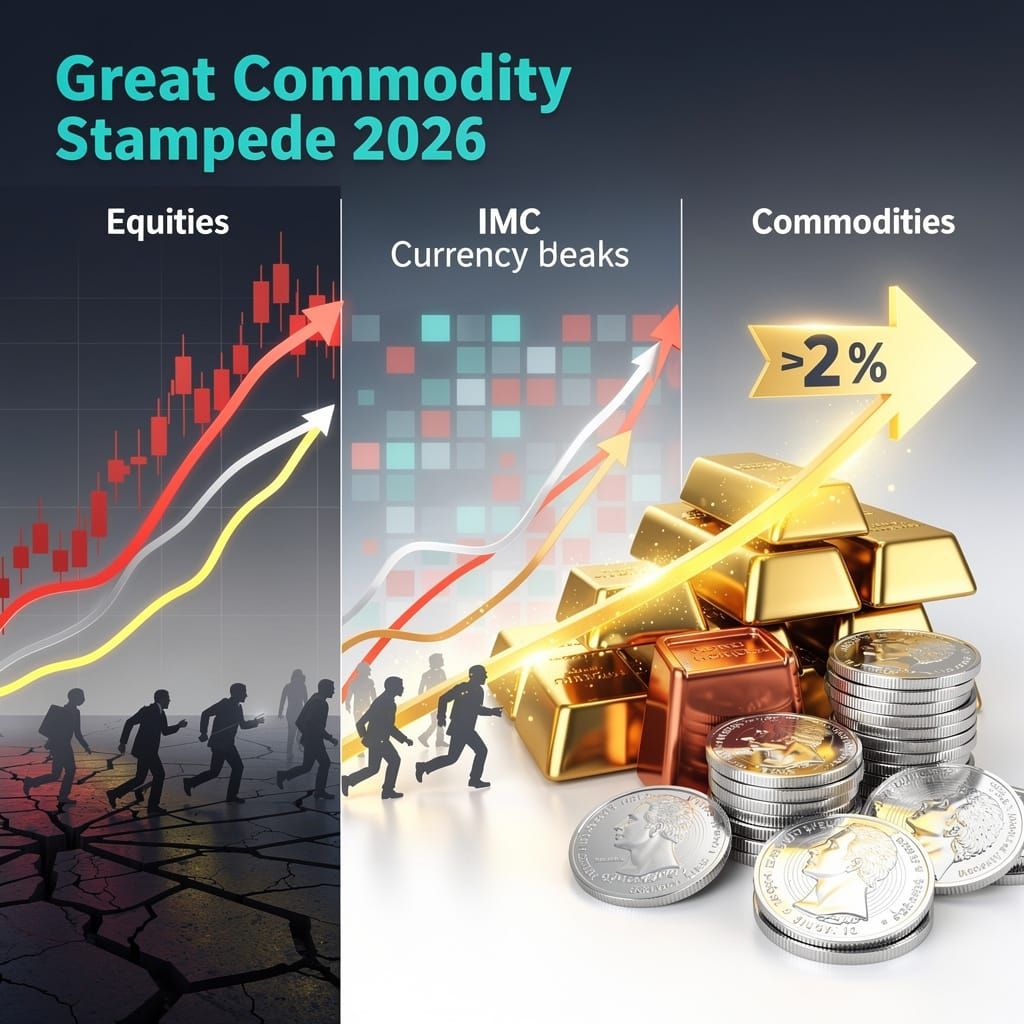
🤡 The Great Commodity Stampede of 2026
Equity outflows accelerated. Bid-ask spreads blew past 2%. And investors called it "rotation." 🤡 Commodities don't pay dividends. They don't generate earnings. Their value depends entirely on someone else paying more later. Retirees locking in premium valuations. New investors trapped between two overvalued markets. Liquidity providers watching spreads widen. If commodities were truly safe — why did commodity-exporting currencies just crater? You're not rotating. You're packing into a crowded exit and calling it strategy.
Investors are fleeing equities for physical commodities. The data is stark, the rationale flimsy, and the likely outcome painfully predictable.
On July 30, a notable rotation began: portfolios tilted away from stocks and toward metal holdings, cash positions shed in favor of "tangible safety." The market interpreted this as conviction. It reads more like reflex.
What Actually Happened
- Equity outflows accelerated as bid-ask spreads widened beyond 2%, signaling deteriorating liquidity rather than strategic rebalancing. By contrast, VOO attracted $12,197 in net inflows on June 12 alone—AUM up 1.22%—while institutional investors resumed capital flows into U.S. equities, pushing SPY toward $750 with stable price action. Expanded share repurchases exceeded $925 billion annually. What changed in 29 days is not fundamentals—it is panic.
- Commodity inflows surged, driven by investors seeking perceived protection from inflation and currency instability. New entrants paid premium valuation multiples, locking in prices that already reflect optimistic assumptions. Gold and copper had been climbing since May on analyst upgrades and supply constraints; by July 10 silver was outpacing gold as the iShares Silver Trust diverged sharply from the SPDR S&P Metals & Mining ETF. The July 30 rotation merely chased already-priced gains.
- Copper inventories declined, yet this followed a June 24 collapse below $6.24/lb after Fed Chair Warsh signaled potential rate hikes—hardly a structural supply crisis. The United States Copper Index Fund showed positive year-to-date returns, but those returns reflect AI infrastructure and EV production narratives, not physical scarcity. Steel output expectations rose, but that tells us more about green‑tech policy (copper added to the U.S. critical minerals list on June 28) than about demand conviction.
This is not a signal of strength. It is a signal of crowding.
The Regional Currency Context
Two days earlier, on July 28, emerging-market currencies told a different story. The Mexican peso managed a marginal +0.54 point gain against the dollar on July 21, reaching 17.4284 MXN/USD. The Chilean and Colombian pesos each lost more than 1%. Argentina's peso held steady only through active monetary restraint—not market confidence.
If commodities were truly a safe haven, one would expect the currencies of commodity-exporting nations to reflect that. They did not. The peso's July 29 intervention tells the real story: on July 5, Banxico prohibited cash withdrawals exceeding MXN 50,000 daily without digital wallet verification, while on June 9 headline CPI declined 0.27%—hardly an inflation emergency. Capital outflows persisted. Credit tightened.
The thesis does not hold.
Who Pays for This Rotation
- Retirees: Forecast models now project additional fund allocation to tangible assets within six months. These are not speculative traders. These are people locking in premium valuations at the wrong moment, while institutional money that rotated back into equities on July 1 already captured SPY's climb above $740.
- New investors: Already reporting drawdown losses exceeding 15%, many who entered equities late and rotated late are now trapped between two overvalued markets.
- Liquidity providers: Spreads exceeding 2% indicate that market structure is degrading, not strengthening.
What the Data Projects
The shift from equities to commodities makes a certain psychological sense. Inflation fears remain elevated. Central bank policy remains unclear. But the signal that matters most came from Harris Oakmark's Q2 letter on July 14: their equity portfolio returned 6.84% vs. the S&P 500's 15.20%. The fund with concentrated AI holdings underperformed broad tech by more than 8 percentage points. That gap—not commodity prices—is what investors are fleeing. They are not running toward safety. They are running from a specific fear that tech leadership has narrowed beyond reason.
A rotation driven by fear rather than fundamentals produces specific, measurable outcomes:
- Near-term: Continued volatility in both asset classes as late-moving capital chases already-priced gains. The June 1 market drop of 9.3% from all-time highs triggered selling pressure that never fully resolved.
- Medium-term: Margin pressure on commodity producers who expanded capacity based on demand that reflects panic, not structural need. Southern Copper recorded record earnings on June 28, but that was before Warsh's rate signal. Freeport-McMoRan and Alcoa saw mining margin expansions through equity stakes—yet those margins depend on industrial spending that remains uncertain.
- Long-term: A correction when liquidity re-enters equities and the safety trade reverses—likely faster than it began. Institutional buybacks already account for 57% of annualized flow.
The Problem with "Safety"
Commodities do not generate earnings. They do not pay dividends. They offer no productivity growth. Their value depends entirely on the next buyer paying more.
When investors describe commodities as "safe," what they mean is "I expect someone else to want this more later." That is not safety. That is speculation with a different label.
The current rotation demonstrates exactly what market commentators claim to dislike: short-term thinking dressed in tactical language, executed at scale, in deteriorating conditions.
This will not end well for those arriving last.
Comments ()