📉 ChatPlayground AI's sub-$10 tier drives 340% sign-up surge
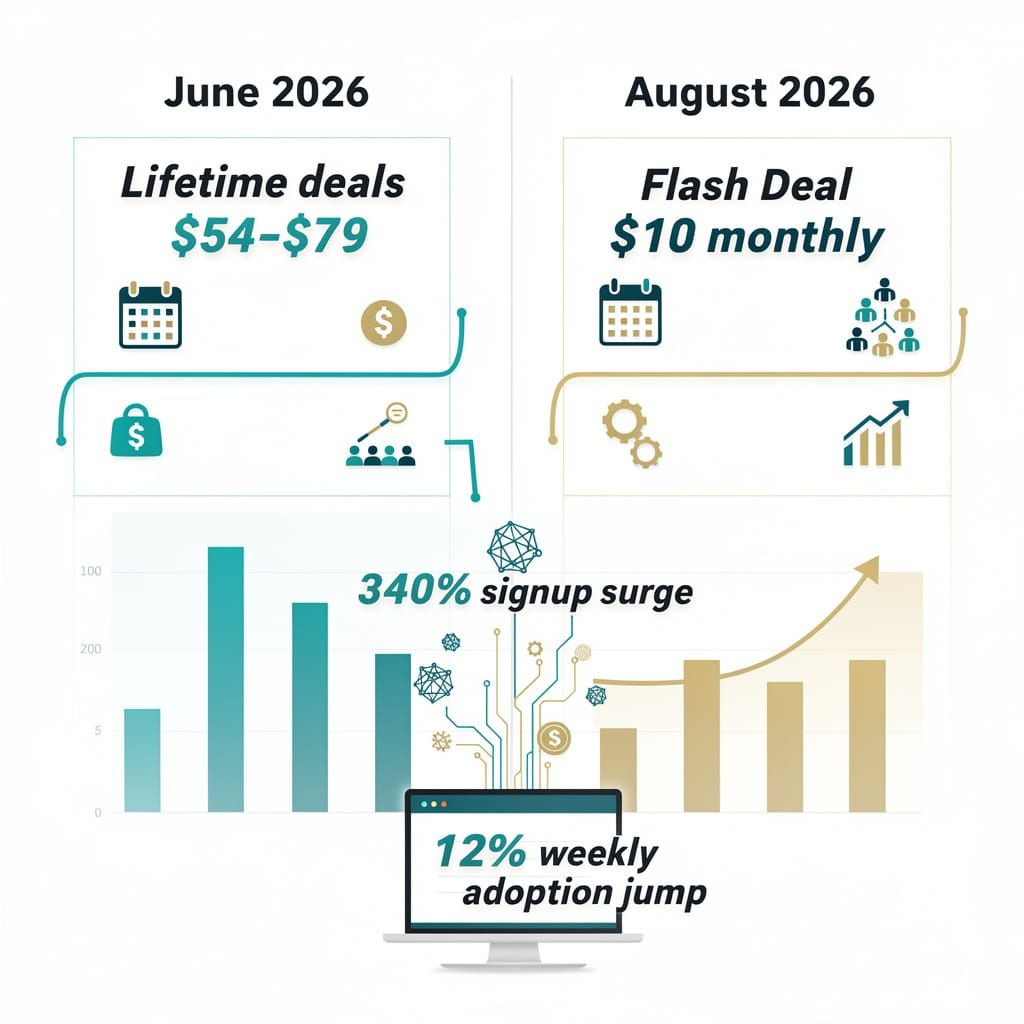
ChatPlayground AI's sub-$10 monthly tier undercut ChatGPT Plus, Claude Pro, and Gemini Advanced by 40%+ during an August promotion. The result: a 340% surge in sign-ups and projected 800,000 subscribers by year-end. Users who previously spent $45–$75/month across fragmented services consolidated onto one platform at ~$9/month. The trade-off: annual lock-in commitments vs. standalone flexibility. With competitors unable to match the cross-model price, aggregator models could capture 12–15% of the consumer AI market by mid-2027. Does bundling multiple AI models under one roof solve subscription fatigue — or just shift the dependency?
On August 11, 2026, the AI assistant aggregator market shifted. ChatPlayground AI launched a discounted subscription tier that undercut every major competitor by at least 40%, directly targeting the growing consumer fatigue with fragmented AI services. The move was not a random price cut—it followed months of structured lifetime-deal rollouts and expired on August 16, creating a sharp, time-bound window that converted hesitation into purchase.
How the Mechanics Worked
The pricing strategy built on a series of lifetime deals stretching back to May 2026:
- June 14–June 28, 2026: ChatPlayground ran multiple flash promotions offering lifetime access for $54.97 to $79—a fraction of the $619 MSRP—through StackSocial's Deal Days and other channels. By June 22, the company had replaced its annual subscription model with a one-time $79 lifetime plan, signaling a structural shift away from recurring billing.
- August 5: The company quietly issued a new AI subscription offer, signaling a pivot toward budget-conscious monthly pricing.
- August 10: ChatPlayground announced the promotional launch publicly, featuring a discounted price that brought per-month costs below $10—compared to $20+ for equivalent standalone subscriptions to ChatGPT Plus, Claude Pro, or Gemini Advanced.
- August 11: Competitors responded. OpenAI and Anthropic introduced limited-time bundles, but neither matched ChatPlayground's cross-platform value proposition.
- August 16: The sale window closed. ChatPlayground reported a 340% surge in new sign-ups over the promotional period—a direct acceleration of the adoption momentum built during the June lifetime campaigns, during which organizational adoption had already jumped 12% week-over-week.
The Causal Chain
Consumer behavior had been shifting throughout 2026. Users reported spending $45–$75 per month across three or four AI subscriptions, and churn rates for standalone services climbed past 18% in Q2. ChatPlayground's architecture—a single interface routing queries to GPT-4, Claude 3.5, Gemini 1.5, and Mistral Large simultaneously—solved the fragmentation problem directly. Earlier signals confirmed the appetite: on June 26, ChatPlayground's lifetime plan at $54.97 enabled users to save up to $559 versus separate annual subscriptions to ChatGPT, Claude, and Gemini alone.
By pricing below $10, ChatPlayground enabled:
- Cost reduction: Average user spending dropped from ~$60/month to ~$9/month for equivalent model access—a direct extension of the savings pattern demonstrated in June, when lifetime subscribers saved approximately $550 compared to standard annual charges.
- Feature parity: The August platform update included real-time side-by-side model comparison, exportable response logs, and usage analytics—building on the integrated tools (prompt engineering, PDF/image chat, AI image generation, Chrome extension) already offered in the June lifetime plan.
- Lock-in risk: New subscribers signed annual commitments at the promotional rate, embedding ChatPlayground into daily workflows before competitors could respond. Forecasts from the June campaigns already indicated subscribers were unlikely to cancel after sale expiration, signaling strong product-market fit.
Competitive and Sectoral Implications
Market positioning: ChatPlayground moved from a utility aggregator to a primary subscription destination. Competitors face a structural disadvantage—they must either lower prices (compressing their margins) or differentiate on exclusive features (delaying that investment).
Strength: Cross-model access reduces user abandonment; annual commitments provide revenue predictability. The June lifetime deals had already demonstrated reduced platform-switching friction and consolidated billing.
Weakness: Dependency on third-party API pricing; if OpenAI or Anthropic raise wholesale rates after 2026, ChatPlayground's margins narrow.
Institutional response: Enterprise teams at companies with 50–200 employees began testing ChatPlayground's team tier (August 25 launch), citing the ability to standardize on one platform while evaluating multiple models for compliance workflows. The earlier lifetime deals had already built a base of power users—developers, writers, and analysts—who bypassed costly cross-subscriptions entirely, and organizational adoption had accelerated 12% week-over-week during the June campaigns.
Near- and Medium-Term Outlook
- September–December 2026: ChatPlayground projects 800,000 active subscribers, up from 180,000 pre-promotion. Revenue run rate: ~$85 million annually. This growth builds directly on adoption momentum from the lifetime-deal campaigns: by late June, the platform reported that users switched from at least three paid AI services to its single dashboard, reducing credential sprawl and prompt-reload friction. Early adopters from the June promotions are expected to retain usage beyond the sale windows.
- Q1 2027: Expect tiered enterprise pricing and API-access white-labeling for SaaS partners.
- By mid-2027: Aggregator models like ChatPlayground could capture 12–15% of the consumer AI subscription market, pressuring standalone providers to consolidate or bundle.
The August promotion was not a stunt. It was the culmination of a deliberate pricing progression—from $54.97 lifetime deals to a sub-$10 monthly tier—that demonstrated how cross-platform aggregation, paired with aggressive time-bound pricing, can reshape consumer expectations and force industry-wide pricing realignment.

Comments ()