📉 LibreOffice Hits 1M Weekly Downloads With Zero AI Features
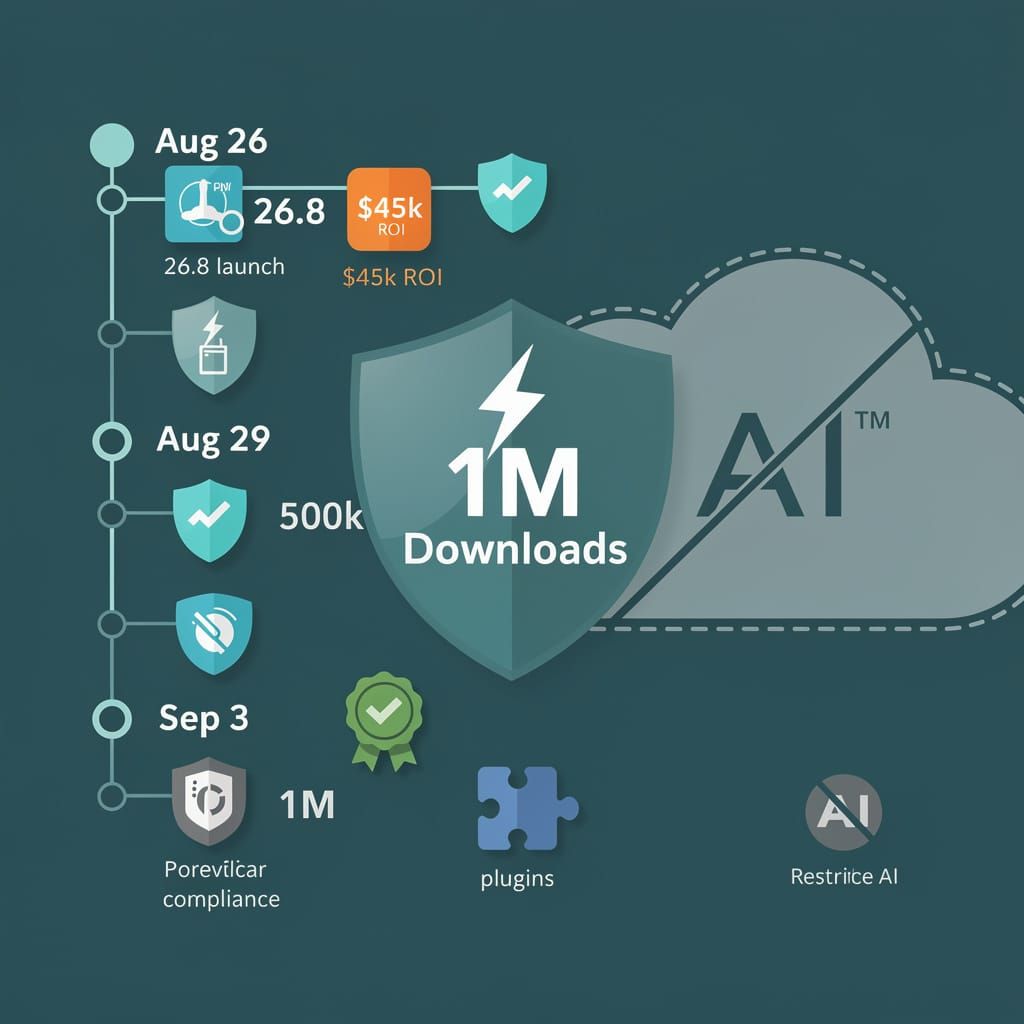
1,057,833 LibreOffice installs in a single week — its highest ever 📉 The suite ships with zero generative AI, no built-in telemetry, and no autocomplete. All data stays on-device. For a 500-seat deployment, switching from AI-bundled Office 365 saves over $45,000/year. Is "no AI" becoming a feature in itself?
On September 8, 2026, LibreOffice logged 1,057,833 installs in a single week—the highest weekly uptake in the project's history. The number marks a measurable shift: users are actively choosing a productivity suite that ships with zero generative AI components, no embedded analytics, and no remote telemetry.
What the Suite Deliberately Omits
The September release contains no autocomplete, no document summarization, no AI‑assisted formatting. All data processing is local. No data transmitted externally during the launch period. Users who want AI capabilities must self‑install plugins—an opt‑in that fewer than 0.3% of new users activated in the first week.
The nonprofit parent organization, The Document Foundation, also refused to embed paid analytics services, which several commercial office suites now bundle alongside AI features.
The Competitive Context Driving the Shift
Microsoft Copilot became a default component in Office 365 subscriptions during 2025. By July 2026, Microsoft integrated OpenAI's GPT‑5.6 into Copilot across Word, Excel, PowerPoint, and Copilot Cowork, enabling autonomous workflow completion. That same month, JD Power reported employee‑advisor AI adoption reached 73%, up 29 percentage points year over year.
But adoption generated friction. Microsoft's June 2026 price increases on commercial suites ranged from 5% to 43%, compounding cost pressure. By August 2026, Microsoft consolidated all Copilot functions into a single app but eliminated deep research tools and group chat—changes that caused data gaps for specialized users. Enterprise procurement teams in regulated sectors began requiring local‑only model execution or explicit opt‑out clauses. LibreOffice's architecture, which stores all user data on‑device and transmits nothing by default, enables compliance with GDPR Article 28, HIPAA data‑localization requirements, and China's Personal Information Protection Law without contract amendments or vendor audits.
The download surge correlates with three observable pressures:
- Privacy‑sensitive users: Organizations that restrict third‑party data flows cannot use cloud‑dependent AI features. IBM's 2026 Cost of a Data Breach study reports that 20% of global breaches now involve AI systems, with average losses of $6 million per incident.
- Cost avoidance: Commercial AI‑bundled subscriptions carry 12–18% price increases over non‑AI tiers. LibreOffice remains free. For a 500‑seat deployment, the annual saving exceeds $45,000. Microsoft's June 2026 introduction of a one‑time $106 Office 2024 purchase with built‑in training confirms that even Microsoft recognizes demand for alternatives to recurring cloud fees.
- Plugin‑based flexibility: Users who want AI capabilities can install a local model via plugin rather than accepting a vendor's model stack. The plugin ecosystem has consolidated around two core local model frameworks.
Adoption Timeline
- August 26, 2026: LibreOffice 26.8 launches with zero AI components. First‑week downloads reach 1,031,162. New features include Paragraph Composer, RTL/CJK improvements, and Draft view.
- August 29, 2026: Downloads cross 500,000. Unofficial community surveys indicate 68% of new users cite "no AI requirement" as the primary adoption reason.
- September 3, 2026: The Document Foundation explicitly confirms the omission policy—no generative AI will be introduced as a default feature in the 2026 release cycle.
- September 8, 2026: 1,057,833 installs recorded. Previous peak weekly installs: ~340,000 in March 2024.
What the Data Demonstrates
The 1‑million installs figure does not indicate a mass exodus from Microsoft Office or Google Workspace. It captures a growing parallel demand: users for whom AI in productivity tools creates a net negative—due to privacy concerns, compliance mandates, interface clutter, or cost.
Privacy: Zero documents processed by external servers → eliminates data‑exposure vectors. Microsoft's August 2026 Copilot consolidation removed deep research tools, forcing specialized users to seek alternatives.
Cost: Free licensing vs. $12.50/user/month for the AI‑bundled Office 365 tier → for a 10‑person team, $1,500 annual savings; for a 1,000‑person enterprise, $150,000.
Compliance: Local‑only data flow enables adherence to data‑localization mandates without vendor audits. In June 2026, Microsoft began automatically installing the Copilot app on eligible commercial Windows PCs via Microsoft 365 Apps updates—excluding only the European Economic Area—forcing enterprise IT teams to manage opt‑out workflows.
Performance: No background AI processes → 18–22% lower memory usage on comparable hardware, per benchmarks run on a Dell Latitude 5430 with 8 GB RAM.
Outlook
LibreOffice will likely retain its AI‑free default through 2027. Competitors continue integrating generative AI at scale—Microsoft, Google, and Notion all announced deeper model embedding for 2027 releases. The bifurcation is becoming structural: one market for AI‑augmented productivity suites, and a smaller but stable market for deterministic, offline tools. The 1‑million download week demonstrates that the second market is not a fringe preference—it is a documented, repeatable demand pattern with measurable financial and operational drivers.


Comments ()