✈️ Amazon Pauses 21 Air After Fatal Miami Runway Overrun
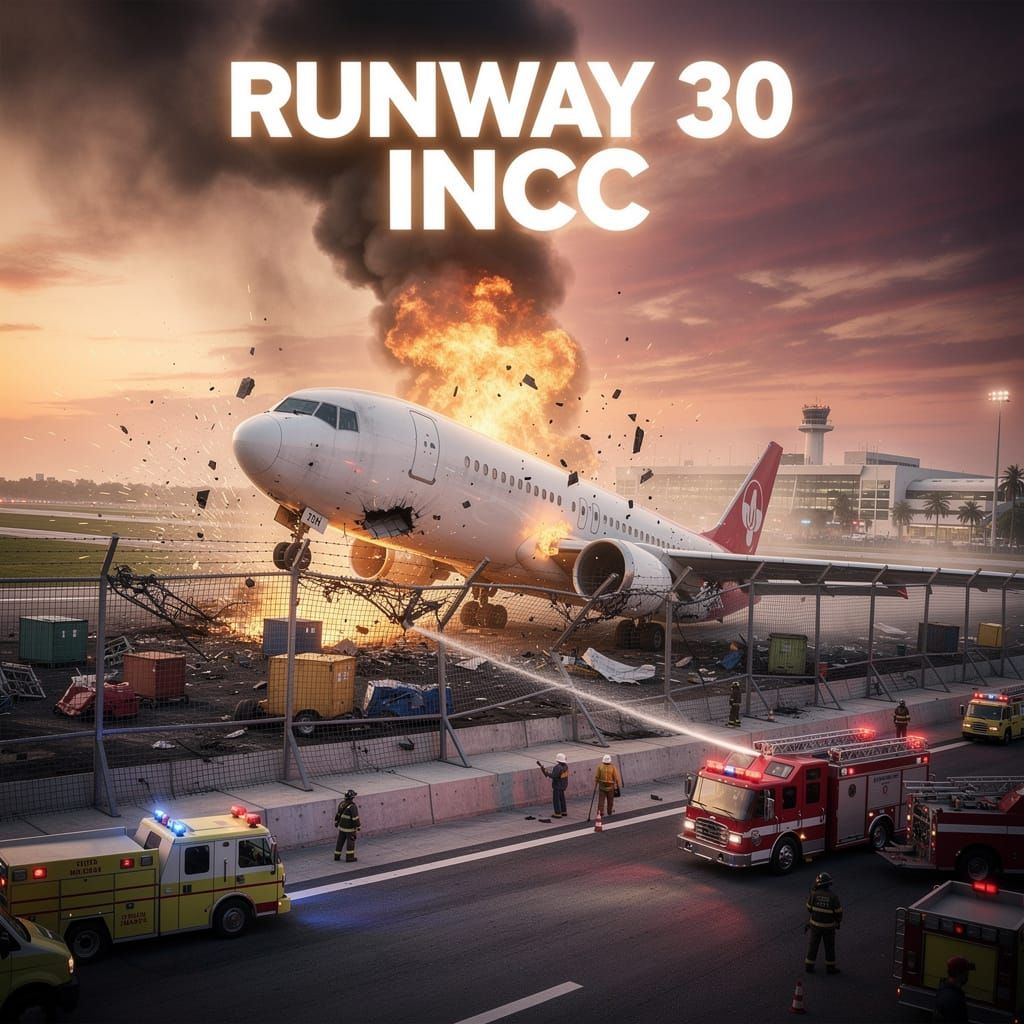
5 killed, 1,300 ft overrun, 158 knots at gear touchdown — a 21 Air Boeing 767 for Amazon crashed past Miami's Runway 30, striking ground vehicles. Amazon paused its 21 Air cargo deal for now; NTSB probes whether wet runway, crosswinds, and missing EMAS made it preventable. Is your hub airport covered by an arrest system?
A Boeing 767-300 freighter (N1997A) operated by 21 Air for Amazon overran Runway 30 at Miami International Airport on September 6, 2026, while moving at 112 knots as it left the usable runway. The aircraft crossed the safety area and perimeter fence before striking ground vehicles roughly 1,300 feet (396 meters) beyond the runway's end. Five people on the ground died; five others sustained injuries, among them three treated as critically injured. Amazon announced on September 13 that it would suspend its 21 Air partnership, shifting shipments to alternative carriers including Sun Country and Hawaiian.
What the Black Box Data Reveals
NTSB investigators recovered flight data and cockpit voice recorders. Flight data show the right main landing gear touched down at 158 knots, the left gear followed at 134 knots, and brakes were released at 120 knots. NTSB investigators attribute the wet runway surface to early brake failure, while high crosswinds from 190 degrees at 17 knots gusting to 26 compounded the approach. Wind shear exacerbated braking limitations despite adequate approach procedures, according to investigators.
The sequence that followed defies standard procedure. The go-around call came seconds after touchdown. Thrust increased during the attempt, inconsistent with a deceleration maneuver. Speed brakes and thrust reversers—critical for short-field stopping—never deployed. The aircraft rolled beyond the perimeter and struck two vehicles on a public road near an Amazon warehouse; one was a U.S. Department of Defense golf cart, per Miami-Dade authorities. The left main gear stayed airborne for 11 seconds after initial touchdown, preventing immediate deployment of those systems. NTSB notes the absence of an Engineered Materials Arresting System (EMAS) on Runway 30/12 limited options for arresting the aircraft's momentum. A structural collapse damaged navigation aids and terminal lighting, while a severe engine fire consumed over 600 kilograms of aviation fuel residue. NTSB Chair Jennifer Homendy held a press conference on September 8; NTSB scheduled pilot interviews for September 9, targeting Captain Joseph Carroll and First Officer Jaime Felipe Silva Molina.
A Subcontractor Problem, Not Just a Pilot Problem
Amazon framed the 21 Air suspension as a commercial decision, not a regulatory mandate from the FAA. The company stated it was "expressing devastation" and pledging support for victims, yet former 21 Air pilots reported retaliatory terminations after filing OSHA complaints about safety concerns. 21 Air operates roughly 17 aircraft, eight of which serve Amazon's Prime Air cargo network.
The 21 Air fleet includes a Boeing 767-300 converted from passenger to cargo service in 2015—roughly 32 years of mixed-use wear cycles now under NTSB review.
Cascading Disruption
The disabled aircraft blocked Miami's northwestern diagonal runway for over a week. A three-hour ground stop followed the crash, during which two of four runways remained closed; three reopened by September 8, full capacity by September 14. On September 13, severe thunderstorms compounded the constraint, producing approximately 320 delays and at least 12 cancellations at Miami International, plus roughly 139 delays at Fort Lauderdale–Hollywood.
Outlook
- NTSB investigation began September 7; final report projected within 12–24 months
- 21 Air remains suspended pending findings; Amazon maintains alternate-carrier coverage
- FAA regulatory action remains undetermined; current pause is contractual, not statutory
- Regulators may implement stricter EMAS requirements and pilot training standards
- Regional thunderstorm activity through mid-September continues to stress South Florida hub capacity
The numbers—five dead, 158 knots at initial gear touchdown, 1,300 feet of overrun—point to a preventable failure chain. Whether Amazon's pause signals genuine safety recalibration or a contained PR response becomes clear only when the NTSB assigns probable cause.
Comments ()