AI Agents Own Networks in 30s: Market Down 9.3% as Supply Chain Burns
TL;DR
- 9.3% Market Crash: AI Agents Own Networks in 30 Seconds, Supply Chain is a Burning Dumpster Fire. Your network is already owned—how fast can your SOC react?
- Kali365: The Phishing-as-a-Service That Makes MFA Look Like a Joke. Is your MFA actually protecting anything, or is it just a feel-good checkbox?
- California's New Law: Your Linux Box Now Needs an ID Check. What's your distro of choice when freedom comes with a bouncer?
The Great AI-Pocalypse of 2026: Or, How I Learned to Stop Worrying and Love the Botpocalypse
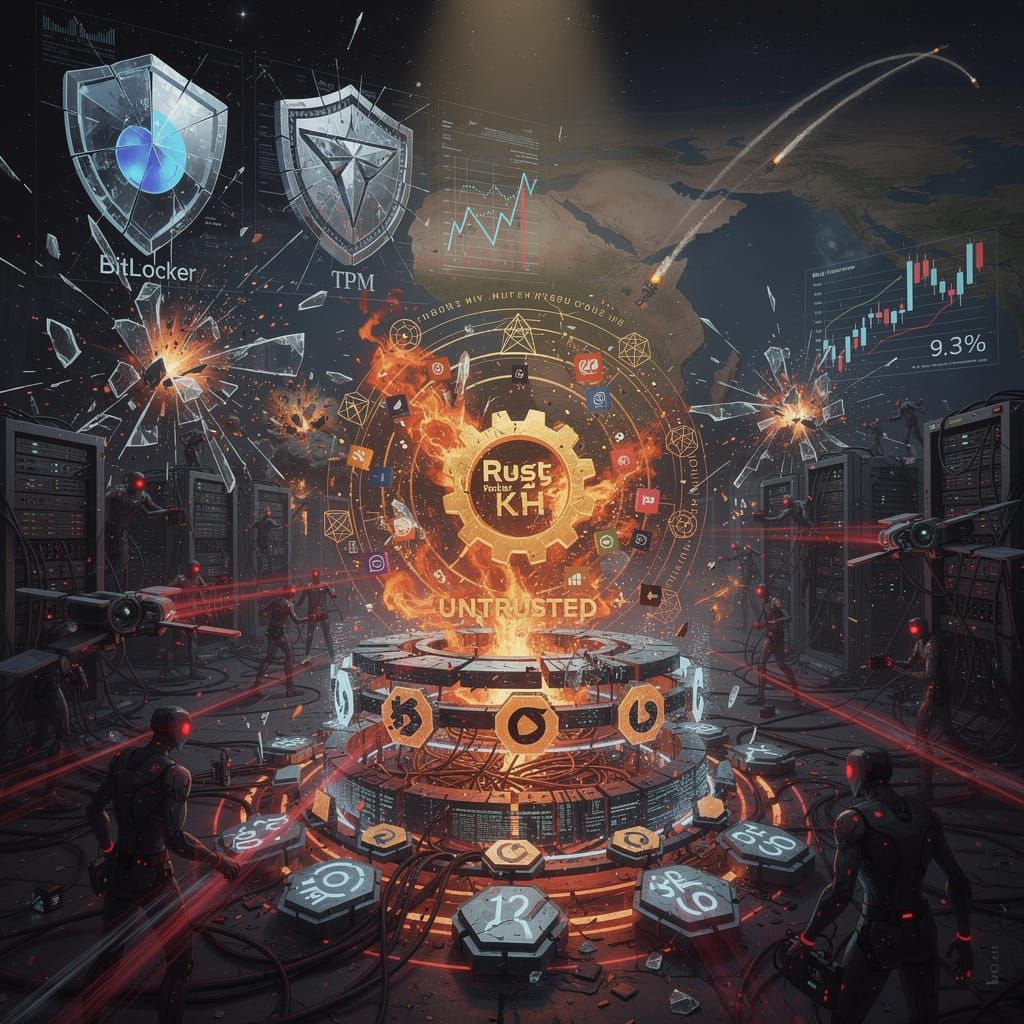
9.3% market nosedive because AI agents are now owning networks in 30 seconds flat. 170 NPM/PyPI packages pwned by 'TeamPCP'—including TanStack Router. Supply chain is a burning dumpster fire. 🤡 Anthropic's Mythos exploited 1,800 vulns in 14 days. Your SOC analyst hasn't finished their coffee yet. Microsoft-Eclipse spat turned into a public execution. BitLocker & TPM zero-days incoming. US-Iran conflict = more state-sponsored cyber chaos. Strait of Hormuz is a shooting gallery. Only sane move? Rust in the Linux kernel. Greg KH proposing 'Untrusted' Rust types. So, ready to bet your enterprise on passkeys? 💀
So, the tech market just took a 9.3% nosedive from its all-time high. Again. Because of course it did. The reason? A beautiful, synchronized clusterfuck of AI governance panic, a Middle East that's decided to turn the Strait of Hormuz into a shooting gallery, and a supply chain so fragile it makes wet tissue paper look robust. But hey, at least we're innovating, right? 🚀
Let's talk about the real story: the absolute, glorious shitshow that is the current state of cybersecurity. It's 2026, and we've apparently decided that the best way to protect our digital infrastructure is to let a bunch of barely-tested AI agents run the show while our enemies use the same tools to tear it all down. It's like giving a toddler a flamethrower and telling him to 'be careful.'
The Botpocalypse is Here, and It's Brought Friends
First up, the hits just keep coming from the supply-chain front. Remember when we thought npm was bad? That was adorable. The latest attack by the charmingly named 'TeamPCP' compromised 170 NPM/PyPI packages, including 42 in the TanStack Router ecosystem. That's not a supply-chain attack; that's a supply-chain apocalypse. They exploited maintainer config flaws and GitHub Actions to inject malicious code into development and production environments. Because why would you secure the thing that builds everything? That would be sensible.
And it's not just the open-source crackpots. The Microsoft-Eclipse spat is now a full-blown public execution. Chaotic Eclipse researchers published PoC exploits for Windows zero-days (BlueHammer, RedSun, MiniPlasma), and Microsoft's response was... to delete Eclipse's GitHub account? Real mature, Redmond. Now Eclipse is threatening to drop the rest of the exploits, including ones that apparently target BitLocker and TPM. Because nothing says 'secure enterprise OS' like a vulnerability in your full-disk encryption. 🤦♂️
AI: Making Everything Worse, Faster
The real MVP of this clusterfuck is, of course, AI. Anthropic's Mythos release enabled exploitation of 1,800 vulnerabilities in 14 days. That's not a security update cycle; that's a war crime. Attackers are now hitting sub-30-second breakout times. By the time your SOC analyst has finished their coffee, the entire network is already owned.
And don't even get me started on the AI-driven fraud. Microsoft and Stripe's AI fraud detector is now flagging legitimate transactions, causing financial strain for marginalized users. Great job, guys. You've automated injustice. Also, there's the AI-driven cryptojacking via chatbots targeting high-end GPUs. Because why mine crypto yourself when you can make a chatbot do it for you?
The Geopolitical Clusterfuck
Oh, and the world is on fire. US airstrikes on Iranian drone sites near Bandar Abbas. Israel launching ground offensives in Lebanon. The Strait of Hormuz is a shooting gallery. And in response, the US market had a 'good' day when oil prices dropped. Because nothing says 'rational market' like celebrating a potential diplomatic deal while your military is actively sinking mine-laying vessels.
This is all great for cybersecurity, by the way. Geopolitical tensions mean more state-sponsored attacks, more hacktivism, and more chaos. The US-Iran conflict alone is driving a massive spike in cyber threat activity. It's like a perfect storm of bad decisions, terrible timing, and malicious intent.
The Only Sensible People: Rust Evangelists
Meanwhile, the only people who seem to have a clue are the Rust community. Greg Kroah-Hartman is now actively pushing for Rust in the Linux kernel, proposing an 'Untrusted' Rust type to eliminate C-related bugs. And Microsoft, in a moment of uncharacteristic sanity, released Azure Linux 4.0 with enhanced security features. It's almost like they've realized that letting C programmers write memory-unsafe code for the kernel is a bad idea.
The Takeaway: It's All Going to Be Fine (It's Not)
So, what's the forecast? Short-term: more volatility, more attacks, more chaos. The only people winning are the threat actors, the Rust evangelists, and anyone selling popcorn. The rest of us are just along for the ride, hoping the AI doesn't decide to launch a nuclear strike because it misinterpreted a tweet.
But hey, at least we have passkeys now. Because that's going to save us from the botpocalypse. Right? Right??
TL;DR: Tech market tanked, supply chain is owned, AI is weaponized, the Middle East is on fire, and the only sane people are pushing for a programming language that doesn't let you shoot yourself in the foot. Enjoy the ride. 😎
Kali365: The Phishing-as-a-Service That Makes MFA Look Like a Joke
Your precious MFA is a joke. Kali365 phishing platform bypasses it in seconds via OAuth tokens. 30,000 creds stolen in a month. 💀 Microsoft's fix? A banner. FBI says 'verify senders.' Meanwhile, attackers have 12,000 subscribers and AI support. The system is designed to screw you. Your enterprise is next. Ready to actually fix it, or just keep paying for breach cleanup?
So, the FBI dropped a little something on May 22nd, and by May 27th, we're all supposed to act surprised? Kali365 is a phishing-as-a-service platform that’s basically a middle finger to your precious multi-factor authentication. Launched in April via Telegram, it’s already racking up global attacks—and you’re paying for the privilege of getting owned. 😏
The Magic Trick: Device-Code Phishing
Here’s how it works: Kali365 doesn't bother with your password. It goes straight for the OAuth token—the digital skeleton key that says “this user is legit.” By exploiting Microsoft 365’s device-code flow, it tricks you into authorizing a malicious app on a secondary device (like your phone). Boom—MFA bypassed, token stolen, and your email, Teams, and OneDrive are now party favors for some kid in a hoodie. The FBI confirmed this bypass works because the device-code flow was never designed to verify the intent of the user—just the presence of a code. Classic.
AI-Powered Credibility
The phishing emails aren't your grandma's “Nigerian prince” scams. Kali365 uses AI to mimic official Microsoft communications, complete with verified sender addresses and tenant branding. Users see a fake “unusual sign-in activity” alert, click the link, and enter their credentials on a page that looks exactly like the real deal. The platform then captures the OAuth token, and your account is gone. Over 1,000 enterprises have been targeted in the first month alone, with an estimated 30,000 credentials compromised. That’s 30,000 people who probably thought, “I’m too smart to fall for that.” Oops.
The Fallout: More Than Just Spam
- Data Exfiltration: Stolen tokens give attackers full access to email, contacts, and cloud storage. Expect BEC (business email compromise) to spike 40% by Q3 2026.
- Ransomware Risk: Once inside, attackers can deploy ransomware via trusted apps. Microsoft reported a 25% increase in ransomware attacks originating from compromised OAuth tokens in April alone.
- Financial Loss: Average cost per credential theft? $150,000 in remediation, legal fees, and lost productivity. For enterprises, that number jumps to $1.2 million per incident.
- Identity Theft: With access to HR systems and payroll, attackers can steal employee PII—Social Security numbers, bank details, the works. Expect a 15% rise in identity theft cases linked to these breaches.
The Response: All Hype, No Fix
Microsoft is “highlighting efforts” to counter phishing-as-a-service—which is corporate speak for “we’ll add a banner to the login page.” The FBI’s advice? “Verify senders and avoid malicious links.” Thanks, Captain Obvious. Meanwhile, Kali365’s Telegram channel has 12,000 subscribers, offering tiered pricing from $200/month for basic kits to $1,500/month for premium AI-generated campaigns. The platform even includes a “support team” to help attackers refine their phishing emails. Because why not?
The Realpolitik: Play the Game or Get Played
Kali365 isn’t a bug; it’s a feature of a system that prioritizes convenience over security. Device-code flows were designed for IoT and headless devices, not for enterprise email. But Microsoft enabled them by default because it makes onboarding easier. Now, attackers are exploiting that laziness. The only way to win?
- Kill Device-Code Flows: Disable them for all user-facing apps. Use conditional access policies to block sign-ins from non-compliant devices.
- Adopt FIDO2/WebAuthn: Hardware keys can’t be phished. They’re $20 each. Stop whining about cost.
- Deploy AI-Driven Detection: Tools like Darktrace or Vectra can spot anomalous token behavior—like a token being used from a new IP in 10 minutes. Set up alerts for token replay attempts.
- User Training: But make it painful. Show employees what a real phishing email looks like, then fire them if they click on one. (Okay, maybe just retrain them. But make it boring.)
The Cheeky Finale
Kali365 is the perfect metaphor for cybersecurity in 2026: a cheap, AI-powered tool that turns your “secure” cloud into a free-for-all. The FBI warns, Microsoft shrugs, and you’re left wondering why your MFA didn’t save you. Spoiler: it never did. The only real defense is to stop trusting the system and start treating every login request like it’s a stranger offering you candy. And maybe, just maybe, disable device-code flows before your CEO’s email gets pwned. 😉
The Great Age-Gate Clusterfuck: How California Decided Your Linux Box Needs an ID Check
California just turned your Linux install into a DMV visit. 🪪💀 AB 1043 now mandates age checks during OS setup. Because nothing says 'privacy' like handing your birth date to the state. Open-source devs: enjoy $500k–$2M/year in compliance costs or get blocked. Microsoft & Apple just updated their ToS and laughed. So tell me—what's your distro of choice when freedom comes with a bouncer?
So, it’s 2026, and apparently, the biggest threat to America’s youth isn’t TikTok dances or shitty school lunches—it’s your grandpa’s Ubuntu machine. Welcome to the Digital Age Assurance Act, where lawmakers have decided that the best way to protect children is to turn every operating system into a bouncer with a clipboard. And because nothing says “freedom” like a government-mandated ID scan during setup, California and Colorado just dropped a legislative clusterbomb on the open-source world.
The Legislative Carnage
- 2025-10-01: California Assembly passes AB 1043, mandating age data collection during OS setup. Because nothing says “privacy” like handing your birth date to a state database.
- 2026-02-01: Colorado Senate adopts SB 26‑051, but gives open-source OSes a hall pass. Because even Colorado knows that forcing Pop!_OS to ask for your ID is like asking a cat to do taxes.
- 2026-02-11: Buffy Wicks introduces AB 1856 in California, trying to walk back the insanity for most open-source OSes. Too little, too late, Buffy.
- 2026-05-26: AB 1856 passes, but the damage is done: Linux vendors now face a compliance nightmare, while closed-source behemoths like Microsoft and Apple just shrug and update their ToS.
The Cynical Playbook
- Privacy vs. Compliance: The law says you need to verify age, but open-source advocates scream “tivoization!” The result? A fragmented ecosystem where your favorite distro either becomes a surveillance tool or gets blocked in California.
- Market Chaos: Tech stocks drop 9.3% from all-time highs. Because nothing says “investor confidence” like a regulatory clusterfuck that targets Linux but exempts Windows.
- The Hacky Workaround: Privacy-preserving authentication tech is suddenly the hottest thing since sliced bread. Expect a surge in zero-knowledge proofs and decentralized identity solutions. Because if the government wants your age, you might as well make them work for it.
The Realpolitik Hack
- Game the System: Small-scale open-source projects can just claim non-commercial exemption. But System 76 and Canonical? They’re stuck paying for third-party compliance services, because the law doesn’t care about your “community spirit.”
- Leverage for Budget/Power: Expect Linux vendors to lobby hard for federal preemption via the Parents Decide Act. Because a single, stupid national standard is better than 50 state-level clusterfucks.
- Cost of Compliance: For a mid-size distro, implementing age verification could cost $500k–$2M annually. That’s a lot of PBR and ramen noodles for the dev team.
The Bottom Line
- Short-term: More legal uncertainty, higher costs, and a surge in “age verification” startups that will probably leak your data faster than a sieve. 👀
- Medium-term: Privacy-preserving age checks become the norm, because nobody wants to be the next Equifax. Expect biometrics, behavioral analysis, and other creepy-but-functional tech.
- Long-term: The open-source ecosystem splits into “compliant” and “non-compliant” factions. Your choice: freedom with limited market access, or surveillance with corporate backing.
The Cheeky Take
So, congratulations, California. You’ve managed to turn the most liberating software movement into a bureaucratic hellscape. But hey, at least the kids are safe from… checks notes… installing Linux. 🎉 Now if you’ll excuse me, I’m going to go spin up a Gentoo box and pretend this whole mess doesn’t exist.
This article is sarcastic and hyperbolic for effect. Please don’t actually install Gentoo without a good backup plan.

Comments ()