80% Collision Drop in Wyoming: AI Avian Systems Trade Energy Yield for Wildlife Compliance
📉 The Efficiency Cost of Avian Preservation
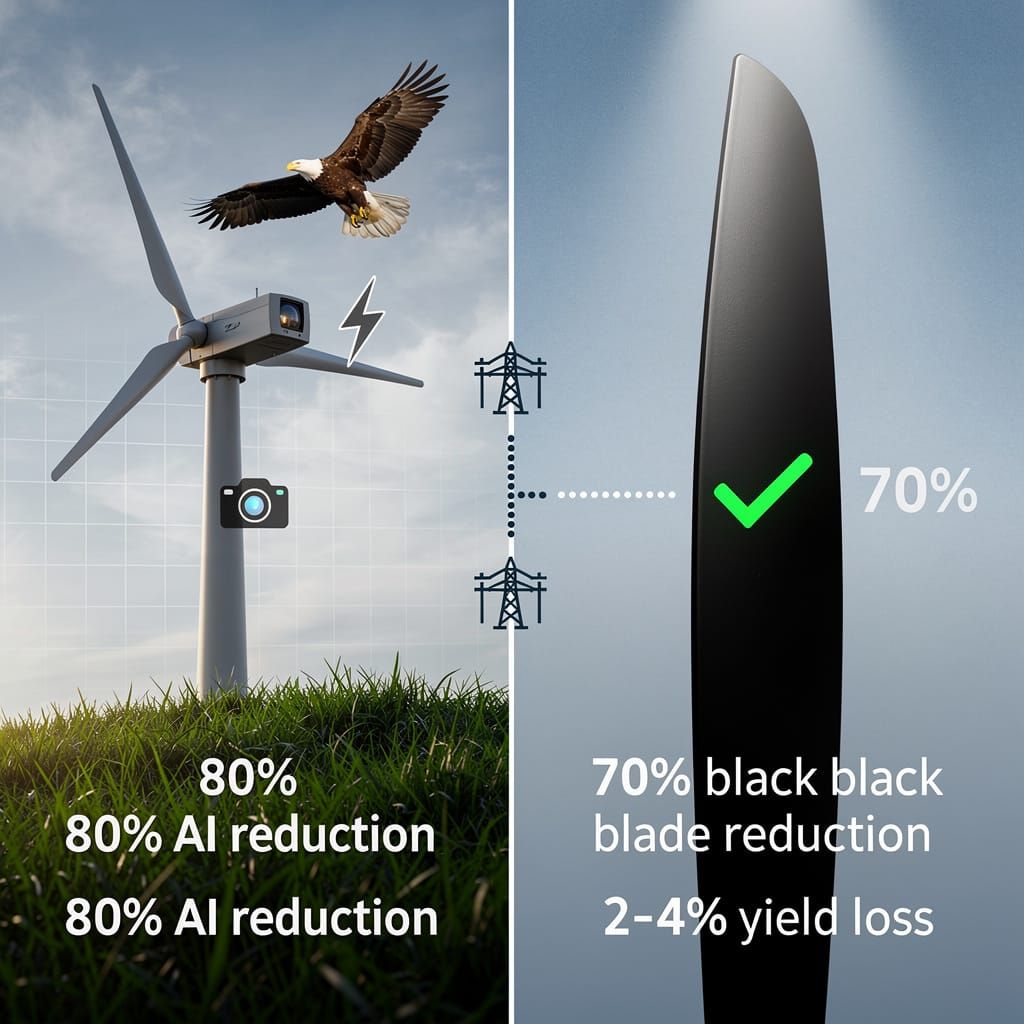
80% reduction in eagle strikes—but at what cost? 📉 This AI-driven shutdown system trades grid stability for conservation, causing unpredictable energy dips. Why use expensive, active halts when a single black blade cut deaths by 70%? 🦅 Wyoming energy firms — is reactive AI just a costly palliative?
Wyoming’s "Top of the World" wind project recently integrated IdentiFlight, an AI-powered camera system designed to detect golden eagles and trigger immediate turbine shutdowns. While developers frame this as a victory for ecosystem health, the deployment demonstrates a fundamental tension between carbon-neutral energy targets and wildlife conservation.
Does AI Solve the Collision Crisis?
The system replaces traditional radar—which often fails to distinguish species—with high-resolution computer vision. When an eagle enters a predefined danger zone, the AI initiates a pause in operation. This causal chain results in a measurable reduction in bird mortality but introduces systemic instability into power generation.
Operational Trade-offs:
- Reliability: Automated halts cause intermittent electricity yield losses.
- Compliance: Energy firms accept production dips to meet strict regulatory environmental standards.
- Performance: AI detection reduces false-positive shutdowns compared to radar but creates an unpredictable output variable for grid operators.
Projecting the Scalability Gap
Recent data suggests a divide between technical success and economic viability. While the "Top of the World" project claims an 80% reduction in collisions using AI eyesight, passive behavioral interventions prove more efficient. As of June 20, 2026, researchers from Vattenfall and RWE demonstrated that painting a single turbine blade black to eliminate "motion smear" reduced annual bird fatalities by 70% at the Smøla test site in Norway and the Eemshaven wind farm in the Netherlands. Similar trials led by PacifiCorp at Glenrock, Wyoming, aim to replicate this 70% reduction without requiring active power shutdowns.
- 2026 (Current): AI deployment achieves an 80% reduction in eagle strikes during trial windows.
- 2027–2028: Projected scaling across Wyoming sites; estimated 2–4% annual energy yield loss due to automated pauses.
- 2030: Integration of V2X-style avian alerts to coordinate multi-farm shutdowns, potentially reducing grid stability.
System Strengths:
- Precision: High-resolution identification isolates specific threats better than radar.
- Compliance: Direct alignment with migratory pathway protections.
System Weaknesses:
- Intermittency: Unscheduled halts complicate load balancing for grid operators.
- Cost: Higher hardware overhead and uptime loss per turbine compared to passive visual deterrents.
This intervention illustrates a critical dilemma in the green transition: the reliance on reactive technology to mitigate the physical footprint of renewable infrastructure. By transforming a biological risk into a technical efficiency loss, AI-driven shutdowns act as a palliative measure rather than a systemic solution to habitat encroachment.


Comments ()