5,500 Job Cuts: Microsoft Xbox Layoffs Risk Flagship Game Delays
TL;DR
- Zero-Hour Curation: Reddit Automates Startup Recruitment Amidst Rising AI Skepticism. Is automated recruitment destroying organic networking for startup founders and job seekers?
- 5,500 Job Cuts: Microsoft Xbox Restructuring Risks Flagship Game Delays. How will Microsoft's massive layoffs and shift toward AI impact the quality of future AAA gaming titles?
- 8% Labor Gap in Eastern Europe: Defense Shifts Trigger Economic Instability. Can migrant labor and older workers resolve the critical 8% employment deficit in Eastern Europe?
🤖 Algorithmic Curation in Niche Recruitment
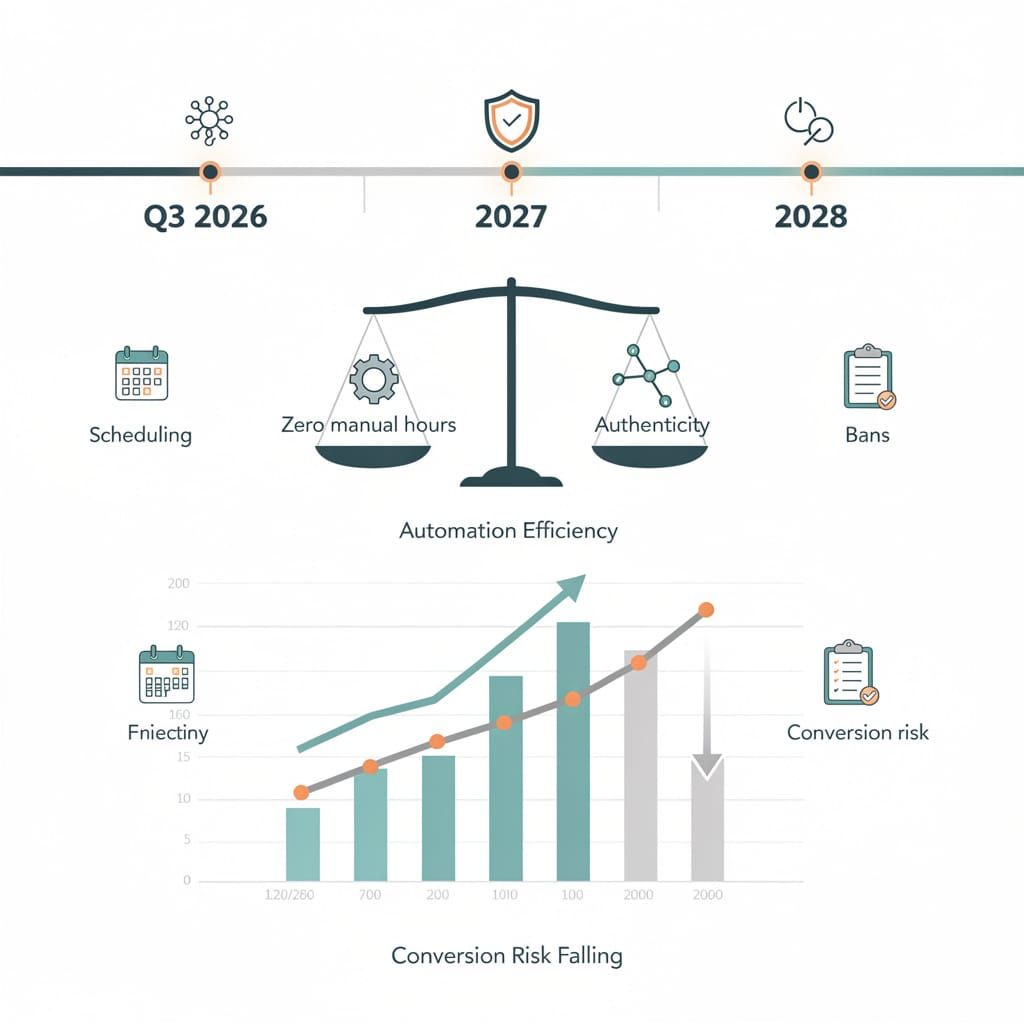
0 manual curation hours. This stark shift to automated job boards is like replacing a headhunter with a bot 🤖. While efficiency peaks, organic conversion is plummeting due to rapid bans. Efficiency vs. Authenticity? Startup founders — is automation killing your networking?
Reddit has implemented automated posting for its weekly startup job-board thread within the r/startups community. This shift replaces manual curation with structured templates, centralizing employer outreach and co-founder networking. By automating administrative overhead, the platform eliminates the need for continuous moderator intervention to maintain thread visibility.
How does automation affect community networking?
The transition to algorithmic scheduling results in a causal chain where reduced moderation friction enables consistent post availability. While this streamlines data exchange, recent data from June 2026 indicates that automated engagement patterns in job seeker communities often lead to rapid bans and limited conversion potential. This operational friction coincides with a broader digital job market evolution; on June 14, 2026, developers began releasing tools to automate job verification and resume tailoring to bypass the noise of automated spam.
This suggests a tension between operational efficiency and the authentic discussion values that drive Reddit's value. The platform's utility as AI infrastructure is highlighted by ongoing publisher disputes over unauthorized copyrighted text usage in Gemini development, as Google integrates high-volume human discourse into its model training.
Operational Efficiency: automated scheduling → zero manual curation hours → consistent thread cadence. Participation: niche-specific engagement → risk of rapid bans → limited organic conversion. User Experience: structured templates → standardized input → faster scanning for job seekers.
Future Trajectory of Automated Job Boards
- Q3 2026: Continued reliance on scheduled posts, though tempered by rising AI skepticism and record-low trust in recruitment algorithms among Gen-Z employees.
- 2027: Potential expansion of template-driven recruitment to adjacent tech-focused subreddits, provided systems can bypass increasing AI-detection tools.
- 2028: Integration of advanced filtering tools to manage automated entries and mitigate "mod culture stress" as platforms scale.
Comparison of Recruitment Methods
Manual Curation: High moderator effort → High quality control → Inconsistent timing. Automated Posting: Zero moderator effort → Standardized format → Risk of algorithmic bias/bans. Traditional Job Boards: High cost per post → Broad reach → High noise-to-signal ratio.
📉 The Cost of Optimization: Gaming's Talent Drain
5,500 jobs gone—a staggering blow equivalent to erasing several mid-sized studios overnight 📉. Microsoft prioritizes AI efficiency over human capital loss risks flagship delays like The Elder Scrolls VI. Profitability vs. Creativity? Xbox staff — how is this affecting your project timelines?
Microsoft’s strategic pivot in game development has triggered a series of workforce reductions across its ecosystem to preserve profitability amid rising AI competition. On July 1, 2026, the corporation announced layoffs affecting approximately 5,500 employees (~2.5% of its workforce), specifically targeting Xbox operations, support teams, and non-core functions. This downsizing follows a period of aggressive cost-cutting, including over 15,000 jobs cut between March and July 2025.
How Cost-Cutting Affects Production?
The restructuring indicates a causal chain where the removal of specialized roles leads to institutional knowledge loss and operational instability. Reports from July 6, 2026, confirm that Microsoft executed a further reduction of 3,200 jobs within the Xbox Commercial Business division alone, as part of a broader effort to address failed console margins.
This talent attrition, which includes the termination of veteran developers and producers across five studios—including Obsidian, Zenimax Online Studios, and id Software—poses a measurable risk to project continuity. Bethesda executives have noted that the loss of internal expertise increases dependency on contractors, which demonstrates a heightened risk of delays for flagship releases such as The Elder Scrolls VI.
Talent Loss: Loss of senior developers → diminished technical oversight and slower iteration cycles. Financial: Reduced headcount → immediate payroll savings but increased long-term production costs due to delays. Creative: Developer attrition → heightened risk exposure for flagship releases like The Elder Scrolls VI and Fallout 5.
What is the Long-Term Outlook?
The current trajectory indicates a shift toward a franchise-centric model, prioritizing revenue-generating flagship titles over smaller projects. This transition is further accelerated by AI integration, which enables task replacement and productivity gains that Microsoft projects will outweigh headcount bloat.
- 2026–2027: Phased reductions expected through Q4 2026; potential for further AI-driven role displacement within two years.
- Early 2028: Gradual stabilization as new production pipelines integrate leaner, automation-heavy team structures.
- Mid-2028: Projected resumption of major release cycles, provided technical debt is managed and core franchises are stabilized.
This shift reflects a broader software sector trend: the prioritization of efficiency gains over creative stability. While balance sheets show immediate optimization, the operational reality is a depleted human capital pool and a documented 12% dip in internal morale.
📉 The Labor Deficit: Strategic Depth and Economic Contraction
8% workforce gap! This critical deficit is like losing 1 in 12 essential workers across sectors 📉. Strategic military withdrawals and GDP drops are crippling operational safety. Can migrant quotas and workers aged 50+ bridge this void? Eastern Europe — how is your local industry coping?
Recent military adjustments and macroeconomic volatility in Eastern Europe demonstrate a direct correlation between defense positioning and civilian labor stability. The Kremlin's July 8 decision to withdraw "blue-flag" units beyond the strategic depth limit has triggered systemic ripples, exacerbating worker shortages in essential sectors and destabilizing regional operational continuity.
How Does Defense Strategy Impact Labor?
This withdrawal of strategic assets coincides with severe macroeconomic stress. While the Ukrainian government secured a $97.6B loan package from the EU and World Bank on June 23, the nation recorded a 0.6% GDP drop in Q1 2026. This combination of geopolitical realignment and GDP compression results in an acute human resource deficit.
Efforts to mitigate these gaps include the "Experience Matters" initiative for workers aged 50+ and a strategic push for migrant labor. Specifically, the Russian government announced visa quotas for Indian workers in 2026, supported by a labor mobility pact signed in December 2024. These measures indicate that domestic workforce gaps exceed 8%.
The construction sector faces a critical crisis, with unemployment among its workers jumping to 31.2% despite a broader need for 4.5 million personnel for reconstruction. This gap has prompted institutional responses, such as Sberbank's expansion into India to recruit skilled workforce pools.
This scarcity creates a causal chain compromising safety and output:
Operational: Workforce gaps >8% → increased absentee rates → reduced output quality. Safety: Absenteeism >3% → trigger of mandatory safety inspections → heightened incident frequency. Economic: GDP contraction → reduced capital for recruitment → deepened humanitarian gaps.
What is the Employment Outlook?
Defense fallbacks remain dependent on stable civilian employment. However, fragmented European defense cooperation—evidenced by Germany and France ending their joint fighter jet project on June 13—and NATO funding disputes indicate that systemic pressure on operational continuity persists.
- Short-term: Pressure on essential sectors remains high as labor gaps stay above 8%.
- Mid-term: Increased reliance on Indian migration and retraining of workers aged 55–70 to offset economic contraction.
- Long-term: Stabilization contingent upon aligning strategic depth limits with civilian workforce capacity.
Comparison of Labor Metrics
Pre-Withdrawal: Labor stability maintained within safety thresholds; absenteeism below 3%. Current State: 8% workforce gap; absenteeism exceeds 3% threshold; construction sector unemployment at 31.2%. Target State: Mobilization of migrant labor and older demographics to reduce gaps below 4% to restore output quality.



Comments ()