$2.8B Kling AI Funding: Kuaishou's High-Stakes Bet Against TikTok in China
TL;DR
- $2.8 Billion AI Infusion: Kling AI China Targets HKEX IPO to Challenge TikTok. Can Kling AI's $2.8 billion war chest actually break TikTok's global grip on video content?
- $85.7B SpaceX IPO: Trillionaire Musk's Wealth Surge Amid UK Political Chaos. Does Elon Musk's political interference in the UK jeopardize the long-term value of SpaceX's trillion-dollar valuation?
- 93% Price Crash: Flowkey and Skoove Trigger Ed-Tech War in Music Education. Would you trade a professional piano tutor for a lifetime app subscription if the cost dropped by 93%?
🤯 The $2.8 Billion AI Bet
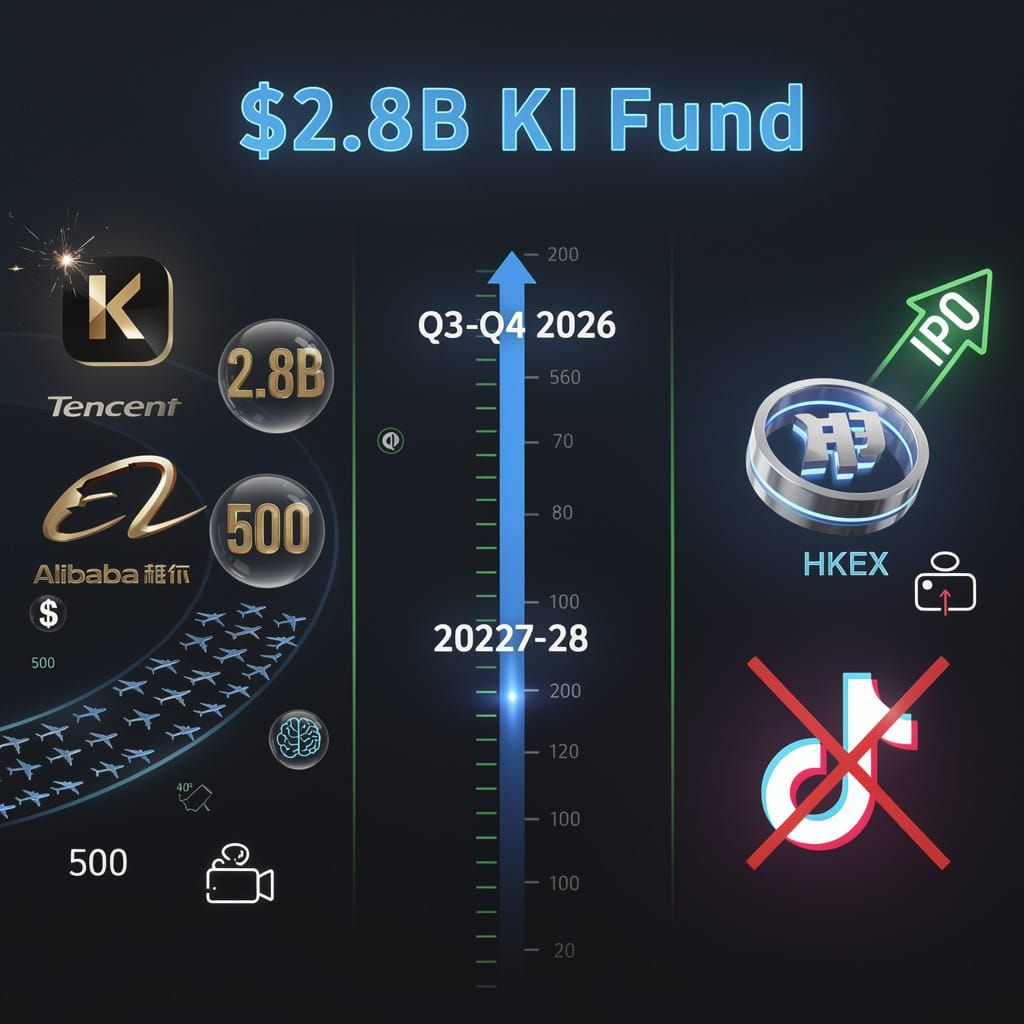
$2.8 Billion! 🤯 That's a staggering war chest for Kling AI—roughly the cost of 500 private jets. This massive injection from Tencent, Alibaba, and Baidu is a desperate bid to break TikTok's dominance. But can they monetize 60M creators before the cash burns out? 📉 Kuaishou's gamble — will your feed change forever?
Kuaishou just poured $2.8 billion into its war chest, and the market is leaning in. On July 3, 2026, the company closed a funding round for its subsidiary, Kling AI, pinning its valuation between $15 billion and $18 billion. While some call it a strategic pivot, the move is a calculated play to scale high-end video generation tools against TikTok’s global grip.
Why the sudden cash injection?
This isn't just about padding the bank account. The funding—led by a $200 million contribution from Tencent and supported by Alibaba and Baidu—signals a rare strategic alignment among Chinese tech giants. Kuaishou is leveraging this capital to spin off Kling AI for a listing on the Hong Kong exchange, moving ownership from 100% to approximately 68% to enable independence.
The immediate fallout:
- Market Reaction: Sentiment turned positive initially, though volatility persists as investors weigh the ROI against a 60-million-creator monetization challenge.
- Resource Allocation: Revenue has already grown sixfold year-over-year, fueling the need for scaled compute power.
- Equity Shift: The shift toward a spin-off prepares the entity for the HKEX, where AI firms like MiniMax and Zhipu AI have already seen debut surges of up to 113%.
What comes next?
The move follows a strict causal chain: secure strategic funding → accelerate AI productization → leverage Hong Kong's Chapter 18C pathway → execute IPO. With Hong Kong reclaiming its status as a top global IPO venue and accounting for over one-third of global fundraising in Q1 2026, the timing is precise.
- Q3-Q4 2026: Aggressive integration of Kling AI features into the main ecosystem to drive user retention.
- 2027-2028: Target for achieving profitability post-IPO.
Strategic Trade-offs:
- Strength: Massive liquidity from top-tier tech partners enables rapid iteration of generative models.
- Weakness: High dependency on scaling revenue faster than valuation decay.
- Competition: Directly counters ByteDance by weaponizing specialized video-gen capabilities.
- Risk: Success depends on navigating the regulatory approvals required for offshore listings.
🚀 The Trillion-Dollar Distraction
$85.7B raised! 🚀 Elon Musk hits trillionaire status, but it's a chaotic ride. While SpaceX IPOs, his political pivots are fueling riots in Belfast. 📉 Trading institutional trust for digital engagement? A risky bet for shareholders. UK residents, does this influence your view on SpaceX?
Elon Musk just hit trillionaire status, and he decided to celebrate by setting the UK's social fabric on fire. By June 17, 2026, Musk’s wealth peaked alongside a bizarre duality: SpaceX closed a massive IPO—raising $85.7 billion in proceeds—while Musk simultaneously pumped anti-immigration content into the digital bloodstream, including endorsements of the far-right 'Restore Britain' party.
Why Pivot to Politics Now?
The timing indicates a strategic diversion. As SpaceX's listing attracts peak media scrutiny, Musk's amplification of figures like Rupert Lowe and Tommy Robinson serves as a chaotic smokescreen. This behavior demonstrates a governance gap where founder activism overrides operational stability. While the IPO figures look stellar, the causal chain from platform amplification to real-world violence is stark. Following a knife attack on June 12, Musk’s reposts of radical slogans reached billions, coinciding with masked mobs in Belfast torching properties and burning out homes of non-white asylum seekers.
The Timeline of Chaos
- June 12, 2026: SpaceX debuts on Nasdaq (SPCX); simultaneous riots erupt in Belfast fueled by viral incitement.
- June 15, 2026: SpaceX IPO closes, raising $85.7B (though actual cash proceeds were lower due to underwriter cuts).
- June 16, 2026: Musk endorses 'Restore Britain' and posts about 'murderous migrants,' prompting the UK government to authorize water cannons in Belfast.
- June 17, 2026: Musk officially achieves trillionaire status via the SpaceX valuation surge.
The Cost of the Noise
The fallout isn't just social; it's operational. The politicization of trade and diplomatic friction, characterized by the UK government condemning Musk's "interference," has created tangible ripples in the aerospace sector.
Governance Impacts:
- Regulatory: Ofcom warns Big Tech of viral incitement risks; separate inquiries target Telegram's arson-detection protocols.
- Institutional: Massive valuation growth contrasts with systemic discrimination risks and the erosion of multiracial democracy.
- Financial: SpaceX reports $31 billion in annual revenue from Starlink and hardware, yet stock trades over $200, signaling potential overvaluation.
This pattern demonstrates that rapid financial scaling can easily eclipse business continuity. When a founder treats a global communications platform as a personal megaphone for agitators, the resulting reputational damage offsets the stock gains. Musk may be the first trillionaire, but he is trading institutional trust for digital engagement—a trade that rarely ends well for long-term shareholders.
📉 The Great Piano Price Crash
93% price drop! 🎹 A 5-year plan for $55.99 is basically free compared to standard rates. 📉 Flowkey is turning premium music education into a budget impulse buy. Sustainable growth or a race to the bottom? Ed-tech users — would you ditch a private tutor for a cheap app?
Ed-tech is currently treating piano lessons like a clearance rack at a summer sale. In a sudden pivot toward aggressive customer acquisition, Flowkey and its affiliate partners have slashed long-term subscription costs, turning high-ticket musical education into a budget-friendly impulse buy.
Who is winning the price war?
The strategy relies on price arbitrage rather than sustainable margin growth. By leveraging seasonal retail windows, Flowkey and platforms like StackSocial are undercutting traditional pricing to capture the "Prime Week" crowd. This creates a causal chain where deep discounts lower the barrier to entry, effectively redirecting students away from expensive private tutors toward scalable software.
The Deal Timeline
- June 15, 2026: StackSocial debuts a 3-year Classic plan at $59.99.
- June 18, 2026: Flowkey officially launches promotional pricing tiers.
- July 3, 2026: Competitor Skoove counters with a lifetime subscription at $104.99.
- July 4, 2026: Flowkey hits a floor, offering 5-year access for $55.99 via the JULY30 code.
This pricing trajectory demonstrates a race to the bottom. When a five-year commitment costs $55.99—a massive drop from the regular $899 rate—the value proposition shifts from "premium education" to "commodity software."
Market Dynamics
- Consumer Gain: Users save ~$843 by purchasing discounted education software vs. standard rates.
- Provider Gain: Lowered churn risk by locking users into multi-year commitments.
- Tutor Loss: Direct revenue diversion from individual instructors to SaaS platforms.
- Usage: Marginal spikes in active users, though long-term retention remains unproven.
While the current blitz enables rapid user growth, it sets a dangerous precedent for perceived value. If a 5-year plan is $55.99 today, users will likely ignore any future attempts to return to standard pricing. The data indicates a market reordering that favors accessibility over high-margin luxury, effectively democratizing the keyboard—one promo code at a time.

Comments ()