2.5 Million Retiring Owners: Small-Business Fire Sale Hits US Market Amid Lending Freeze
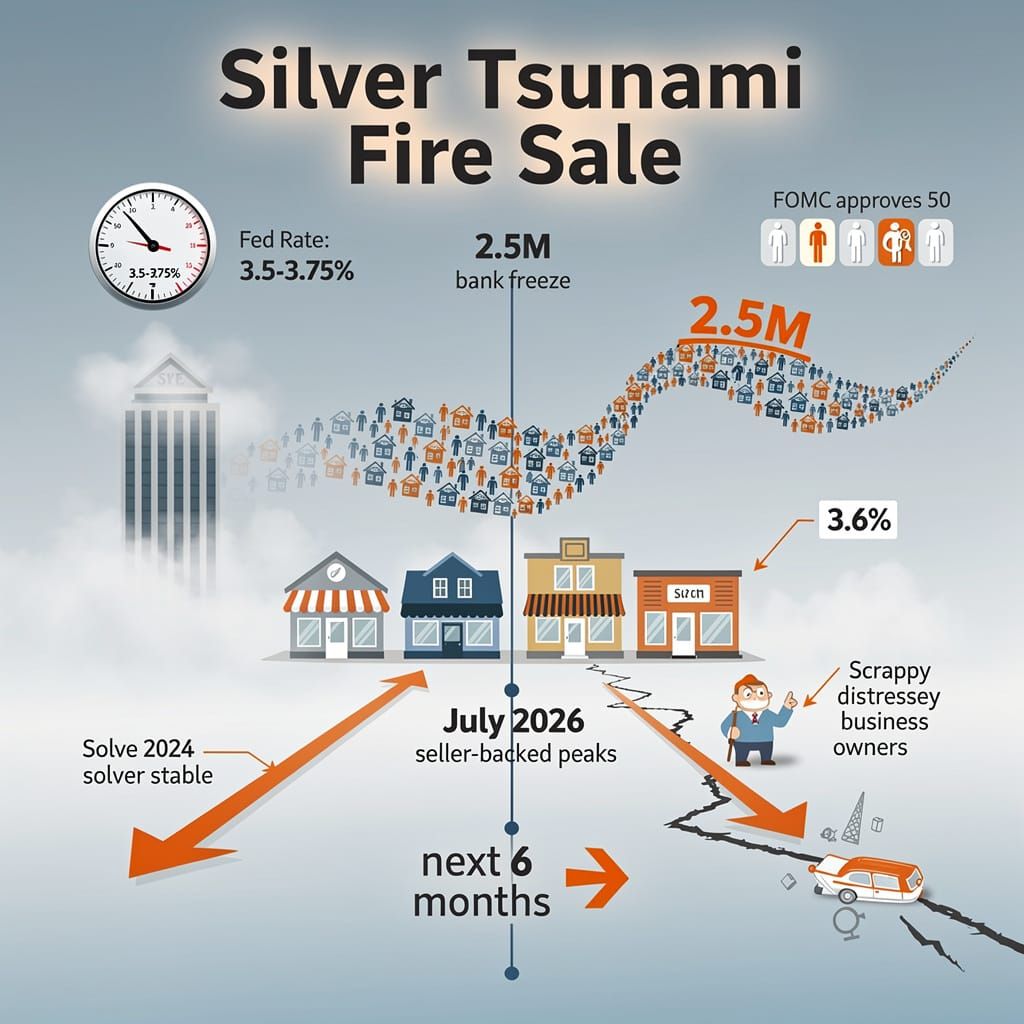
📉 The Silver Tsunami's Fire Sale
2.5 million retiring owners are sparking a total fire sale! 📉 That's like every small town losing its main street anchors at once. 🏢 Banks are ghosting buyers, forcing a shift to seller-backed loans. Scrappy vs. Solvent: who wins? Young founders—are you ready to buy a legacy with zero cash?
Baby boomers are exiting the boardroom in droves, and they aren't leaving the keys to their kids. With approximately 2.5 million business owners retiring, a vacuum has opened in the small-to-mid-market sector, turning the entrepreneurial landscape into a giant game of musical chairs played against a backdrop of macroeconomic volatility.
Why is the bank saying no?
Traditional financing has become a fortress. By October 9, 2024, first-time buyers hit a wall as financial institutions imposed stricter lending criteria and raised approval thresholds. Banks began viewing small-business acquisitions as high-risk, citing limited collateral and thin credit profiles, which made conventional loans nearly impossible for those without massive liquidity.
To bypass this, a new breed of agile operators is using "seller-backed loans." Instead of begging a bank, the buyer pays the retiring owner over time using the company's own future profits. This mechanism, alongside earn-out clauses and asset-based purchases, enables zero-upfront-cost transactions, effectively turning the seller into the bank.
The Transition Timeline
- Oct 2024: Conventional lending freezes; first-time buyers face systemic rejection due to tight credit benchmarks.
- July 2026: Seller-backed financing peaks as entrepreneurs acquire underperforming firms amid urgent selling motives.
- Next 6 Months: Projected rise in strategic exits utilizing profit-sharing to hedge risk and modernize legacy firms.
What happens to the assets?
This shift isn't just about who owns the deed; it's about how value moves. While the 2024 era was defined by a tight 5.5% rate environment, the landscape has evolved. As of June 17, 2026, the Federal Reserve held the federal funds rate between 3.5% and 3.75%. However, with 50% of FOMC members signaling potential hikes and inflation expectations rising to 3.6%, the "cheap money" dream is dead.
The Trade-offs
- Opportunity: High volume of distressed or "tired" assets available via non-cash acquisition methods.
- Risk: High-interest exposure and personal liability amplify financial risk for the new owners.
- Employment: Rapid leadership turnover preserves community jobs but forces abrupt shifts in operational scale.
- Finance: Tightening tax rules (IMRAA, NIIT) raise the burden on investment income, incentivizing lean restructuring.
As the retirement wave accelerates, the market favors the scrappy over the solvent. Those who can structure a deal without a traditional bank statement are currently capturing the legacy of the boomer era.

Comments ()