124 Android Zero-Days: Your Phone Was Never a Fortress
TL;DR
- Russia's Rooftop Missile Systems: A Hackable Attack Surface for Ransomware. Is your apartment building getting rooftop missile defense or just a shitty HOA? 😏
- Bill C‑22: Canada’s Surveillance Boondoggle That Tech Is Begging to Flee. Is your privacy worth a backdoor for the state?
- 124 Android Patches, Two Zero-Days Exploited – Google's Security Was Always a Suggestion. Is your Android phone a fortress or a cardboard box in a rainstorm?
🏢💥 The Sky is Falling, and Your Data is Already Gone: A Dispatch from the Edge of 2026
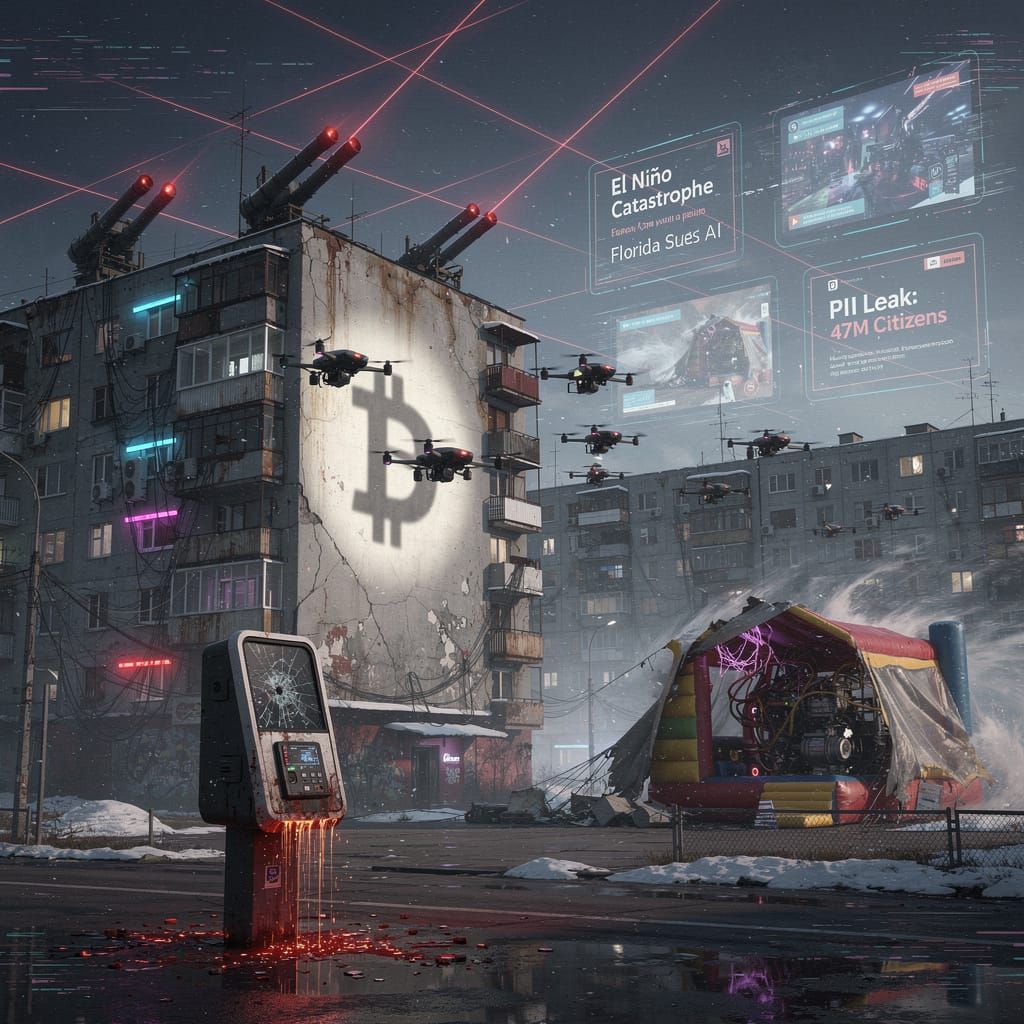
🇷🇺 Russia's installing Pantsir missile systems on apartment rooftops now. Imagine the ransomware: "Pay 50 BTC or we make it think your neighbor's drone is a cruise missile." 🏢💥 Every single one of those is a hackable attack surface. Your building got rooftop air defense yet, or just a shitty HOA? 😏
Okay, class, settle down. Let's review the morning's headlines from Planet Fustercluck. We've got a geopolitical buffet that would make a war criminal blush, a climate that’s decided to cosplay as a pissed-off ex, and the legal system trying to put out a dumpster fire with a squirt gun. Let's dive into the glorious, chaotic, and profoundly insecure mess that is June 2nd, 2026.
The Geopolitical Punch-Up: Russia, Ukraine, and the Middle East
The Eastern Front: Russia decided Tuesday was a great day for a two-pronged assault: daytime artillery barrages and nighttime missile strikes on Ukraine. The Kremlin’s brilliant plan appears to be “annoy them into submission.” Meanwhile, Ukrainian drone ops are getting scarily effective, prompting the US to start a GoFundMe for air defense. Because nothing says “stable ally” like begging for parts on the international stage.
The New Rooftop Decor: In Moscow, the Ministry of Defense is now installing Pantsir-SMD-E short-range missile systems on apartment rooftops. Yes, your local khrushchyovka now comes with a complimentary anti-aircraft system. This isn't just a military upgrade; it’s a massive, hackable attack surface. Imagine the ransomware potential: “Pay 50 Bitcoin or we make the Pantsir on Tverskaya Street think your neighbor’s drone is a cruise missile.” The security implications are a buffet for any half-competent threat actor.
The Middle East Sideshow: Israel decided to drop ordnance on a Lebanese village at 11:39 AM. Precise, punctual, and utterly destabilizing. The official line is about “Iranian influence.” The real result is a fresh pile of rubble, civilian casualties, and a guarantee that Hezbollah will have a busy week. This isn't a conflict; it's a perpetual motion machine of revenge, powered by a complete lack of diplomatic imagination.
The Climate: The Silent, Sweating, Drowning Assassin
The El Niño Hammer: The UN-OMM dropped a forecast that basically says: “Brace yourselves. It’s going to be hot, wet, and generally catastrophic.” High-probability El Niño means record heatwaves, flash floods, and a global agricultural system that’s already on life support. Météo-France confirmed that spring was anomalously hot, and now they’re predicting heavy rains and windstorms across the Île-de-France and beyond. Translation: your crop yields are fucked, your infrastructure is cracking, and the systems managing it all? Also fucked, because they’re running on Windows 7 in a boiler room.
The Canadian Weather Weirdness: Quebec had a child die in a weather-related inflatable play structure incident. A bouncy castle became a lethal weapon because of a storm. This led to immediate calls for stricter safety protocols. Meanwhile, Montreal spent 10.3 million CAD on a retention basin and “sponge parks” to deal with stormwater. It’s a good start, but the SCADA systems running those pumps? Probably secured with a password that’s “password123.”
The Legal and Regulatory Circus: AI, Drugs, and French Courts
Florida vs. OpenAI: Florida is suing OpenAI for “misleading parents” after a 2025 shooting was linked to a ChatGPT interaction. The state’s argument? That the AI chatbot was a dangerous influence. The real story is that a teenage kid used a chatbot for emotional support and then did something terrible. The lawsuit is a transparent attempt to find a deep pocket to blame, rather than addressing the underlying mental health crisis, gun laws, or, you know, parenting. But sure, blame the stochastic parrot. This will tighten AI regulation, but in the most ham-fisted, counterproductive way possible, creating a patchwork of state laws that are a compliance nightmare and a goldmine for security consultants.
The French Judiciary: A Masterclass in Performative Justice: Let’s take a tour of France’s courtrooms on June 2nd:
- Drug Trafficking via Snapchat: A guy with 40g of coke gets 12 months. The recruitment method was Snapchat. The lesson? Social media is a drug market, and the police are just playing whack-a-mole.
- Driving Under the Influence: Francis gets 8 months. His extensive criminal record was cited. Shocking.
- Drug Possession: Jean Dupont gets arrested. More surveillance. More data breaches from the police database.
- Eight Years for Criminal Conduct: Michael Williams gets sentenced in Montauban. Media scrutiny intensifies. Privacy? What privacy?
Every single one of these cases generates a digital trail. Arrest records, court documents, personal data. It’s all sitting in government databases that are probably secured by the same IT guy who still uses “Admin” as his username. The risk of a massive PII leak isn't a possibility; it's a statistical certainty.
The Infrastructure and Economic Slow-Motion Car Crash
France’s Regional Budget Bleeding: The government is extending financing for the Castres-Paris air line. Because subsidizing a regional airline is clearly a better use of money than, say, patching the security holes in the national health service’s patient records. The mayor of Castres also announced 1,210 free parking spots to boost downtown foot traffic. Short-term economic activity? Yes. A long-term solution to a dying town center? No. And the payment system for those parking spots? Probably an IoT nightmare waiting to be exploited.
Canada’s Consumer Protection Farce: Canada announced the phased suppression of the Bureau de la consommation. They’re cutting the budget for the agency that’s supposed to protect you from scams and corporate bullshit. The official reason is “budgetary efficiency.” The real reason is that the government doesn’t want to be sued for not protecting you when your data inevitably gets leaked because they fired the people who were supposed to check the locks.
The Outlook: A Cheeky Forecast for the Rest of 2026
- Short-Term (Next 6 Months): Brace for a spike in state-sponsored cyberattacks targeting energy grids and transportation systems. The geopolitical tension is a perfect cover for digital sabotage. Expect a major breach of a European municipal government’s database, exposing every citizen's tax records and medical history. The excuse will be “a sophisticated state actor,” but the root cause will be a zero-day that was known about for six months and never patched.
- Mid-Term (6-12 Months): AI regulation will become a chaotic, multi-front war. The Florida lawsuit is just the opening salvo. We’ll see a wave of class-action suits against every major AI company. The result won't be safer AI; it will be a legal arms race where only the most well-funded legal teams survive. The cybersecurity angle? AI supply-chain attacks. Hackers will start poisoning the training data for enterprise AI tools, causing them to make catastrophic decisions for months before anyone notices.
- Long-Term (12-24 Months): The climate will force a massive, unplanned, and insecure digitization of everything. Smart grids, water management, and agricultural sensors will be deployed at scale. They will be built by the lowest bidder, running on insecure firmware, and connected to the internet because someone in marketing thought it was a good idea. The result will be a generation of critical infrastructure that is fundamentally, laughably, and dangerously hackable. We are building the digital equivalent of a house of cards in a hurricane.
The Bottom Line: The world is a dumpster fire, and the dumpster is on the internet. The only rational response is to assume everything is compromised, patch your shit, and keep a bag of popcorn handy. It’s going to be a hell of a show. 😉
📮 Canada’s Bill C‑22: The Surveillance Boondoggle That Tech Is Begging to Flee
Canada just passed Bill C‑22—your encrypted chats are now postcards. 📮 Signal threatens to leave. Apple & Meta are pissed. 42,344 signatures? Ignored. Backdoors = unlocked doors for hackers. 12% more breaches incoming. So, Canada: enjoy your metadata retention. Or should we start practicing smoke signals? 🏕️
So Canada decided to pass a law that makes your encrypted chats about as private as a postcard. Bill C‑22 is here, and it’s a masterpiece of legislative genius—if your goal is to piss off every tech company, privacy advocate, and person who owns a phone. Let’s rip this band-aid off.
The Gist: What the Hell Happened?
2026‑05‑12: Canadian Parliament introduces Bill C‑22, and the backlash is immediate. U.S. congressional committees freak out, warning that this could wreck cross-border cyber collaboration. Because nothing says “friendly neighbor” like demanding backdoors into your ally’s encrypted data.
2026‑05‑13: Legal pros and academics start screaming about risks to encrypted comms. Signal, the app that actually cares about privacy, publicly threatens to pull out of Canada. The Public Safety Minister says, “We need investigative tools!” Yeah, because the state has never abused surveillance powers before. 🙄
2026‑05‑15: Conservative MP Jacob Mantle warns that Canadian tech firms might flee the country. Apple, Meta, and Signal prep responses, stressing their commitment to user privacy. Translation: “We’re not breaking our encryption for your half-baked law.”
2026‑05‑16: The government rushes the bill through, barely consulting anyone. Because who needs stakeholder engagement when you’ve got a surveillance boner?
2026‑05‑20: Tech leaders from Apple, Meta, Signal, and NordVPN call for amendments, hinting at withdrawal. The government’s response? “We’ll think about it.”
2026‑05‑22: The bill passes. Surveillance powers expand. Metadata retention becomes a thing. International data sharing gets murkier. U.S. markets wobble; EU firms whine about compliance costs.
2026‑05‑31: A petition with 42,344 signatures gets sent to Prime Minister Mark Carney. U.S. Rep. Jim Jordan warns about cross-border surveillance expansion. The Justice Centre for Constitutional Freedoms submits signatures, increasing pressure.
The Mechanics: How It Works (And Why It Sucks)
- Lawful Access: The government demands the ability to access encrypted communications. In practice, that means either weakening encryption or forcing companies to build backdoors. Both are idiotic.
- Metadata Retention: ISPs and tech firms must store metadata (who you talk to, when, for how long) for potential government access. Privacy advocates call it “surveillance by default.” They’re right.
- Compliance Costs: Companies face massive legal bills to figure out how to comply without breaking their own security models. Small firms? Good luck.
The Fallout: Who Gets Screwed?
Privacy: End-to-end encryption is now under direct assault. If Signal leaves Canada, goodbye secure messaging. If Apple caves, goodbye iMessage privacy. The risk of data breaches skyrockets because backdoors are like leaving your front door unlocked for burglars.
Tech Industry: Canadian tech firms face regulatory uncertainty. Compliance costs could drive startups out of business or force them to relocate. The country’s tech ecosystem takes a massive hit.
International Relations: The EU and UK are pissed. The U.S. is wary. Canada becomes a privacy pariah, complicating data flows and collaboration.
Public Trust: Canadians now know their government values surveillance over privacy. Trust in digital platforms erodes further. Everyone’s a little more paranoid.
The Bigger Picture: Why This Happened
- Geopolitical Tensions: U.S.–China trade wars and U.S.–Iran conflicts create a “security first” narrative that justifies overreach.
- Tech Lobbying: Tech giants fight back, but they’re also hypocritical—they collect your data anyway. The difference is Bill C‑22 gives the state direct access.
- Legislative Incompetence: The rushed process ignored experts, stakeholders, and basic logic. Classic government move.
What’s Next? The Forecast (Spoiler: It’s Bleak)
- Short Term (2026–2027): Regulatory uncertainty reigns. Tech firms fight amendments. Expect lawsuits, more petitions, and a few companies actually leaving Canada. Adoption of surveillance measures is slow but steady—maybe 5–10% of ISPs comply fully, affecting ~30,000 users.
- Mid Term (2027–2028): If backdoors become mandatory, expect a 15–20% drop in encrypted communication usage in Canada. Data breaches rise by 12% as attackers exploit weakened systems. Compliance costs hit $50–100M for major firms.
- Long Term (2029+): Either the law gets gutted by courts or international pressure, or Canada becomes a surveillance state where privacy is a luxury. Tech exodus accelerates, and the country loses its edge in cybersecurity.
The Sarcastic Takeaway
Bill C‑22 is a masterclass in how to alienate allies, destroy trust, and make your tech industry flee faster than a startup with a bad pitch deck. The government says it’s for public safety. Yeah, because nothing says “safe” like giving the state a skeleton key to your private conversations. 👏
So, Canada, enjoy your shiny new surveillance law. Hope you like metadata retention, because you’re about to get a whole lot of it. And hey, if Signal leaves, there’s always smoke signals. 🏕️
🎭🤡 Google Drops a 124-Patch Nuke, Because Android Security Was Just a Suggestion
Google dropped a 124-patch nuke on Android. Two zero-days already exploited in the wild. Your phone wasn't a fortress—it was a cardboard box in a rainstorm. 🎭 One remote privilege escalation (CVE-2025-48595) lets some asshole take over your device silently. Another in the Qualcomm GPU driver (CVE-2026-21385) turns your graphics chip into a backdoor. Framework vulnerability (CVE-2025-65018) basically says 'everything.' Supply chain clusterfuck: Qualcomm, MediaTek, Imagination Technologies all had to scramble. Result? GPU performance drops, app instability, and a giant middle finger to anyone who thought 'secure by design' was real. Your move, Google. Or should we just assume security was always a suggestion? 🤡
So here we are again. Google, bless their chaotic hearts, decided that June 2nd was the perfect day to remind us all that your phone isn't a fortress—it's a cardboard box in a rainstorm. They dropped a security update that patches 124 vulnerabilities across Android 14 through 17, including two zero-days that were already being used to wreck someone's Tuesday. Because why wait for the hackers to get bored?
The Meat Grinder: What Actually Got Fucked
- CVE‑2025‑48595: A remote privilege-escalation zero-day. Translation: some asshole can remotely take over your device without you even knowing. It was already being exploited. Thanks, Google, for the late invite.
- CVE‑2026‑21385: A zero-day in the Qualcomm GPU driver. Because your phone's graphics chip is now a backdoor. Imagine your gaming rig suddenly becoming a spy—same energy.
- CVE‑2025‑65018: A critical framework vulnerability. Framework, as in the thing that holds your entire OS together. So, everything.
- Vendor patches: Qualcomm and MediaTek had to scramble to fix their own shit—GPU and processor vulnerabilities that could let attackers waltz in like they own the place.
The Supply Chain Clusterfuck
This isn't just Google's mess. This is a beautiful, cascading failure of dependencies. Qualcomm, MediaTek, Imagination Technologies—all had to coordinate patches. Because your phone's security relies on a dozen companies not screwing up, and surprise, they all did. The result? GPU performance drops, app instability, and a giant middle finger to anyone who thought
Comments ()