$1.75M Grant, Zero Customers: Space Angel's Green Spaceport Gamble
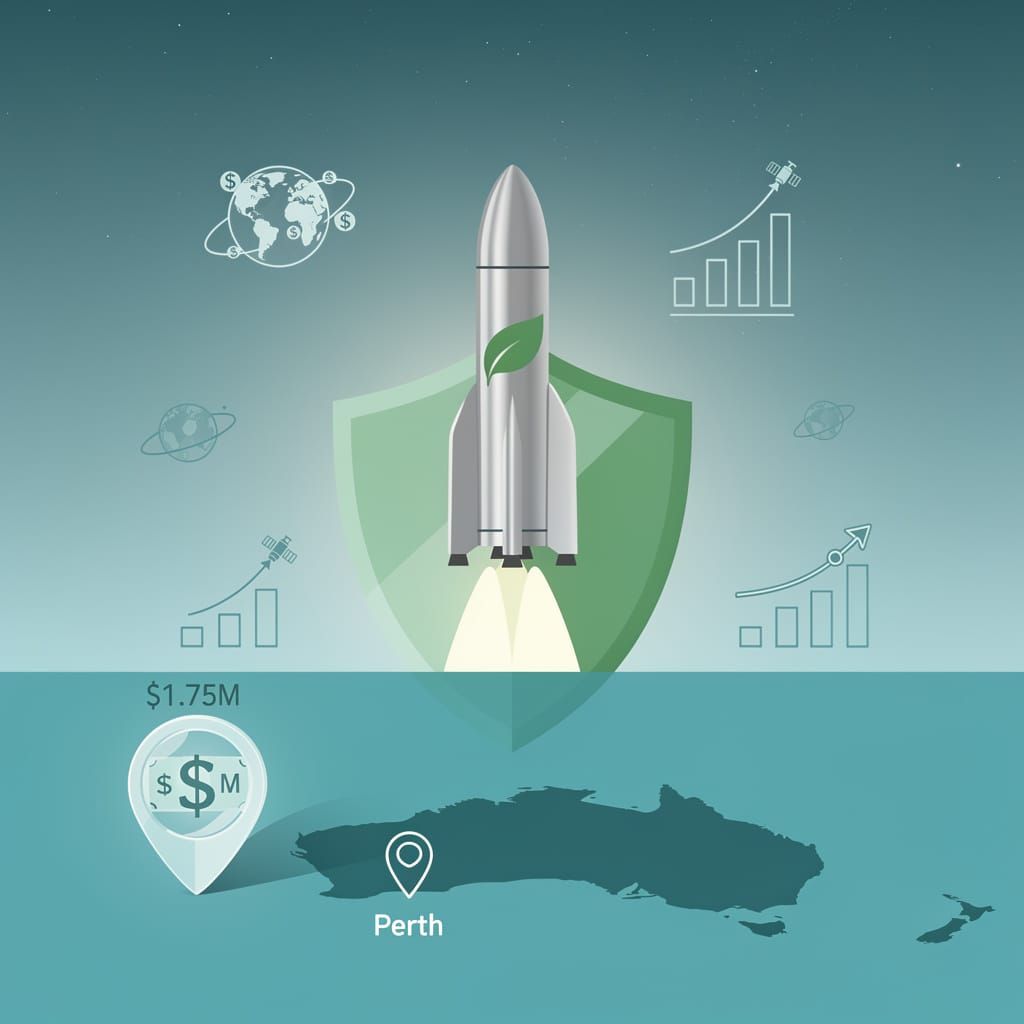
🚀 Space Angel Scores $1.75M – WA Bets on Green Spaceports
Space Angel just snagged a $1.75M grant from WA — that's 87.5% of the entire $2M Made in WA fund, for green spaceport studies 🚢🚀 No launch customers. No launch pad. No launch window. But hey, Perth has green ambitions and matching dollars. WA's betting on eco-friendly rockets like it built LNG terminals: public cash, private ops, green gloss. Meanwhile, Starfighters Space in Florida just bagged $17.5M and joined the Russell 3000. One of these is building a real space business. The other is doing feasibility studies. Perth startup, you've got the grant — but where are the paying customers?
Perth woke up on August 25 to news that Space Angel, a Western Australian startup with ambitions of launching rockets from the coast, had bagged a $1.75 million Spaceport Establishment Support Grant. The money comes via the $2 million Made in WA initiative the state government announced—$1.75 million earmarked for green spaceports, matched dollar-for-dollar by Space Angel itself.
Here's the deal: Western Australia wants a slice of the commercial spaceflight pie (the global space economy hit US$429 billion in 2025, up 3%, with analysts at UBS projecting US$1.3 trillion by 2040). It also wants to look eco-friendly doing it. Space Angel's pitch involves coastwise launch operations paired with low-emission mission profiles—something between a rocket company and a marine logistics play. The $1.75 million grant covers early-stage site assessment, regulatory groundwork, and engineering studies for sustainable maritime launch infrastructure. CEO Ram Kuppusamy points to WA's strengths in resources, engineering, logistics, and technology as the foundation.
Why this matters (and why it's weird)
- New jobs, old problems: Minister Stephen Dawson talked up high-skilled job creation and investment attraction. But WA's labor market is already tight—talent will need to come from somewhere, likely poached from mining or defense sectors.
- Government money meets private ambition: The grant came from an open February 2025 competition run by the Labor government. Space Angel was selected over other applicants to assess sites including Christmas Island, Eucla, and Albany.
- Green is the hook, launch is the product: "Green spaceport" sounds nice, but the core economic driver remains commercial launch capability. Sustainability is the wrapper, not the payload.
The catch
No clear trajectory emerges from the data. Space Angel has cash, a matching grant, and government interest—but no confirmed launch customers, no secured launch window, and no operational pad. Meanwhile, over in Florida, Starfighters Space just secured a $17.5 million investment, joined the Russell 3000, and is pushing its STarlaunch air-launch system capable of cutting costs by ~$38 million per mission versus traditional methods. That's the kind of anchored competition WA is up against. The $1.75 million funds assessment, not construction. Actual spaceport build-out will require multiples of that. Space Angel targets first modular launches using Green Earth modules by Q4 2026—but that timeline depends entirely on further capital and regulatory clearance under the AUSSCOR program.
Bottom line
WA is trying to build a space industry the way it built LNG terminals: with public money, private operators, and a green gloss. Space Angel now holds a ticket to play. Whether it launches or just burns cash on feasibility studies is the question nobody's answered yet.


Comments ()