Zero Passenger Verification: Waymo Robotaxis in San Mateo Expose Critical Cabin Security Gaps
TL;DR
- Below 20% Adoption: 3D-Printed Gearing Fails Reliability Tests in FRC Robotics. Can 3D-printed polymer gears ever truly replace metal standards in high-stress robotic competitions like FRC?
- Zero Cabin Oversight: Waymo San Mateo Incident Highlights Critical Autonomy Safety Gap. Does the lack of in-cabin monitoring make robotaxis a public safety liability in your city?
⚙️ The Friction of Innovation: 3D-Printed Gearing in FRC
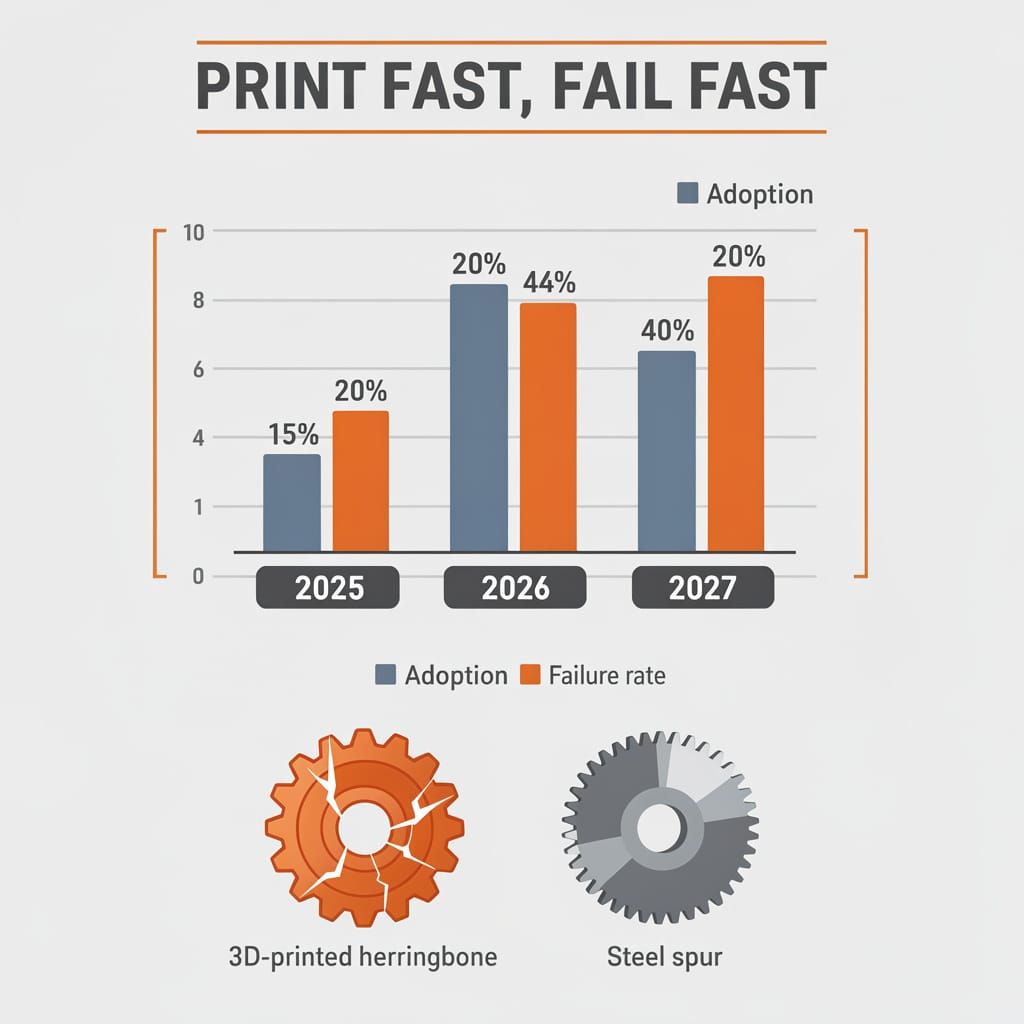
Below 20% adoption: the failure rate of 3D-printed gears in FRC is staggering. Material deficits outweigh theoretical geometry ⚙️. Rapid wear in PETG-CF forces a retreat to metal standards. Speed of printing ≠ reliability in competition. FRC teams—would you trust a plastic gear in a final match?
Recent technical debates within FIRST Robotics Competition (FRC) teams indicate a growing tension between additive fabrication and mechanical reliability. As teams experiment with 3D-printed herringbone gears to replace traditional spur gears, the results demonstrate a gap between theoretical modularity and operational consistency.
Does Novelty Equal Performance?
Herringbone gears, often produced via 3D printing and OnShape designs, aim to reduce backlash and axial thrust while increasing load capacity. However, 2026 field data indicates these theoretical gains are frequently neutralized by material failure. While some teams report success with high RPM performance using optimized PLA settings, others—specifically those utilizing PETG-CF bevel gears on indexers—documented rapid wear requiring replacements every few matches.
Competition dynamics further marginalize these innovations. Most teams prioritize immediate deployment, favoring off-the-shelf 20dp spur gears for their interoperability via standardized catalogs. The causal chain is evident: while 3D printing enables the creation of specialized components like reverser mechanisms or telescope climbers, the high failure rate of certain polymers—such as the frequent failures reported with PLA-CF pulleys—reinforces the dominance of established metal standards.
Adoption Trends
- 2025–2026: Experimentation with PLA, PETG-CF, and PA-CF for niche components; high variance in durability based on print settings.
- Q3 2026: Stabilization of standard spur gears as the reliability benchmark for high-stress cycles.
- 2027 Projection: Niche adoption of 3D-printed gears for primary drive systems remains below 20%, limited by the necessity of functional success over additive experimentation.
Comparison: Gear Implementations
- Spur Gears: High availability → interoperable catalogs → predictable deployment.
- Herringbone (3D): Improved load distribution → inconsistent material durability → unsuitable for primary drive replacement.
- Industrial Helical: Superior strength → prohibitive custom fabrication costs → inaccessible for most FRC budgets.
This trend demonstrates a critical reality in robotic mechanics: the ability to print a part quickly does not equate to the ability to deploy it reliably. The shift toward metal replacements before major events like the World Championships indicates that theoretical geometry cannot overcome the physical deficits of additive polymers in high-stress applications. Consequently, standardized gearsets remain the dominant choice for teams prioritizing competition viability.
🚨 The San Mateo Incident: Autonomy as an Unsupervised Sanctuary
0 biometric barriers. A shocking void in Waymo's cabin security is essentially an open invitation for chaos 🚨. This lack of oversight turns robotaxis into unsupervised sanctuaries for minors. Tech maturity ≠ public safety. Is your city ready for high-tech liabilities on its streets?
The July 7, 2026 arrest of two 15-year-olds in San Mateo, California, exposes a fundamental flaw in the operational logic of robotaxis. Police intervened after a Waymo vehicle was reported for carrying intoxicated passengers who fired Orbeez projectile toys out of the vehicle. While Waymo claims proactive monitoring via customer feedback, the lack of an immediate system-generated response demonstrates a failure in real-time cabin oversight.
Is Autonomy Just a Lack of Supervision?
The causal chain is evident: the absence of a human driver enables unsupervised access for minors, which results in the vehicle being used for underage substance use and public disturbance. The incident required officers to approach the vehicle with firearms due to safety concerns over potential property damage. This indicates that current sensor suites prioritize external navigation over internal security, leaving the cabin as a blind spot for behavioral anomalies.
Safety Gaps:
- Verification: Zero biometric or age-gate barriers → enables unauthorized minor access.
- Detection: Lack of in-cabin behavioral analytics → fails to identify alcohol consumption or projectile weapon use.
- Response: Ineffective remote intervention → necessitates high-risk police deployment with firearms.
The Regulatory Vacuum
This event correlates with a broader trend where autonomous fleets are perceived as targets for mischief. The inability of AI to predict human volatility proves that technological maturity in SLAM and path planning does not equal operational maturity in public safety. While the US government recently reduced hardware friction by updating FMVSS No. 135 (June 25–30, 2026) to allow the removal of manual brake pedals, this deregulation redistributes risk onto algorithms without addressing the human element inside the car.
Projected Regulatory Shifts:
- Q4 2026: Implementation of mandatory ID verification for ride-hailing apps to block unsupervised teen usage.
- 2027: Requirements for internal AI-driven cabin monitoring to detect intoxication or prohibited items.
- 2028: Federal mandates for "kill-switch" protocols allowing authorities to lock vehicles remotely during criminal activity.
Until Waymo and its competitors are now operating against a backdrop of tightening state oversight. California has introduced 10 new compliance rules requiring real-time data submission and rapid emergency response, where non-compliance triggers automatic DMV penalties. Until these fleets integrate strict passenger validation and active internal surveillance, robotaxis remain high-tech liabilities—mobile, unsupervised spaces for illicit activity.


Comments ()