75% AI Compute Monopoly: US Rejects Binding Rules Amid Vatican Ethical Push
TL;DR
- Zero-Error AI Coding: Pearl Launches BESSER Skills to Standardize AI Generation via B-UML. Will structural validation via B-UML eliminate logical errors in AI-generated code?
- 75% Compute Monopoly: Vatican and UN Clash with U.S. over Global AI Governance. Can ethical frameworks like the Vatican's Magnifica Humanitas effectively regulate a global AI compute monopoly?
- $14B Acquisition Power: Meta Muse Image Rollout in Global Social Apps Sparks GDPR Privacy Crisis. Does Meta's default extraction of Instagram profiles for AI training violate individual digital identity rights?
🛠️ Standardizing AI Code Generation via Structural Validation
Zero-defect intent: BESSER Skills replaces probabilistic coding with B-UML structural validation 🛠️. It forces AI to map architecture before syntax, eliminating logical drift. Formal models vs. token prediction? Software engineers—will this end your debugging nightmares?
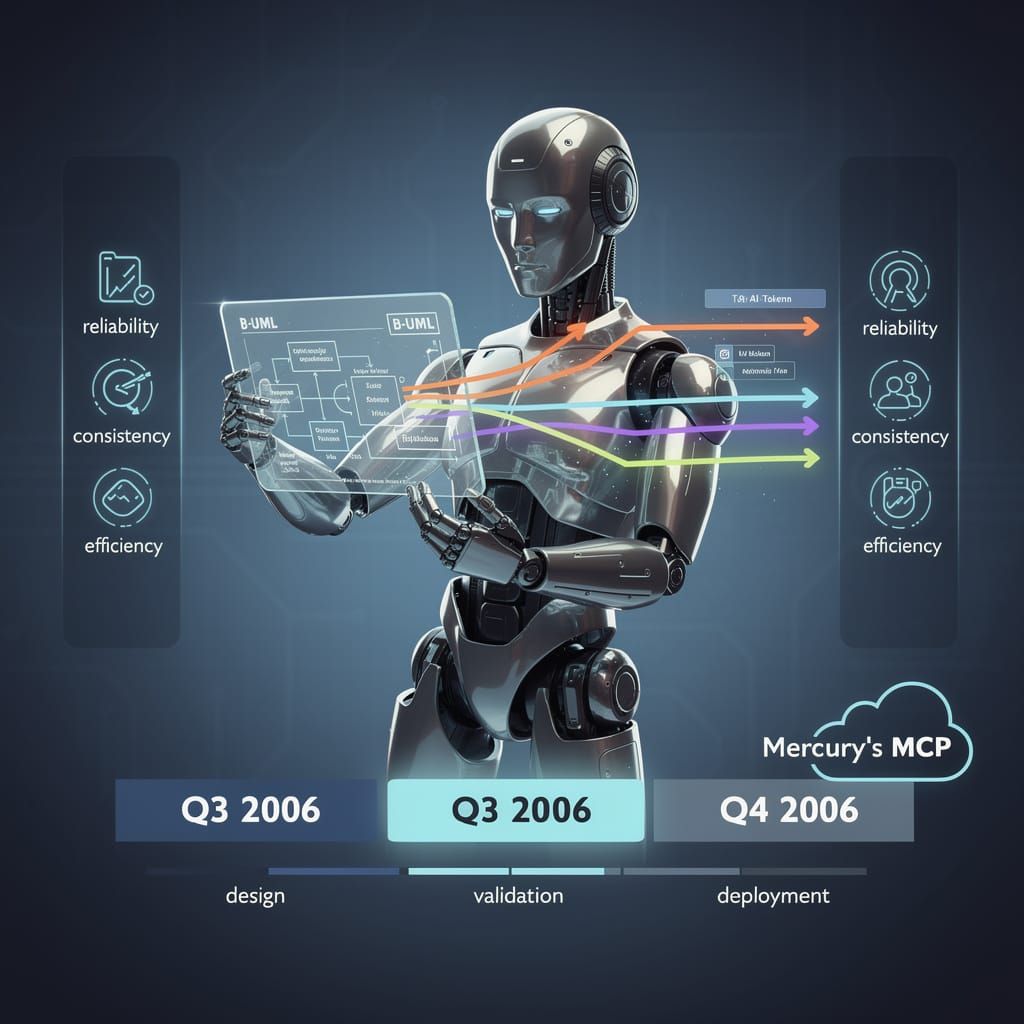
On July 8, 2026, Pearl launched BESSER Skills, a framework that integrates B-UML (Behavioral Unified Modeling Language) models into AI coding agents. This transition shifts AI generation from direct text-to-code synthesis to a validated structural phase, requiring agents to adopt a formal model before producing executable code.
How BESSER Skills Alters Code Generation?
Traditional AI coding assistants rely on probabilistic token prediction, which frequently results in logical inconsistencies. BESSER Skills introduces a validation layer that forces agents to adhere to predefined structural programming models. This mechanism enables agents to map intent to a B-UML model first, ensuring architectural soundness before syntax is written. This approach ensures consistency across diverse outputs, including database schemas, SQL scripts, and web framework components.
Simultaneously, Mercer Corporation introduced Model Context Protocol (MCP) support for Agentic Low-Code, granting agents direct interaction with BESSER's model-driven engine. This integration allows agents to access the MDE platform in real-time, enabling end-to-end automation where changes to a single B-UML model propagate automatically to all related artifacts, reducing the gap between high-level architecture and implementation.
Performance Gains
- Reliability: Implementation of structural validation reduces errors caused by ad-hoc code generation.
- Consistency: B-UML adoption standardizes collaborative code uniformity across distributed engineering teams.
- Efficiency: Automatic synchronization between live code and models reduces documentation drift and cognitive load.
Future Integration Timeline
- Q3 2026: Expansion of B-UML libraries to include specialized modules for embedded systems and cloud-native architectures.
- Q4 2026: Broad automation standardization as BESSER Skills integrates with major CI/CD pipelines to automate structural audits.
Sectoral Impacts
- Software Development: Accelerated transition from design documents to production code via structural mapping.
- Engineering Documentation: Real-time synchronization between executable code and visual B-UML models.
- Quality Assurance: Shift in testing focus from syntax debugging to structural logic validation.
⚠️ The Moral Pivot: Vatican Intervention in AI Governance
75% of AI compute power is held by one nation, creating a staggering imbalance ⚠️ equivalent to a global monopoly on intelligence. While the Vatican pushes for human dignity, the U.S. rejects binding rules. Can ethics override raw power? Global workers — how does this impact your job security?
On May 25, 2026, the regulatory trajectory of artificial intelligence shifted with the release of the encyclical Magnifica Humanitas, commanded by Pope Leo XIV. The document focuses on the tension between human agency and machine autonomy, specifically addressing workers' rights and criticizing the use of AI in warfare. This moral framework transitions the discourse from technical optimization to ethical governance, formalizing institutional oversight through the Interdicasterial Commission on Artificial Intelligence.
Why Now?
A combination of rapid AI advancement and labor displacement concerns accelerated the demand for institutional oversight. This moral urgency emerged as technical breakthroughs outpaced enforcement mechanisms. The Vatican's intervention seeks to bridge this governance gap, referencing Rerum Novarum to protect human dignity and providing guidance for Catholic institutions on AI usage during a period of intense digital transformation.
Quantifying the Impact
The introduction of these ethical mandates correlates with shifts in global deployment and compliance metrics:
Reliability: Integration of human-centric governance structures targets the gap between executive trust and employee understanding to address the "human problem" in the AI boom. Compliance: The encyclical's focus on ethics coincides with a restrictive European environment. EU firms face heightened pressure as the European Commission implements the Tech Sovereignty Package—including a €264 billion annual shift toward open-source projects—to reduce reliance on U.S.-controlled technology. Diplomacy: The UN Global Dialogue on AI Governance, convened in Geneva on July 6, 2026, leveraged multi-stakeholder standards from 193 member states. However, the summit revealed a systemic imbalance, as the U.S., controlling 75% of AI compute power, rejected binding rules despite scientific consensus that AI lacks technical guarantees to prevent catastrophic harm.
The Governance Gap
While the Vatican shapes the moral trajectory, a disparity exists between ethical directives and legislative execution:
Strengths: Rapid mobilization of global public opinion; alignment of multi-national ethical frameworks. Weaknesses: Lack of internal enforcement capacity; reliance on voluntary institutional adoption. Risk: Political inertia. The EU AI Act's implementation is fragmented; while transparency mandates for generative AI are immediate, amendments on June 20, 2026, delayed high-risk rule enforcement to late 2027 and 2028 to ease pressure on heavy industry.
Forecast
- Q3 2026: Mandatory transparency for generative AI platforms (ChatGPT, Gemini, Claude) takes full effect; non-consensual deepfake generation is banned by December 2.
- Late 2026: Increased market volatility as firms navigate EU penalties reaching 7% of global annual turnover.
- 2027–2028: Implementation of high-risk AI conformity assessments and stricter product-specific rules.
💸 The Cost of Synthesis: Meta’s Muse Image Rollout
14 billion dollars billion spent to automate your likeness 💸 That is equivalent to buying 28 Boeing 747s just to train on your public photos. Meta's Muse Image now extracts Instagram profiles by default. Efficiency or identity theft? Creators — is your digital identity still yours?
Meta launched Muse Image on July 7, 2026, integrating an autonomous image generator across Instagram, WhatsApp, Facebook, and Messenger. Developed by Meta Superintelligence Labs and powered by the Muse Spark LLM, the model enables image creation using public Instagram profiles. This strategic deployment follows a $14 billion acquisition of Scale AI in 2025, aimed at accelerating commercial viability and enhancing multi-reference composition fidelity.
How Does Muse Image Scale?
The system operates by automatically extracting public Instagram photos to train its generative architecture, enabling the production of high-fidelity portraits. This integration is enabled by default; users must manually adjust sharing preferences to opt out. This mechanism redefines public visibility as a basis for unauthorized facial replication, creating a causal chain of digital identity erosion where strangers can generate likenesses of users without consent.
Financial: Q1 2026 revenue reached $56.31B (+33%), though aggressive AI CAPEX of $125–$145B has pressured margins and triggered stock volatility. Legal: Non-consensual data collection patterns have resulted in a 34% increase in GDPR-related complaints compared to baseline levels. Privacy: The shift toward automatic profile extraction increases risks of impersonation and brand damage for creators and influencers. Technical: Integration with Advantage+ Creative enables the immediate transition of synthetic assets into commercial advertising tools.
What are the Projected Outcomes?
The deployment demonstrates a prioritization of data harvesting over consent frameworks. While early adopters report high engagement—with AI tools reaching 10 million weekly conversations—the rollout mirrors a pattern of deploying features with delayed opt-in options. Current trajectories indicate that generative integration will persist until legislative mandates enforce stricter protocols.
- Q3 2026: Expansion into advertising and video tools, increasing synthetic media volume and exposure risks.
- 2027: Anticipated regulatory rulings on biometric scraping, potentially forcing a transition to licensed dataset models.
- 2028: Projection of a bifurcated market between "verified human" content and autonomous AI synthesis.
This rollout leverages a massive existing user base to close the technical gap with experimental labs. However, the resulting uncertainty among creators highlights a growing tension between corporate AI infrastructure and individual intellectual property.


Comments ()