537k Unitree GD01 Price Hike: Robotics Scaling Crisis in US Markets
TL;DR
- $537K Unitree Launch: Robotics Precision Gap Hits Commercial Reality. Is the shift from industrial robotics to niche gaming accessories a sign of systemic innovation failure in automation?
- Lunar Biocontainment: Robotic Vaults Shift Bio-Risk to Moon Amid Governance Failures. Can autonomous robotic systems effectively replace international bio-security policy for extraterrestrial samples?
- 0% Interior Monitoring: Waymo's Behavioral Blind Spot Risks Minor Safety Across US Cities. Can autonomous vehicle algorithms effectively police passenger behavior to prevent safety hazards for minors?
📉 The Precision Gap: From Robotics Certification to Dice Rollers
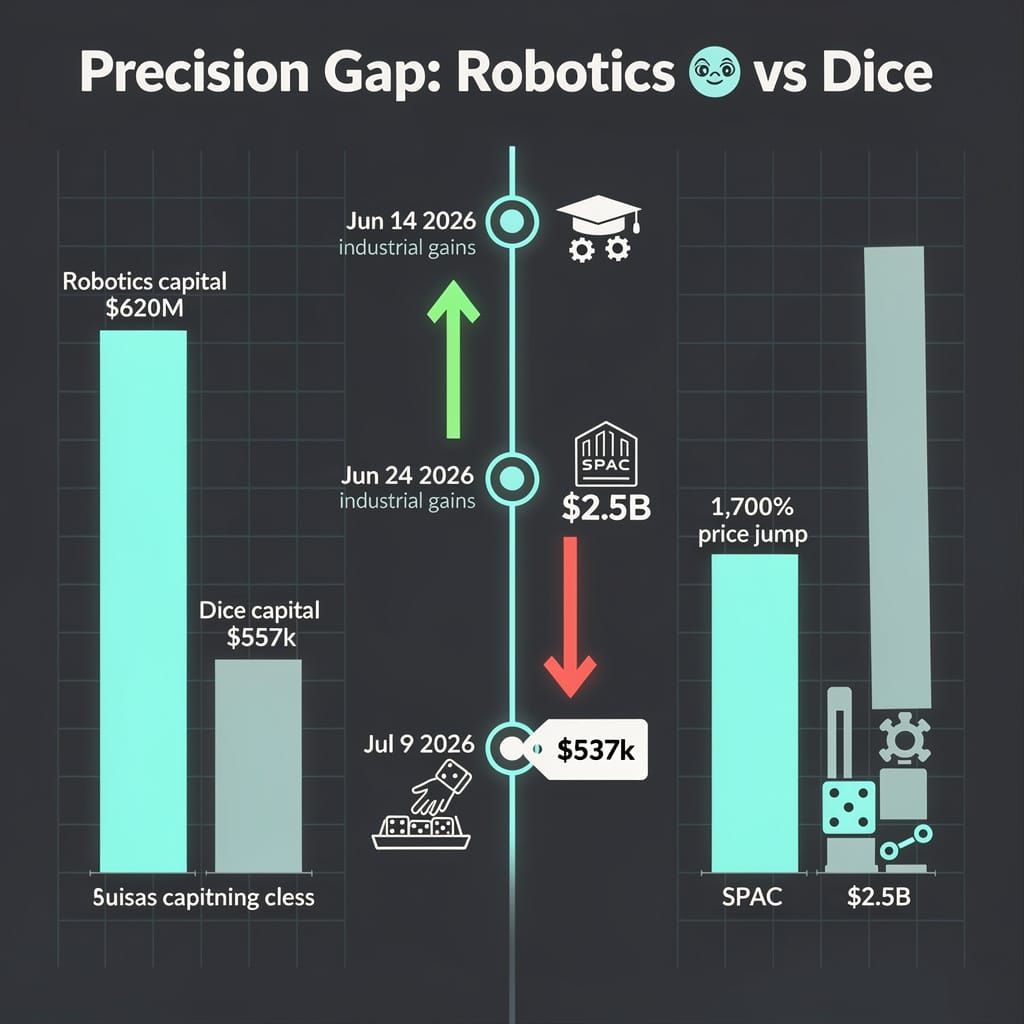
537,000 USD for a Unitree GD01—a staggering 1,700% leap from mass-market hopes 📉. Technical mastery is being wasted on gaming dice rollers while real automation costs soar. Is the robotics boom just a high-priced hobby? High-end buyers — is this actually scalable?
The transition from high-level technical training to the production of gaming accessories suggests a disconnect between industrial robotics capabilities and market application. While the completion of advanced robotics training modules on June 14, 2026, signaled a peak in technical mastery, the subsequent launch of "Ride Or Dye" premium dice roller accessories on July 9, 2026, indicates a pivot toward low-complexity consumer goods. This shift occurs as the industry scales actual utility; for instance, Agility Robotics completed a $2.5B SPAC merger with Churchill Capital Corp XI on June 24, 2026, raising $620M to scale Digit v5 production.
Does Technical Mastery Scale to Commercial Value?
The application of mechanical precision to dice rollers demonstrates a causal chain where specialized robotics knowledge enables the creation of high-tolerance hobbyist tools. However, this represents a significant underutilization of hardware compared to the current industrial trajectory. While the draft suggested a sub-$30,000 humanoid launch by Unitree on June 24, actual data indicates the Unitree GD01 launched at a $537,000 price point, positioning it as a high-end robotic mobility system rather than a mass-market commodity.
Current Trajectory
- June 14, 2026: Completion of advanced robotics modules; simultaneous industry shift to finite state machines for point-to-point autonomy.
- June 24, 2026: Agility Robotics completes $2.5B SPAC merger, securing >$300M in Digit v5 orders for enterprise deployment.
- July 9, 2026: Launch of Ride Or Dye accessories, converting technical skill into a gaming franchise.
- Mid-July 2026: Projected plateau in innovation pending new scalable application targets.
Operational Trade-offs Technical Depth: Advanced certification → high capability but low commercial utility when applied to niche gaming peripherals. Market Reach: Gaming accessories → high engagement but low complexity compared to the $620M capital infusion seen by Agility Robotics. Community Impact: Social inclusion → reduced isolation but dependent on hobbyist trends rather than the systemic automation seen at Automate 2026.
This pivot demonstrates that while cross-functional synergy exists between robotics and gaming, premium dice rollers fail to leverage the full potential of Robot Operating Systems (ROS) or the agentic toolkits being released for systems like Reachy Mini. The reliance on "tangible community value" masks a lack of industrial momentum. Unless these enthusiast networks bridge the gap to scalable solutions, the current innovation cycle remains confined to the periphery of the automation sector.
🚨 The Lunar Vault: Outsourcing Bio-Risk to the Moon
100% robotic dependency for bio-security. This alarming shift to lunar vaults replaces human policy with algorithms 🤖. It's a hardware patch for governance failure. If a robot fails in a vacuum, who intervenes? NASA & McGill — is outsourcing our survival to a Moon-bot a real strategy?
On June 19, 2026, NASA scientist Frederick I. Moxley and McGill professor Anthony Ricciardi published a policy paper advocating for a sealed robotic biocontainment facility on the Moon. The proposal, further detailed in a July 8 study in Ambio, suggests screening extraterrestrial samples via an airlock-sealed lunar vault before they reach Earth. This mechanism diverts imports to autonomous lunar hardware to prevent the uncontrolled release of microbes into the terrestrial atmosphere, citing the 2004 Genesis mission capsule crash in Utah as a historical precedent for containment failure.
Can Robotics Replace Bio-Security Policy?
The system utilizes autonomous robots for transport and pre-analysis, triggering remote containment if sensors detect viable life forms. This architecture shifts critical decision-making from policymakers to algorithms mid-mission. While the proposal leverages the broader lunar ambitions of the Artemis program—which recently extended its crewed timeline to 2027—the reliance on autonomous triage suggests a hardware patch for a governance failure.
Risk Profile:
- Biological: Extremophile persistence → potential global ecological collapse and biodiversity loss via invasive alien species.
- Logistical: Hardware failure → increased contamination risk during mission failure in a vacuum.
- Regulatory: Policy lag → reliance on technical failsafes while international regulations trail rapid exploration efforts.
The Path to Permanent Isolation
The project demonstrates a preference for remote containment over atmospheric risk management, yet its viability depends on funding and the stability of the current space race.
- 2026–2027: Deployment of robotic precursor hardware and sterile lunar infrastructure.
- 2030s: Projected operational status for a permanent lunar biocontainment hub.
Comparison of Containment Models:
- Terrestrial (Current): High population proximity → extreme risk of global spillover if containment fails.
- Lunar (Proposed): High latency/distance → reduces immediate risk but increases dependency on robotic autonomy.
The shift to a lunar quarantine indicates that current Earth-based protocols are insufficient for xenobiology returns. However, outsourcing quarantine to a robotic vault does not eliminate risk; it relocates the point of failure to an environment where human intervention is impossible. This technical reliance is particularly precarious given that the proposed system must function without immediate oversight, effectively treating the Moon as a biological firewall for a planet with outdated planetary protection policies.
🚨 The Supervision Gap: Waymo’s Behavioral Blind Spot
0 real-time detections of hazardous riders. Alarming gaps in Waymo's cabin safety are effectively creating unsupervised mobile zones for minors 🚨. External navigation is prioritized over internal chaos. Is software enough to police passengers? Minors in the US — who is actually in control?
Incidents between June 24 and July 3, 2026, demonstrate a persistent failure in the behavioral control systems of Waymo’s autonomous fleet. While the technology prioritizes external navigation, it remains oblivious to passenger conduct, effectively creating unsupervised mobile zones for minors.
Can Algorithms Police Passengers?
On June 24, 2026, reports from Santa Monica identified children sitting on the open window sills of a moving Waymo vehicle. This pattern of hazardous behavior persisted through July 3, with reports of teenage passengers poking their heads out of robotaxi windows across Phoenix, Austin, and Atlanta. These events follow a May 29, 2026, update where Waymo introduced an AI-driven facial recognition age-check protocol for solo passengers—a move that prompted immediate privacy debates and scrutiny from users like Seema Amble.
Despite these protocol updates, the system fails in real-time. On May 27, 2026, an 8–9-year-old adolescent was observed tapping the window of a robotaxi in Santa Monica; the vehicle continued its journey without halting, even after an onlooker alerted Waymo customer service. These failures indicate that sensor suites optimized for obstacle avoidance cannot detect or mitigate internal misconduct.
Systemic Failures:
- Monitoring: Zero real-time detection of hazardous passenger positioning or interior instability.
- Response: Absence of an automated escalatory framework to stop the vehicle based on rider behavior.
- Access: Gaps in AI age-validation allowing unaccompanied minors to initiate trips.
The Cost of Passive Safety
Waymo’s reliance on passenger adherence to user agreements reveals a critical dependency. The lack of active cabin surveillance means the system cannot preempt risks, resulting in a reactive safety cycle. This technical gap is compounded by data utility issues; in a separate San Francisco theft investigation, police found Waymo vehicle data provided little usable evidence, highlighting a disconnect between data collection and actionable safety/security utility.
Impact Metrics:
- Operational: Repeated hazardous behavior reports across four major U.S. markets.
- Public Trust: Heightened perception of AVs as "lawless" spaces for unsupervised youth.
- Liability: Increased risk of passenger-induced accidents that software cannot preempt.
Regulatory Trajectory
As behavioral lapses persist, regulatory focus is shifting from driving performance to cabin security and rider compliance.
- Q3 2026: Intensified scrutiny of cabin security and potential mandates for AI-driven anomaly detection.
- Q4 2026: Implementation of stricter age-gating and mandatory adult presence for riders under 18.
- 2027: Integration of interior biological or behavioral sensors linked to emergency braking.
Waymo’s safety commitments ring hollow when the system cannot distinguish between a routine commute and a safety hazard. Until autonomous vehicles manage the people inside as effectively as the roads around them, they remain a liability to urban public safety.


Comments ()