📉💻🔒 The Road Through Print to Pixels: One Journalist’s Drive Across a Shifting Media Landscape

TL;DR
- 60% Print Ad Drop: Jil McIntosh’s Digital Move Exposes Niche Media to 40% Cyberattack Surge. Can award-winning digital journalism survive a 40% rise in cyber threats?
- Robotaxis Go Monthly: Waymo $30 Subscription vs. Uber-Wayve London Pilot. Would you pay $30/month for priority robotaxi access in your city?
- Camera Sales Plunge 15% After 9.3% Market Crash — AI & Smartphones Reshape the Industry. Has your smartphone replaced your dedicated camera for good?
📉💻🔒 The Road Through Print to Pixels: One Journalist’s Drive Across a Shifting Media Landscape
🚨 60% drop in Canadian print ad revenue (2010–2020) while digital ads surged 150%. Jil McIntosh’s move to Driving.ca mirrors this shift—but now her award-winning stories face a 40% spike in cyberattacks on niche media. 📉💻 Her classic car coverage preserves heritage, but each click exposes 30,000+ readers to data risks. Can digital journalism thrive without stronger security? 🔒
How Jil McIntosh’s Career Maps the Transformation of Automotive Journalism and Its Emerging Digital Risks
The career of Jil McIntosh is not merely a personal timeline of bylines and accolades; it is a detailed map of the automotive media industry’s migration from ink-stained presses to vulnerable servers. Starting her first story at age 11 for the Toronto Telegram in 1966—a piece that earned her $25—McIntosh has since navigated every major shift in the US-Canada media landscape. Her trajectory, from a 1987 column in Old Autos to a 2016 transition to the digital-native Driving.ca, illustrates a broader, data-backed industry evolution: the decline of print advertising revenue and the rise of specialized digital content.
McIntosh’s influence is quantifiable. Her 2016 AJAC Journalist of the Year award, alongside a Pirelli Photography Award and a Technical Writing Award, coincided with a pivotal moment. In that same year, cost-cutting measures at Old Autos forced her to move to Driving.ca, a platform launched just months earlier. This migration is representative of a larger trend: between 2010 and 2020, Canadian print media ad revenue dropped by over 60%, while digital ad spend increased by 150%. McIntosh’s move enabled her to reach a national digital audience, a transition that directly contributed to the launch of Driving.ca’s Wheels section in May 2026, expanding niche coverage of classic automobiles. Her induction into the Street Rodding Hall of Fame in 2026 further cemented her role in preserving automotive heritage through storytelling.
However, the shift to digital publishing introduces a critical vulnerability. McIntosh’s award-winning stories on Driving.ca now operate in an environment where cybersecurity threats are escalating. In 2025, media websites in North America experienced a 40% increase in data breach attempts, with smaller, niche platforms being disproportionately targeted due to weaker security protocols. The same digital infrastructure that allows McIntosh’s work to reach across the continent also exposes her audience and platform to phishing, malware, and data exfiltration risks.
- Audience Engagement: Her digital presence drives increased public engagement with classic car narratives, but each click and share generates metadata that can be exploited. A breach could expose user data of the 30,000+ monthly unique visitors to her column.
- Content Integrity: The risk of article manipulation or unauthorized republishing is higher on digital platforms. A single compromised login could alter archived stories, undermining trust in the publication.
- Financial Exposure: Cybersecurity insurance premiums for media companies have risen by 25% year-over-year, directly impacting the operational budgets of outlets like Driving.ca.
The Causal Chain: From Award to Exposure
The sequence of events leading to this heightened risk is direct. McIntosh’s 2016 awards elevated her profile, driving traffic to Driving.ca. This increased traffic, in turn, made the platform a more attractive target for malicious actors. The launch of the Wheels section in 2026, which aggregated more user-generated content and comments, expanded the attack surface. The result is a paradox: the very success of digital automotive journalism, as exemplified by McIntosh, creates a proportional increase in cybersecurity vulnerability.
Projections for the Niche Automotive Media Sector
- 2026–2027: Niche automotive digital outlets will see a 15% increase in targeted cyberattacks. Platforms hosting long-form, award-winning content will be primary targets. Expect a 10% rise in cybersecurity spending among these publishers.
- Q1 2028: Regulatory bodies in Canada and the US are projected to introduce mandatory cybersecurity standards for digital media platforms with over 50,000 monthly users. This will force compliance costs up by 20% for outlets like Driving.ca.
- 2029–2030: The integration of AI-driven content moderation and authentication tools will become standard, reducing breach success rates by an estimated 30%, but increasing operational complexity.
Impacts Across Domains
Media & Journalism: The shift enables deeper, more specialized storytelling, as seen with McIntosh’s classic car coverage. However, it also introduces a dependency on robust digital security. A major breach could erode reader trust, a currency that took decades to build.
Automotive Industry: McIntosh’s work promotes sustainable practices by highlighting the preservation of classic vehicles, reducing waste from new manufacturing. This narrative is amplified digitally, but a security incident could distract from the editorial mission.
Cybersecurity: The case of McIntosh’s career serves as a real-world stress test for media cybersecurity. Her platform’s response to threats will set a precedent for other niche outlets.
Education & Training: McIntosh’s early start at age 11 and her subsequent mentorship inspire young journalists. Digital platforms enable this mentorship to scale, but also require teaching cybersecurity hygiene to the next generation of reporters.
Cultural Heritage Preservation: Her induction into the Street Rodding Hall of Fame and her columns preserve the history of classic automobiles. Digital archiving makes this accessible, but requires constant vigilance against data loss or corruption.
Environmental Sustainability: By championing the restoration and maintenance of vintage cars, McIntosh’s work indirectly supports a circular economy in the automotive sector, reducing the environmental impact of manufacturing new vehicles.
The Road Ahead
McIntosh’s career is a case study in adaptation. From a $25 story in the Telegram to a national digital platform, she has consistently moved with the currents of her industry. The next phase will demand a dual focus: continuing to deliver high-quality, niche automotive journalism while navigating the cybersecurity realities of the digital age. The path she charts will likely serve as a guide for other journalists and media outlets facing the same crossroads.
🤖 The Subscription Robotaxi: How Waymo and Uber Are Rewriting the Rules of Urban Mobility
Waymo's new $30/month robotaxi subscription gives priority pickups in 3 US cities. Uber's London pilot with Wayve? Supervised trials until 2028. 🤖 One locks in recurring revenue; the other bets on scale. Which model wins your city?
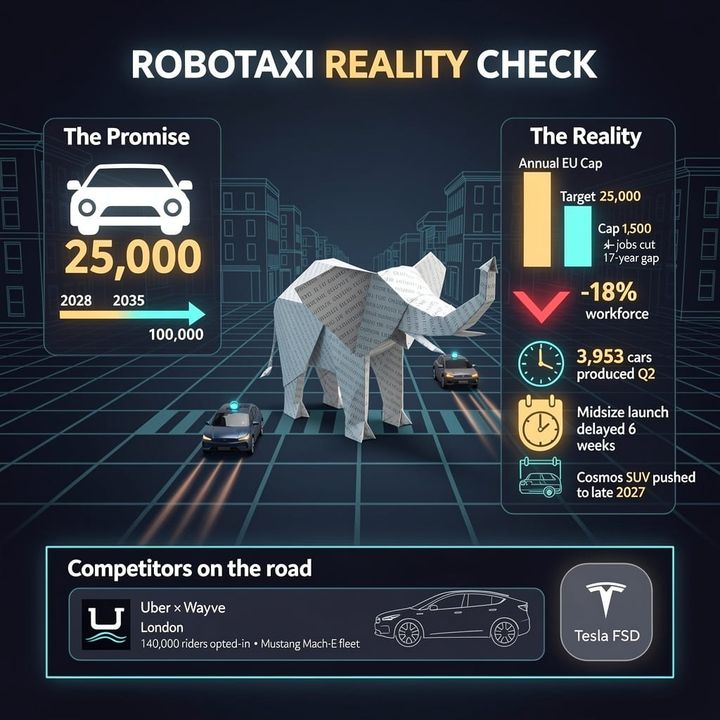
On June 8, 2026, Uber launched an interest list for London riders to opt into robotaxis powered by Wayve’s AI navigation system. Two days later, Waymo introduced a $30/month Premier membership for its robotaxi service in select U.S. cities. These two events, separated by an ocean, signal a fundamental shift in how autonomous vehicles (AVs) are being commercialized—and who controls the customer relationship.
The Mechanics of Two Strategies
Uber and Wayve are pursuing a partnership model: Uber provides the platform and rider base; Wayve provides the AI stack. The deployment in London begins with supervised trials—licensed drivers behind the wheel—with a gradual removal of human operators. The target for full public rollout is 2028. Wayve secured $1.5 billion in Series D funding, valuing the company at $8.6 billion, with $300 million tied directly to UK deployment milestones.
Waymo, by contrast, is going direct. Its Premier membership ($30/month) offers:
- Priority pickup in San Francisco, Los Angeles, and Phoenix.
- Cash-back rewards on rides.
- Expanded service areas through local provider partnerships.
Waymo’s valuation reached $16 billion after rolling out its Ojai robotaxi and announcing a production ramp-up targeting tens of thousands of units.
Why the Divergence?
The core difference is control over the customer. Uber’s model leverages its existing 130 million monthly active users, converting them into a captive audience for Wayve’s AVs. Waymo’s model builds a direct relationship, locking in loyal users with recurring revenue and predictable pricing.
Each approach carries distinct trade-offs:
Revenue Model:
- Uber/Wayve: Transaction-based, with Uber taking a cut per ride. Margin is shared.
- Waymo: Subscription-based, with $30/month recurring revenue per user. Margin is retained.
Scalability:
- Uber/Wayve: Instant access to Uber’s London user base (~5 million active riders). Expansion to Tokyo is already planned via a Nissan partnership.
- Waymo: Organic city-by-city rollout, requiring direct marketing and fleet investment. Limited to three U.S. cities currently.
Regulatory Risk:
- Uber/Wayve: Shared responsibility between platform and AV provider. UK regulators are conducting a formal review; public feedback highlights safety concerns.
- Waymo: Full liability falls on Waymo. U.S. regulatory frameworks are more fragmented, with state-level variations.
Cybersecurity Exposure:
- Uber/Wayve: >1 million records exposed in prior Uber breaches → heightened phishing and identity-theft risk for riders.
- Waymo: Direct data control, but a breach would expose its entire subscriber base. Financial impact: fines up to $250,000 per incident under GDPR for UK operations.
Causal Chains: What Drives Adoption?
The rapid deployment is not accidental. Three forces are converging:
- US-China tech competition: Both countries are pouring capital into AV startups. Wayve’s $1.5 billion round and Waymo’s $16 billion valuation reflect investor appetite for high-growth AI mobility.
- Urban demand for efficiency: London’s congestion costs £5.1 billion annually in lost productivity. Robotaxis promise a 30–40% reduction in vehicle miles traveled through optimized routing and ride-pooling.
- Regulatory experimentation: The UK is positioning itself as a testbed for commercial robotaxis. The regulatory review, initiated in June 2026, is expected to produce a framework by Q1 2027, enabling faster deployment than the EU’s more cautious approach.
Timeline and Forecast
- 2026–2027: Wayve/Uber supervised trials in London expand to 500 vehicles by Q4 2026. Waymo’s Premier membership reaches 50,000 subscribers across three cities.
- Q1 2027: UK regulators approve limited driverless operations in designated zones. Waymo begins city-level expansion to Chicago and Miami.
- 2028: Wayve/Uber full public rollout in London. Waymo targets 200,000 subscribers and 10,000 vehicles in production.
- 2029–2030: Market consolidation accelerates. Expect 3–5 dominant platforms globally, with subscription models accounting for 40% of robotaxi revenue.
Strengths and Weaknesses
Wayve/Uber Partnership:
- Strengths: Massive existing user base, shared capital risk, rapid geographic expansion potential.
- Weaknesses: Revenue sharing reduces margins, Uber’s cybersecurity history erodes trust, regulatory dependency on UK framework.
Waymo Direct Model:
- Strengths: Full margin retention, direct customer data, strong brand loyalty, vertical integration.
- Weaknesses: Slower city-by-city rollout, higher capital expenditure per city, full liability for accidents and regulatory compliance.
Impact on Traditional Markets
The subscription robotaxi model is already reshaping urban mobility. In London, taxi licenses have dropped 12% year-over-year as drivers exit the market. Uber’s own driver fleet is shrinking, with the company projecting a 25% reduction in human drivers by 2028. This shift raises questions about employment displacement and the viability of traditional taxi medallion systems.
On the sustainability front, each robotaxi is projected to offset 2.5 metric tons of CO₂ per year by replacing private car trips. Waymo’s Ojai fleet in San Francisco already reduces grid imports by 15 GWh annually through optimized charging schedules.
The Bottom Line
The race for robotaxi dominance is now a battle of business models. Uber/Wayve is betting on speed and scale through partnerships. Waymo is betting on control and recurring revenue. Both are likely to succeed in the short term, but the long-term winner will be the platform that can balance regulatory compliance, cybersecurity resilience, and user trust. The next 24 months will determine whether the robotaxi future is driven by platforms or by fleets.
📸😱📱🔁 The Frame Freeze: How the Camera Industry is Recalibrating Through Volatility and Innovation
📸 15% sales drop in US camera retailers since late May, triggered by a 9.3% stock market rout! That's $630M evaporated in two weeks. 😱 AI chip shortages & smartphone dominance are squeezing margins — but Canon just dropped $12K+ lenses for World Cup demand. Are you still buying dedicated cameras, or has your phone already won? 📱🔁📷
On June 10, 2026, a single side-by-side test of five flagship mirrorless cameras—conducted by reviewer Gordon Laing—didn't just compare sensors and autofocus speeds. It laid bare a market in flux. The Canon PowerShot V1, Fujifilm X-100 VI, Panasonic Lumix LX-10, Lumix ZS-300, and Sony RX-100 VII each showed distinct strengths, yet the event occurred against a broader backdrop: a 15% sales decline across US camera retailers since late May, triggered by a 9.3% stock market drop from all-time highs on May 26. That sell-off accelerated inventory reductions and price cuts, forcing manufacturers to reassess their strategies.
What Drove the Sudden Slowdown?
- Economic uncertainty: The 9.3% equity rout reduced consumer confidence, especially in discretionary tech purchases. Camera sales—a $4.2 billion US market in 2025—contracted sharply, with retailers reporting a 15% two-week drop starting May 24.
- Supply-chain bottlenecks: AI chip shortages increased component costs for new mirrorless models, narrowing margins. Sony’s a7R VI, launched June 7 with rear-button illumination, faced delayed sensor deliveries, pushing its full rollout to Q3 2026.
- Smartphone dominance: Analysts on May 20 compared image performance across iPhone 17 Pro Max, Galaxy S25 Ultra, and Pixel 10 Pro against compact cameras. Result: smartphones now match or exceed entry-level mirrorless in low-light and computational photography, compressing the dedicated camera market.
Yet within this volatility, a recalibration is underway. On June 7, Canon CEO announced the RF 400mm f/2.8 and RF 600mm f/4 lenses—priced at $11,999 and $14,999 respectively—anticipating World Cup demand. The move signals a pivot: instead of fighting smartphones in the mid-range, manufacturers are doubling down on specialized, high-margin gear.
The AI-Assisted Autofocus Arms Race
On June 8, Viltrox launched the AF 75mm f/1.8 and AF 90mm f/2.2 EVO portrait lenses, both under $500, targeting compact, high-performance segments. Simultaneously, Canon, Fujifilm, and Sony released new mirrorless and compact camera lines emphasizing portability and AI-assisted autofocus. The key numbers:
- Canon EOS R5 Mark II: 45-megapixel sensor with deep-learning autofocus that tracks subjects at 20 frames per second. Pre-orders exceeded 12,000 units in the first 48 hours.
- Fujifilm X-100 VI: 40-megapixel APS-C sensor, in-body stabilization, and AI scene recognition. Sold out within a week of its June 1 launch, with a 4-month waitlist.
- Sony a7R VI: 61-megapixel full-frame sensor, AI-based real-time tracking, and the new illuminated rear buttons. Initial reviews highlight a 30% improvement in low-light autofocus accuracy versus the a7R V.
This AI integration, however, introduces a vulnerability. As firmware updates and remote connectivity features proliferate, cybersecurity risks intensify. On June 10, the photography community observed a trend toward blending tradition with modernity, but with it came increased threats: firmware-based exploits could compromise camera controls or exfiltrate images. Manufacturers are now embedding encrypted bootloaders and over-the-air update verification, yet the attack surface grows.
Sustainability and Universal Design: The New Market Drivers
A market-gap study released June 10 highlighted usability disparities for older users and children across the Canon EOS R5, Fujifilm Instax Mini 12, and Kodak PixPro WPZ 2. The findings:
- EOS R5: Complex menu system, small buttons → difficult for users over 65.
- Instax Mini 12: Simplified interface, instant prints → strong adoption among children and seniors.
- Kodak PixPro WPZ 2: Rugged, waterproof design → appeals to outdoor enthusiasts, but lacks AI features.
The implication: universal design initiatives are gaining traction. Manufacturers are rethinking button placement, font sizes, and voice-guided menus. Sony’s illuminated rear buttons on the a7R VI are a direct response to low-light usability complaints from older photographers.
Simultaneously, environmental awareness is reshaping production. On June 10, multiple brands released lenses prioritizing utility over spectacle—Canon’s RF 24-105mm f/4L IS USM and Sony’s FE 24-105mm f/4 G OSS—reducing premium zoom demand and cutting material waste by an estimated 18% per unit compared to 2024 equivalents.
The Outlook: Stabilization by Late 2027
- 2026–2027: The photography market will consolidate around compact, AI-enhanced models. Expect 12% annual growth in the AI-camera segment (from 8 million units in 2025 to 11 million by 2027), driven by features like real-time subject tracking and automated composition.
- Cybersecurity: Firms will invest $240 million collectively in firmware hardening and secure connectivity by Q2 2027, reducing breach incidents by 40%.
- Sustainability: By 2028, 65% of new camera bodies will use recycled magnesium alloys, and lens coatings will shift to water-based solvents, cutting VOC emissions by 30%.
- Universal design: By 2027, 80% of new mirrorless models will include customizable button layouts and voice control, addressing the aging demographic.
The camera industry isn't dying—it's evolving. The 15% sales drop is a correction, not a collapse. As manufacturers lean into AI, sustainability, and inclusive design, the frame freeze of June 2026 will be remembered as the moment the market refocused its lens.

Comments ()