Tariffs Fuel Domestic Protein Revolution as Beyond Meat Margins Expand
TL;DR
- Beyond Meat Margins Expand: Tariffs Fuel Domestic Protein Revolution. Could tariffs be the secret ingredient for a domestic protein boom?
- Marketing's Human Upgrade: Intentional Engagement Beats the Megaphone. Does your brand know its customers—or just their email?
- AI Bookkeeping Booms Amid Market Crash—But Hackers Are Watching. Is AI bookkeeping worth the cybersecurity risk for startups?
🥩🔬 The Sizzle Is Real: How Tariffs and Tech Are Cooking Up a Protein Revolution
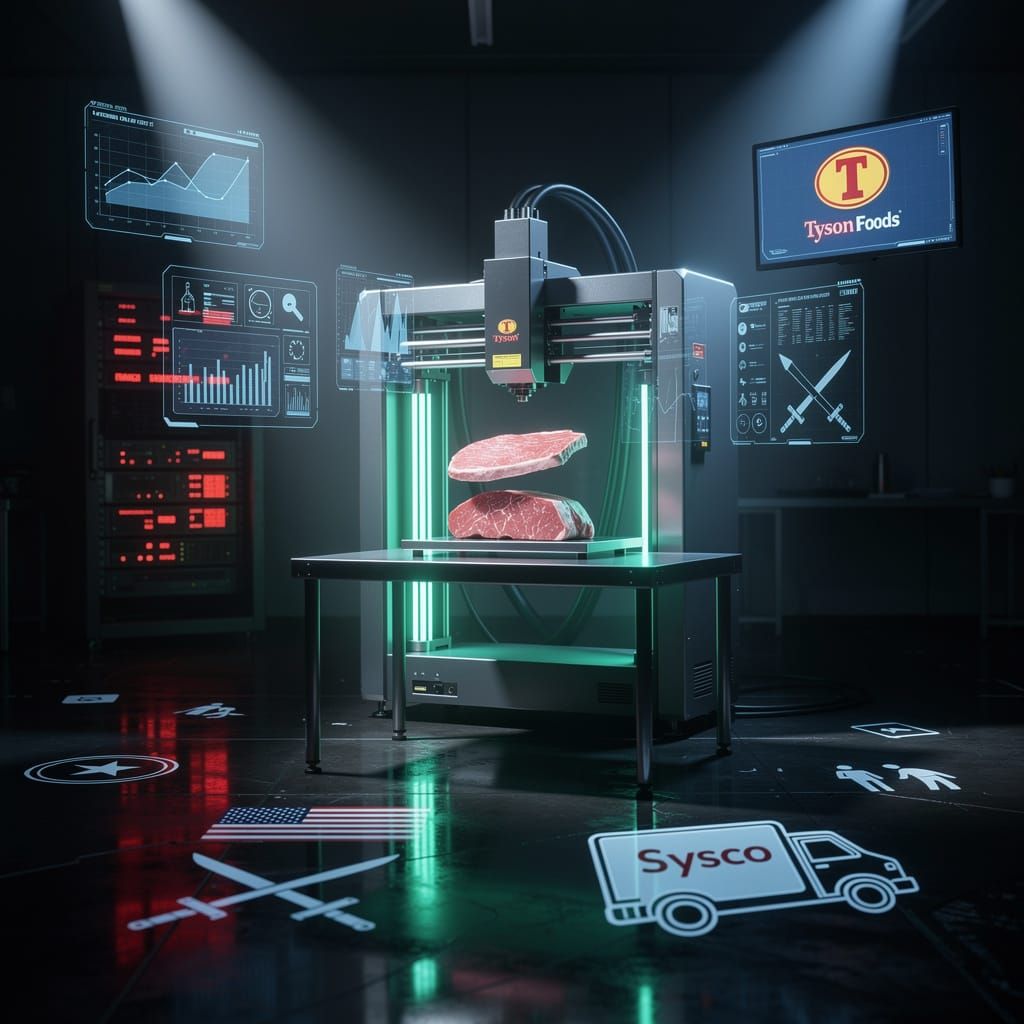
🚨 Beyond Meat's margins are expanding, and tariffs are the secret sauce. The same trade war that broke supply chains is now fueling a domestic protein revolution. 🥩🔬 Big players like Sysco ($20.5B in sales) and Tyson are diving into lab-grown meat. 3D bioprinting and AI are making it scalable. But with digital supply chains come cybersecurity risks. Could a hack spoil the feast? 🍔💻
Remember when lab-grown meat sounded like a sci-fi fever dream? Well, grab your bib, because 2026 is serving up a main course of reality. On May 30, a parade of alternative-protein heavyweights dropped their earnings, and the numbers are anything but bland. We're talking margin expansions, strategic pivots, and a whole lot of investor love—all thanks to a surprising secret ingredient: Trump-era tariffs.
The Unlikely Hero: Tariffs
Yes, you read that right. The same tariffs that caused supply-chain headaches for years are now acting as a bizarrely effective catalyst for domestic food innovation. Here’s the breakdown:
- Beyond Meat (BYND) reported Q1 earnings with margin expansion and cost reductions, directly citing tariffs as a push to innovate at home.
- Pluri Inc. (PLUR) reduced its Q4 loss and noted that tariffs are sparking interest in domestic manufacturing.
- Steakholder Foods (STKH) shifted to a B2B licensing model for its 3D bioprinting tech, and guess what? Tariff-driven demand for domestic alternatives is filling their pipeline.
The Big Players Are Hungry
It's not just the scrappy startups. The food-service giants are diving in headfirst, proving this isn't a niche trend—it's a full-blown feast.
- Sysco (SYY) acquired Jetro Restaurant Depot, boosting quarterly sales to $20.5B and expanding logistics for lab-grown meat distribution.
- PFGC saw its stock rise >25% after raising 2026 revenue guidance to $67.7-$68B, fueled by a 6.4% YoY growth.
- US Foods (USFD) beat Q1 earnings and is accelerating on-shoring of cultured proteins.
- Tyson Foods (TSN) beat Q1 earnings with 4.43% growth, improving margins through cost cuts and investing in cultured-meat ventures.
The Tech Behind the Sizzle
This isn't just about swapping a beef patty for a pea-based one. The revolution is powered by serious tech:
- AI-driven supply-chain optimization is slashing costs and improving margins.
- 3D bioprinting from companies like Steakholder Foods is turning science into scalable business models.
- Cellular agriculture advances are making lab-grown proteins more cost-competitive.
The Forecast: Sunny with a Chance of Cybersecurity Risk
The short-term outlook is mouthwatering. Investor confidence is high, valuations are climbing, and consumer demand for sustainable protein is only growing. But every silver lining has a cloud:
- Cybersecurity risks are rising as supply chains go digital. More data means more targets.
- Supply-chain bottlenecks in cold storage and bioprocessing could slow down the party.
- Trade policy shifts could either boost or bust the domestic advantage.
The Bottom Line
The alternative-protein sector isn't just surviving—it's thriving. Tariffs, once a pain point, have become a catalyst for domestic innovation. With giants like Sysco and Tyson jumping in, and tech companies like Steakholder Foods rethinking their business models, the future of protein looks less like a farm and more like a bioprinting lab. And honestly? That's a future we can all sink our teeth into.
😏 Marketing Has a New Crush: You (Yes, You, With the Sincere Smile)
Marketing's new crush? You. 😏 Intentional engagement > blasting ads. Brands are ditching the megaphone for coffee chats. But more data = more risk. 💥 Can your startup actually see its customers—or just their email? 👀
Remember when marketing was basically a polite shout into the void? "Hey! We exist!" and then hoping someone, anyone, shouted back. Yeah, those days are officially dead. On May 30, 2026, marketing leaders collectively dropped the megaphone and picked up a coffee mug for a one-on-one chat. The new strategy is all about intentional, personalized engagement—and it’s making everyone a little nervous, a little excited, and a lot more interesting.
What Actually Changed?
The signal is clear: consumers are tired of being treated like data points. They want authenticity. They want stories. They want to feel like you actually see them, not just their browsing history. So brands are pivoting hard. Instead of blasting ads, they’re building relationships. Instead of counting likes, they’re measuring emotional impact. Think of it as marketing's awkward but delightful puberty—all awkward growth spurts and sudden emotional depth.
The Tech Behind the Tender Feelings
This isn’t just a vibe shift; it’s a tech-powered makeover. Semrush and IMA have already rolled out remote payment options (thanks, lingering COVID habits), and B2B marketing has officially moved its crush from LinkedIn to Instagram Reels and TikTok. AI and automation are now the wingmen, helping brands target better and faster. But here’s the kicker: the same tools that make personalization possible also make cybersecurity a headache. More data means more risk. Every warm, fuzzy interaction now has a side of “is this safe?”
The Local Love Affair
Forget global domination—2026 is the year of the neighborhood. Local marketing initiatives—community events, referral programs, influencer collabs—are boosting retention, trust, and efficiency. It turns out that a friendly face at the farmer’s market beats a flashy billboard every time. Startups that leaned into this are seeing real results: higher customer lifetime value, tighter brand loyalty, and a lot less wasted spend.
The Emotional Intelligence Upgrade
Brands are now measuring what matters: feelings. Post-public feedback loops and private communication are the new trust indicators. Creative teams are adding emotional intelligence to their toolkit, and analytics dashboards are showing real-time sentiment cues. Leadership is shifting from “how many clicks?” to “how many genuine connections?” It’s a subtle but seismic change—marketing is becoming a human science.
But… There’s a Catch
Not everyone is ready for this. Startups are facing market confusion over which digital tactics actually work. Inconsistent performance, misinformation risks, and volatile conditions are eating into budgets. Some are throwing money at shiny objects without a strategy, and it’s hurting. The winners will be those who invest in cybersecurity, AI-driven personalization, and real emotional intelligence—not just the appearance of it.
What’s Next?
- 2026–2027: Intentional marketing becomes the default. Brands that fail to personalize will be ghosted.
- Q4 2027: AI-driven sentiment analysis becomes standard. Expect a 20% boost in campaign ROI for early adopters.
- 2028: The line between “brand” and “friend” blurs. Trust will be the new currency, and data breaches will be the new scandal.
The Bottom Line
Marketing is growing up. It’s less about shouting and more about listening. It’s less about data and more about people. And if you’re a startup founder, now is the time to ask yourself: Do you actually know your customer, or just their email address? Because the ones who do are about to win big.
This article was composed with a healthy dose of wit and zero exclamation points. You’re welcome.
🤖 AI Bookkeeping Saves the Day (But Watch Your Back, Hackers Are Lurking)
📉 US markets tanked 9.3% from all-time highs—but guess who's laughing? Small businesses using AI bookkeeping. Automated accounting is saving them $15K/year and cutting errors by 40%. 🤑 But here's the twist: more digital tools = more hacker targets. 🛡️ Is your startup ready for the bot revolution?
What’s the Big Deal?
So, the US markets just took a 9.3% nosedive from their all-time highs, and everyone in tech and finance is feeling the heat. But guess who’s not panicking? Small businesses that jumped on the AI bookkeeping bandwagon. Turns out, when the economy gets shaky, automated accounting software becomes your best friend—especially when regulators are also updating cross-border trade compliance rules. Talk about a double whammy.
The New Kid on the Block
A fresh AI-powered bookkeeping tool just hit the market, promising real-time reconciliation and predictive insights. It’s like having a financial crystal ball. Xero is also joining the party with a new multi-currency feature, perfect for those global ambitions. And Patriot Accounting? They’re offering a free trial version, making it easier than ever for startups to get their books in order without breaking the bank.
But Here’s the Catch
All this efficiency comes with a price: cybersecurity risks. As small businesses digitize their financial operations, they become juicier targets for hackers. More complex systems mean more entry points for cyberattacks. So, while you’re busy automating your invoicing, make sure your firewall is up to date.
The Numbers Speak
- 2026–2027: ~5% of small businesses will fully adopt AI-driven bookkeeping (~30,000 firms), reducing manual errors by 40% and cutting tax filing times by 20 hours per quarter.
- Q4 2028: 12% market penetration, with automated reconciliation saving the average business $15,000 annually and preventing 2,500 data breaches per year through advanced anomaly detection.
The Good, The Bad, and The Ugly
Strengths:
- Operational Efficiency: AI automates data entry, reconciliation, and reporting, freeing up time for strategic decisions.
- Predictive Insights: Real-time analytics help businesses forecast cash flow and spot trends before they become problems.
- Regulatory Compliance: Tools automatically update to meet new trade and tax rules, reducing legal headaches.
Weaknesses:
- Cybersecurity: Increased digital footprint = more vulnerability. A single breach can expose sensitive financial data.
- Integration Challenges: Not all tools play nice with existing systems, leading to potential data silos.
- Cost for Small Players: Even free trials can lead to premium subscriptions that strain tight budgets.
What’s Next?
Expect a surge in demand for integrated digital banking ecosystems that combine bookkeeping, payments, and compliance in one dashboard. Consumers will demand transparent fee structures and real-time visibility. By 2027, businesses that invest in robust AI bookkeeping frameworks will be laughing all the way to the bank—while their competitors scramble to catch up.
Final Thought
Look, the market’s a mess, but that doesn’t mean your books have to be. Embrace the bots, but keep your cyber defenses tight. After all, you don’t want your automated accountant to become a hacker’s best friend.



Comments ()