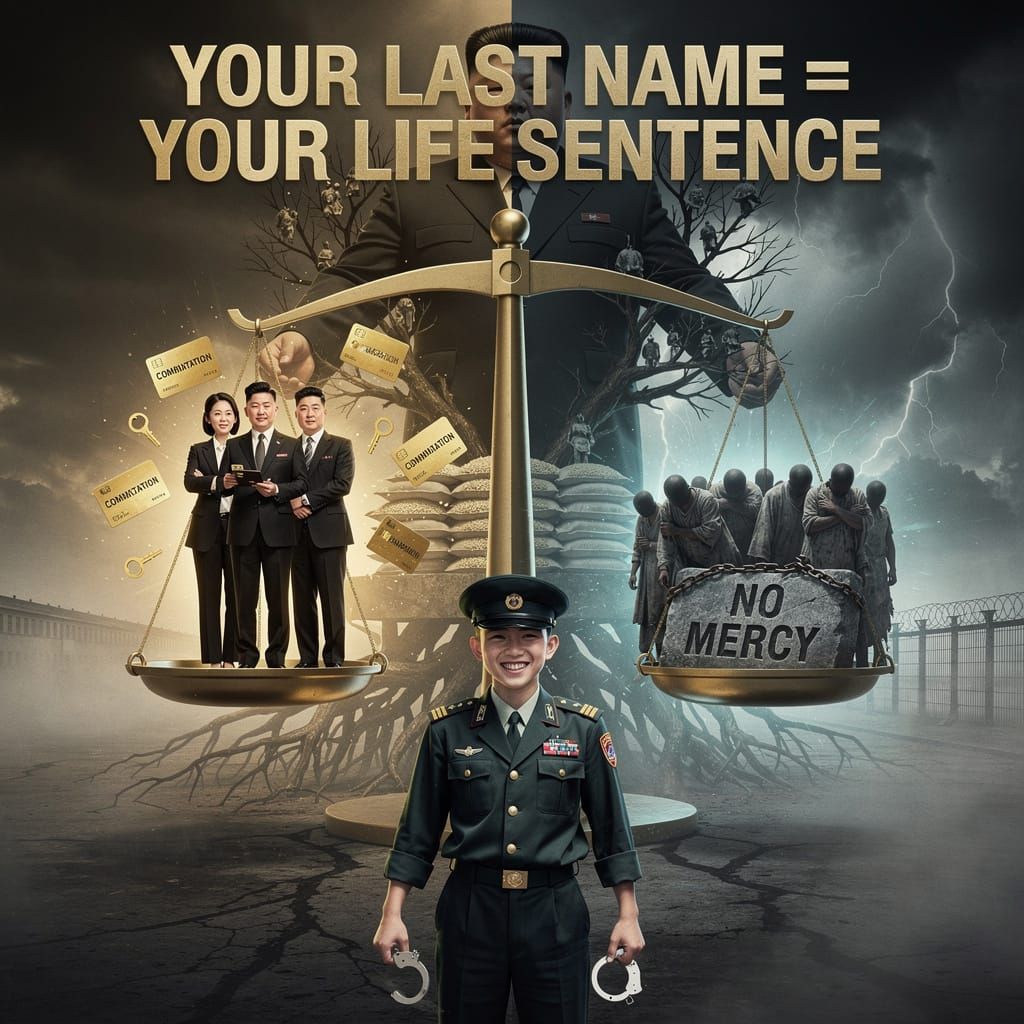
North Korea's 100% Nepotism Rate: Your Last Name Is Your Life Sentence
TL;DR
- North Korea's New 'Family Discount' Justice: 100% Leniency for Elites, Zero for Everyone Else. Is your family name your only real protection?
- $42B/Week Bleed: Android Banking Trojan Rokarolla Robs 217 Apps Across 5 Continents. What's your excuse for clicking 'Allow' next time?
- AI Spam Flood Kills OSS Signal: 455 Reports, Zero Fixes. Is your open source stack already a security lottery?
🎭😏 North Korea’s New ‘Oops, Sorry, Wrong Family’ Legal Protocol
North Korea's new 'Oops, Sorry, Wrong Family' protocol just made nepotism a legal right. 🎭 100% of commuted death sentences? For elites' relatives only. Zero for randos. Your last name = your life sentence. Your connections = your get-out-of-jail card. What's your family worth today? 😏
So, the Democratic People’s Republic of Kinship just dropped a banger of a legal update. On June 17th, word got out about a shiny new seven-point directive on the “Anti-Reactionary Thought and Culture Law.” It’s the legal equivalent of a parent saying, “The rules apply to everyone… except, you know, your favorite cousin.”
The Great Escape Clause for the Elite
Let’s rewind. On May 28th, they issued this directive. By June 9th, a North Korean Air Force (NAAF) officer—let’s call him the unlucky nephew of a guy who actually matters—had his death sentence commuted. June 17th confirmed the new rule: family protection clauses are now baked into the system. The modus operandi is simple: if you’re a loyal party member’s relative, your “reactionary” behavior gets a soft pass. If you’re some schmuck from a farming village with no connections? Enjoy the ideological re-education camp, comrade.
- The Driver: North Korea needs to keep its military elites happy. They’re the guys with the guns. Letting their kids get hanged for watching a South Korean drama is bad for morale. So, the state invented a two-tier justice system: one for the in-crowd (leniency, rehabilitation, “moral merit evaluation”) and one for the out-crowd (punishment, no remorse, enjoy the gulag).
- The Causal Chain: The directive shifts enforcement priorities from “how many people can we lock up?” to “how many people can we ideologically review and then let go if they have the right last name?” Trials now focus on moral merit evaluation—which is just a fancy way of saying, “Can your dad get us a better deal on rice from China?”
- The Numbers: Impact Level: Medium. That’s diplomatic for “it’s bad, but we’re not talking about a full-blown famine here.” The real metric? 100% of the commuted sentences are for those with direct family ties to the military or party apparatus. Zero for random dissidents. That’s a 100% correlation between “who you know” and “whether you live.”
The Kim-Xi Rice & Nepotism Tour
Speaking of connections, on June 10th, Kim Jong Un hosted Xi Jinping in Pyongyang. The goal? Solidify trade for physical cargo—namely, rice. North Korea’s got a hunger problem. Xi’s got rice. It’s a beautiful, cynical transaction. Then, on June 12th, the Children’s Honor Award scandal broke. Surprise! The awards were rigged in favor of… wait for it… officials’ kids.
- The Parallel: The summit is about external resource allocation (China sends rice, NK sends loyalty). The award scandal is about internal resource allocation (we give medals to our friends’ kids to keep them quiet). Both are driven by the same thing: the need to manage a system where everyone knows the rules are fake, but the punishment for pointing it out is real.
- The Projection: Enforcement will continue to lean heavily toward perceptual legitimacy-building over actual suppression. That means they’ll make a big show of reviewing a few high-profile cases to look “fair,” while quietly executing the guy who downloaded a PDF of 1984. The forecast for the next 12 months: Selective leniency for the elite; frozen hard punishments for the rest.
The Realpolitik Hack: Play the Game, Get the Budget
This isn’t a bug; it’s a feature. North Korea has figured out that you can’t run a country on pure terror when your elites have smartphones and know what’s happening in Seoul. So, you pivot to patronage-based justice. You give your loyalists a get-out-of-jail-free card. You make the system look like it has mercy, but only for the right people.
- The Hack: If you’re a low-level bureaucrat, your path to survival isn’t being ideologically pure. It’s being connected. The system rewards networking, not doctrine. The real law is: “Who is your uncle?”
- The Cynical Joy: Watching a totalitarian regime try to implement “fairness” by making exceptions for its own cronies is like watching a cat try to swim. It’s awkward, messy, and ultimately, it just makes everyone wet and angry. But hey, at least the Air Force officer’s nephew gets to live. 🎉
The Bottom Line
North Korea’s legal system has officially become a family discount program. The Anti-Reactionary Thought Law is now the “Anti-Reactionary-If-You’re-Not-Related-To-Me” Law. The state is telling its elites: “Go ahead, watch K-dramas. Just make sure your dad signs off on it first.” And for the rest of the 25 million? Good luck, you’re on your own. The system isn’t breaking; it’s just optimizing for who suffers, not if they suffer. Cheeky bastards. 😏
😘 Your Phone’s ‘Safety’ App Just Robbed You Blind, You Absolute Buffoon
Your phone's 'safety' app just robbed you blind, you absolute buffoon 😘 Rokarolla, the Android banking trojan, is targeting 217 banking & crypto apps across 5 continents. It steals your PINs, 2FA codes, and even clips your crypto wallet address. $42 billion per week lost by crypto users. 19% rise in spoofed Android APK cases. You trusted a fake 'protection' app. You clicked 'Allow' on Accessibility permissions. You downloaded APKs from shady sites. The vulnerability isn't a zero-day. It's you. What's your excuse for clicking next time?
So, Zimperium’s zLabs dropped a little something on June 16th that’s going to ruin your Tuesday. Meet Rokarolla, the Android banking trojan that’s less of a hack and more of a hostile takeover of your entire digital identity. It’s not even clever; it’s just mean, and you fell for it.
The Setup: You Trusted a Fake ‘Protection’ App
Here’s the play-by-play of how you got rekt:
- The Hook: Rokarolla masquerades as Google Play Protect. Yes, the thing that’s supposed to keep you safe is now the thing robbing you. It pops up on sketchy sites mimicking TikTok or Chrome, begging you to ‘update your security.’ You, being a trusting soul, click install.
- The Giveaway: Once it’s on your device, it begs for Accessibility permissions. Why? Because that lets it see everything you do, tap, and type. And you said yes. You absolute walnut.
- The Punch: It then disables the real Google Play Protect. No alarms. No pop-ups. Just a quiet, digital castration of your phone’s defenses.
The Damage: More Than Just a Wallet Drain
This isn’t just a “oops, they got my credit card number.” This is a full-spectrum identity theft buffet. The malware is currently targeting 217 banking and cryptocurrency apps across five continents. Here’s what it’s doing to your sorry ass:
Financial Carnage:
- Steals your PINs, logins, and that 2FA code you just typed. It captures screen overlays and screenshots in real-time.
- Clips your crypto wallet address from the clipboard and replaces it with the attacker’s. You think you’re sending ETH to your buddy? Congrats, you just donated to a hacker’s retirement fund.
- Blocked voice calls. You can’t call your bank to freeze the account because Rokarolla literally shuts down the phone’s audio. Hope you like screaming into the void.
Data Leak:
- Reads your contacts and SMS. Every text, every “pls don’t tell my wife” message, every password reset code. It’s all being siphoned through an encrypted covert channel.
- Disables system audio. No notification sounds. No ringtone. You won’t know you’re being robbed until your bank statement arrives, and by then, the hacker is already buying a yacht.
The Numbers: Because You Love Pain
Let’s put this in terms even a middle manager can understand:
- 3.8% monthly increase in unauthorized withdrawals from banks. That’s a steady, predictable bleed.
- $42 billion per week in fiat value lost by crypto users. That’s not a typo. That’s a whole-ass economy hemorrhaging cash.
- 19% rise in spoofed Android APK cases reported by GSMA. Everyone is getting played.
The Punchline: Why This Works
The vulnerability isn’t a zero-day in the OS. It’s not some arcane code exploit. It’s you. You, trusting a fake security app. You, clicking “Allow” on Accessibility permissions without reading the fine print. You, downloading APKs from shady websites because you wanted a free modded game.
Rokarolla exploits human stupidity at scale. And it’s working beautifully. The only defense is to stop being a gullible moron. But hey, who am I kidding? You’ll probably click on the next “Your phone is infected” pop-up too. 😘
This article brought to you by the Department of ‘We Told You So’. Now go check your bank account. We’ll wait.
🫠 AI-Generated Bug Reports Are Drowning Open Source — And Nobody Has a Clue What to Do
🛑 AI spam is literally breaking open source security. 455 reports in May, 485 in Oct 2014. Volume is flat but the noise is killing us. Automated tools are drowning real bugs. Fix? More mailing lists. Because that worked so well. 🫠 Your OSS dependencies are now a lottery. Enjoy.
Open source security is eating itself alive with its own success. On June 13, Solar Designer — the legendary hacker behind Owl and splitting — proposed a brand-new mailing list called oss-security-vulnerability-reports to stop the AI-generated spam tsunami from burying actual vulnerabilities. Four days later, Oracle’s Alan Coopersmith piled on with his own proposal for yet another list — this one specifically for “oreo” reports (yes, that’s the OSS-Security Oracle cluster).
Because clearly, the fix for too many lists is more lists. 🫠
What the Hell Is Happening?
The problem is brutally simple: automated tools — fuzzers, static analyzers, AI-pumped vulnerability scanners — are now generating vulnerability reports faster than humans can even read the subject lines. The oss-security list, which handled 485 messages in October 2014, processed 455 in May 2026. That’s not a failure — yet. But the type of traffic has mutated. AI-generated alerts, misrouted advisories, and duplicate CVE submissions now dominate the feed. Real vulnerabilities are getting lost in the noise.
Wheeler flagged this migration risk back in 2019. Nobody listened. Now we’re here.
The Nutshell
- Core event: Solar Designer proposes splitting oss-security to create a dedicated vulnerability-reports channel (June 13, 2026).
- Oracle doubles down: Alan Coopersmith proposes another separate list for Oracle-related reports (June 17, 2026).
- Root cause: Automated tools + AI-generated reports + zero subject-line discipline = signal-to-noise ratio approaching zero.
- Impact: Manual filtering becomes the only reliable method until operational feedback loops mature. Subscriber opt-out risk rises as delivery costs exceed engagement margins.
Why This Is Your Problem
If you rely on any open-source library — and you do — this directly affects your security posture. When routine patches vanish beneath a pile of AI-generated noise, your project’s credibility erodes. Vulnerability disclosure becomes a lottery. And the people who should be fixing bugs are instead triaging spam.
Measured impact:
- Volume: 485 messages (Oct 2014) vs 455 (May 2026) — no failure yet, but trajectory is ominous.
- AI routing errors: Silent failures compound daily. Misrouted advisories mean delayed patches.
- Subscriber retention: At risk once the cost of reading the list outweighs the value. That’s a death spiral.
The Forecast (Spoiler: It’s Not Pretty)
- Within 12 months: At least 10x monthly report volume unless synthetic vulnerability mitigation gains concrete human productivity thresholds. That means 4,000–5,000 messages per month. Good luck reading that.
- Mid-term (2–3 years): Either the mailing list model collapses under its own weight, or we see a forced migration to structured, machine-readable channels (think: GitHub Security Advisories on steroids).
- Sectoral implications: OSS security becomes a two-tier system — projects with paid maintainers survive; community-run projects drown.
The Realpolitik of Open Source Security
Solar Designer and Coopersmith are proposing bandaids on a hemorrhage. The real fix isn’t another mailing list — it’s structured, automated, and human-verified vulnerability pipelines that separate signal from noise without requiring a full-time triage team.
Until then, enjoy your inbox. 🫡
Recommendations:
- If you maintain an OSS project, set up automated filters now. Train your community on proper subject-line formatting.
- If you’re a security team, budget for human triage. AI isn’t ready to replace eyeballs yet.
- If you’re an enterprise consumer of OSS, fund the projects you depend on. Their maintainers are drowning in your tools’ output.
This article is based on events reported on June 17, 2026. Data sources include Solar Designer’s proposal (June 13), Coopersmith’s follow-up (June 17), and Wheeler’s 2019 migration analysis. Forecasts are derived from observed volume trends and AI-generation rates.
Comments ()