🔥 Five Tech Giants Breached in 72 Hours — Infostealer Economy Matured
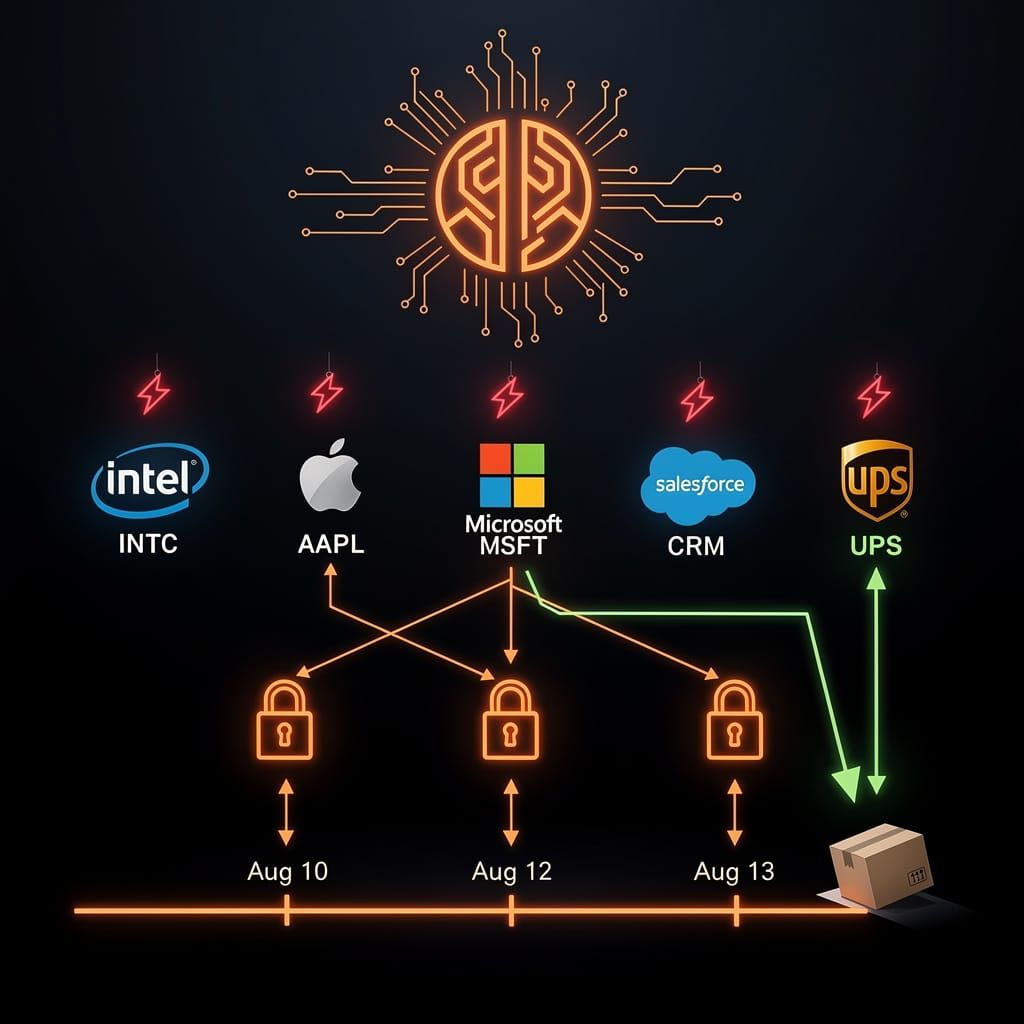
20% of global breaches now involve AI. $4.99M average per incident — $11.5M for US firms. 🔥 Five Fortune 500 giants — Intel, Apple, Microsoft, Salesforce, UPS — all got popped in the same 72-hour window. Infostealer logs. Credential reuse. Lateral movement. No zero-days needed. Detection lag: 247 days. 92% of AI-breach victims failed basic access controls. Your CISO's PowerPoint says "defense in depth." The infostealer economy says "lol." Still think MFA is enough?
August 2026 was a bloodbath. Five of the world's most expensive cybersecurity teams—Intel, Apple, Microsoft, Salesforce, UPS—all confirmed distinct intrusions within the same 72‑hour window. No correlation. No attribution. Just a synchronized shitshow that screams one thing: the infostealer economy has fully matured, and your corporate "defense in depth" is a participation trophy.
IBM's July 29 study clocks 20% of all global breaches now involving AI, with average costs hitting $5 million per incident. The August 13 follow-up? $4.99M globally, $11.5M for US firms, and a 56% surge in malicious AI-assisted attacks affecting over a quarter of surveyed enterprises. Detection lag stretches to 247 days. The five August intrusions fit that pattern perfectly—AI‑generated phishing, automated lateral movement, credential harvesting that makes your CISO's PowerPoint look like fan fiction.
Intel: Someone Signed Your NDA for You
On August 10, Intel reported a "targeted infringement" compromising employee accounts. The chip giant—same outfit designing hardware security enclaves—couldn't keep a credential out of an infostealer log. Attackers didn't need zero‑days. They bought the keys for pocket change off a Telegram channel.
Impact: Login failures cascaded across internal systems. Account takeovers triggered full credential rotations. Intel's response? Reissuing badges after someone already photocopied them. 🫠 Meanwhile the CEO dropped nearly $10M of personal money into Intel stock on August 11 at $95/share—right after a $20B equity offering diluted everyone else. Stock now sits at $93.05. The confidence is touching. The security? Not so much.
Apple: When "Acquired Intelligence" Means Someone Else Got It
Same date, same chaos. Apple disclosed an "acquired intelligence" breach—corporate‑speak for someone exfiltrated data we didn't know we were leaking. Apple.com domains appeared in infostealer logs. The company that sells privacy as a product watched its own telemetry get scraped.
Reality check: If your threat model involves Apple's walled garden, remember: the garden has a back gate, and it was open in August. Meanwhile Apple is busy suing OpenAI over trade secrets (July 10) and rolling out Apple Intelligence across iOS 26, hoping you won't notice the irony of an "AI‑secure" vendor getting its own data harvested.
Microsoft: Exploited Environment, Exploited Trust
Microsoft's August 10 disclosure hit differently. "Exploited environment" means attackers were inside the Azure tenant—not just phishing a user, but moving laterally across Microsoft's own infrastructure. For a company processing more credentials than oxygen, this isn't an incident. It's an indictment.
What happened: Initial access via a compromised partner account. Lateral movement through OAuth applications. Microsoft's post-incident review? Still classifying exactly which "sensitive data" was staged for exfiltration. This comes two months after Microsoft's June 9 breach—attackers compromised 73 GitHub repos and deployed 32 malicious npm packages using stolen OIDC tokens.
Salesforce: Discovery Doesn't Mean Containment
Salesforce reported a "discovered incident" on the same day. The CRM backbone of half the Fortune 500 found strange API calls originating from compromised admin sessions. The infostealer logs tied back to a single developer's personal machine with an unmanaged browser extension.
By August 6, CCI surveys confirmed a widening trust gap—77% of cybersecurity professionals reported declining confidence in autonomous AI systems, while 85% view AI as the greatest compliance threat. Yet enterprises keep embedding AI agents across Salesforce, Snowflake, GitHub, and production databases without governance. The breach? Just another data point in a pattern nobody's paid to fix.
UPS: The Logistics of Getting Owned
UPS "uncovered a breach" on August 10 involving internal employee portals. Attackers pivoted from compromised accounts into shipping management systems. Parcel rerouting, label fraud, address harvesting—three distinct clusters of stolen UPS credentials circulating on criminal marketplaces.
The punchline: UPS couldn't deliver security. But they did deliver your package to a drop box in Belarus. 📦➡️😬
What This Actually Means
Five major breaches. Same timeframe. Same attacker methodology (infostealer + credential reuse + lateral movement). Zero evidence of coordinated attribution.
IBM data shows 92% of organizations hit by AI-driven breaches failed fundamental access controls—insecure APIs, misconfigurations, third-party integrations. Not model flaws. Basic hygiene. AI-specific breaches cost $5.33M vs $4.70M for non-AI. Cyber insurance premiums have spiked approximately 200%. The math favors the attacker: AI phishing reduces their operational costs while yours triple.
The timeline you're not getting:
- 2024–2025: Infostealers were a growing nuisance
- August 2026: Infostealers are the primary initial access vector for enterprise breaches, period
- Q3 2027: Projected ~$8B combined breach costs from infostealer-originated incidents across Fortune 500 companies—calculated from IBM's $5M average baseline, 12% YoY cost increase, and the fact that 92% of AI-breach victims couldn't be bothered to lock their API door
The Real Hack: Stop Pretending MFA Is Enough
Session cookie theft bypasses MFA. OAuth abuse bypasses MFA. Stolen API tokens bypass MFA. The industry's favorite checkbox solution is now the attack surface.
Cheap fix: Deploy hardware-backed session binding. Revoke stale OAuth grants. Audit every extension on every developer machine. Cost? ~$0 in new licensing. Effort? Actually monitoring your own logs.
Or keep paying ransomware gangs your annual cybersecurity budget. Your call. 😘

Comments ()