87,714 AI-Driven Job Cuts: IBM and Tech Giants Shift to Labor Arbitrage in US
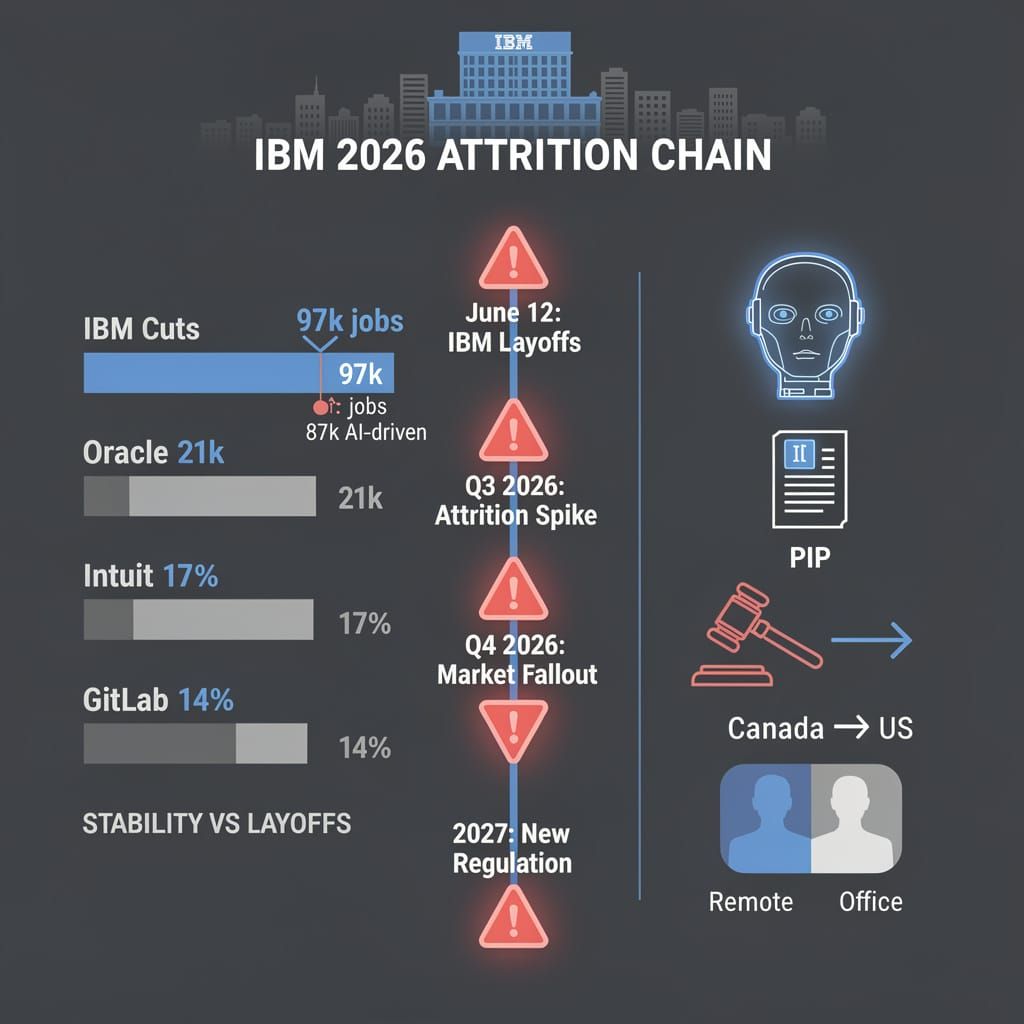
📉 The Arbitrage of Attrition: IBM's Structural Shifts
87,714 jobs lost to AI in one month—a staggering blow 📉. This is like losing the entire workforce of a mid-sized city overnight. IBM and others are using PIPs and RTO mandates to fuel 'silent layoffs.' Is your role safe from the AI pivot? U.S. workers—how are you pivoting?
IBM's operational pivots demonstrate a causal chain where AI-driven automation and cost-containment pressures result in aggressive workforce instability. On June 12, 2026, IBM announced mass layoffs targeting U.S. employees, primarily within F&D divisions. This occurs amid a systemic tech sector contraction; as firms pivot to AI-centric models: Oracle reduced its workforce by 21,000 (13%) on June 22, 2026, while Intuit and GitLab cut 17% and 14% of staff, respectively, to fund AI infrastructure.
How are headcount cuts being managed?
Leadership utilizes Performance Improvement Plans (PIPs) as procedural cover to facilitate terminations within compliance frameworks. This mechanism allows the company to mask termination volumes and bypass traditional severance obligations. Internal reports highlight "silent layoffs" affecting engineering projects like GTK, where employees experience immediate system lockouts following sick leave requests, with notices issued via third parties like Fidelity.
This strategy enables specific structural maneuvers:
Labor Arbitrage: Displaced U.S. staff are replaced by Canadian talent at an 80–90% hire rate. Operational Pressure: Mandatory return-to-office policies are leveraged to encourage voluntary attrition. Public Narrative: Sponsored content frames reported layoffs as "fabricated" PIP stories to discredit instability reports.
What are the systemic risks?
This approach correlates opaque termination processes with the erosion of corporate transparency. By leveraging ambiguous performance reviews to signal dismissals, IBM increases its exposure to litigation and damages institutional trust.
Governance: Misuse of PIPs → heightened risk of age-discrimination and wrongful termination lawsuits. Culture: Punitive policies and minimal salary growth → rapid employee disengagement and retaliation risks. Market: Heavy reliance on acquisitions (e.g., Octo Consulting) → perceived lack of organic innovation.
What is the trajectory?
Projections indicate a cycle of attrition-driven closures as IBM aligns payroll with volatile AI revenues, mirroring a broader trend where 97,006 U.S. jobs were cut in May 2026 alone, with AI cited as the primary driver for 87,714 of those losses.
- Q3 2026: Continued attrition-driven closures across global units; IBM share prices remain volatile following the June 12 announcement.
- Q4 2026: Market stabilization dependent on Federal Reserve decisions and the integration of AI-centric portfolios.
- 2027: Increased regulatory scrutiny regarding the use of PIPs as de facto termination tools.
These events indicate a shift where labor arbitrage and automation replace organic growth, necessitating stricter audit enforcement to prevent systemic compliance failures.



Comments ()