20% Churn Spike: Technical Leadership Gaps Trigger Retention Crisis in Tech Sector
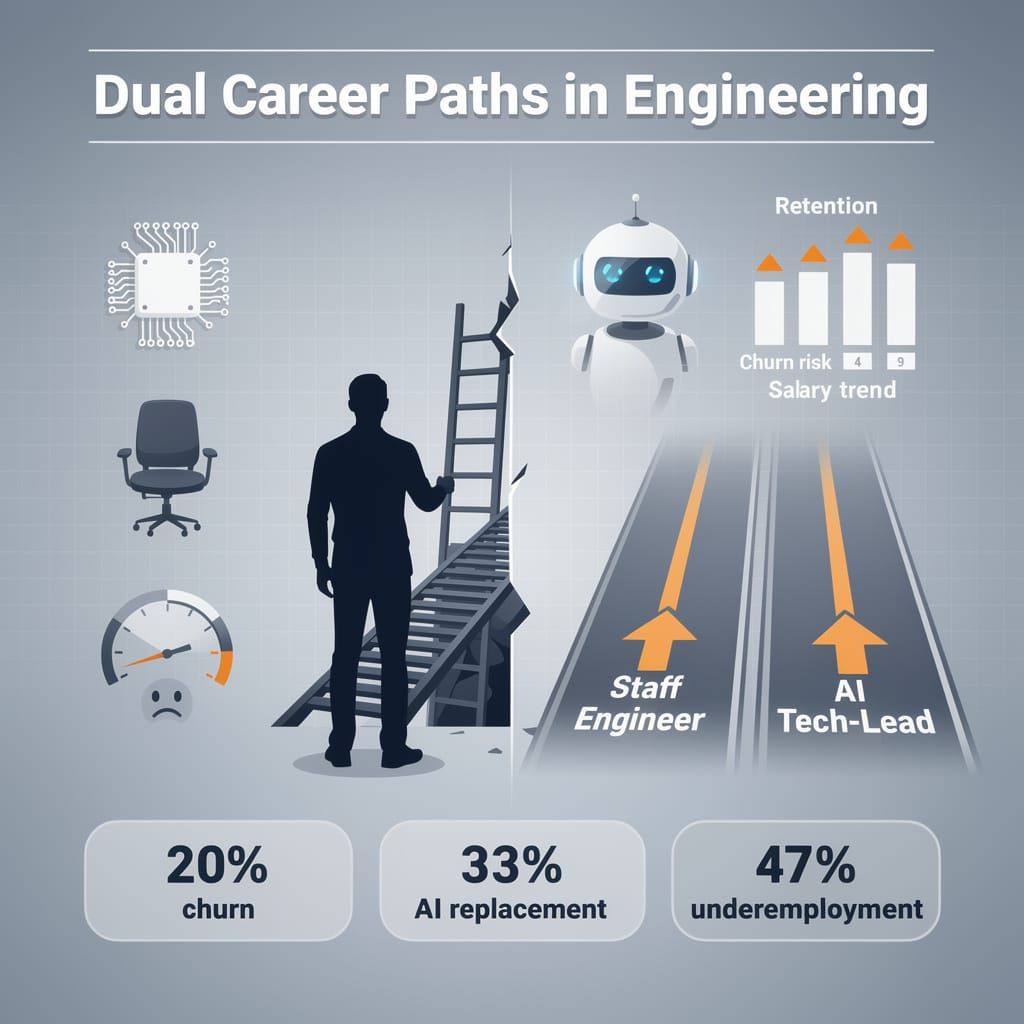
📉 The Paradox of Internal Mobility: Navigating the Management Pivot
20% churn risk spike! 📉 a massive talent leak when high-performers hit a career ceiling. Technical depth is often ignored for external hires, only to be reactively offered later to stop the bleed. Dual-track ladders are the fix. Engineers—has your growth been stalled by a management gap?
Recent shifts in technology organizational structures indicate growing friction between technical expertise and leadership appointment. A June 2026 case involving a Senior Software Engineer demonstrates a recurring causal chain: an employee is passed over for promotion in favor of external leadership, only to be offered a management role later as a reactive measure to stabilize team morale and restore technical direction.
Why do leadership gaps occur?
This pattern results from a disconnect between technical proficiency and perceived leadership readiness. When organizations prioritize management traits over domain expertise, they create "discovery debt"—unvalidated assumptions that increase sprint delays. This is compounded by a market shift where AI automates routine tasks, shifting demand from quantity-based recruitment to concentrated expertise.
Skill Alignment
- Technical Depth: High proficiency in systems architecture → ensures project stability.
- Leadership Gap: Lack of formalized coaching → results in bypassed promotions.
- Organizational Correction: Reactive leadership offers → stabilizes retention of critical talent.
Performance Impacts
- Execution: Concentration of ownership correlates with lower defect rates; leadership voids increase technical debt.
- Morale: Passing over experienced staff increases burnout and stagnation risks among top engineers.
- Retention: 20% increase in churn risk when high-performers perceive a career ceiling.
What is the outlook for technical leadership?
Projections indicate a shift toward "dual-track" career ladders. The expansion of "Staff Engineer" roles enables architectural influence and strategic decision-making without requiring people management. This transition is critical as traditional credentials lose value; only 13% of firms reported increasing MBA hiring in 2025, with median starting salaries declining from $125,000 to $120,000.
- 2026–2027: Implementation of formal Individual Contributor (IC) tracks in 40% of mid-to-large tech firms to reduce promotion friction.
- 2028: Integration of leadership certifications into onboarding to close the management readiness gap.
- Q4 2028: Projected 15% increase in hybrid "Tech-Lead" roles balancing 60% execution with 40% strategic oversight.
Market Realities
- Automation: 33% of global employers replaced entry-level roles with AI, increasing demand for AI-literate senior leads.
- Underemployment: 47% of STEM graduates remain underemployed five years post-graduation, reducing annual earnings by ~$41,000.
- Sector Growth: Hiring is outpacing pure tech in defense and healthcare, where BLS projects 22% growth for specialized analytical roles like actuaries (median pay $60.47/hour).



Comments ()