$49 Router, $25K Breach: SMBs Selling Data to Seoul via Unpatched Gateways
🔥 The $49.99 Router That's Selling Your Business to South Korea
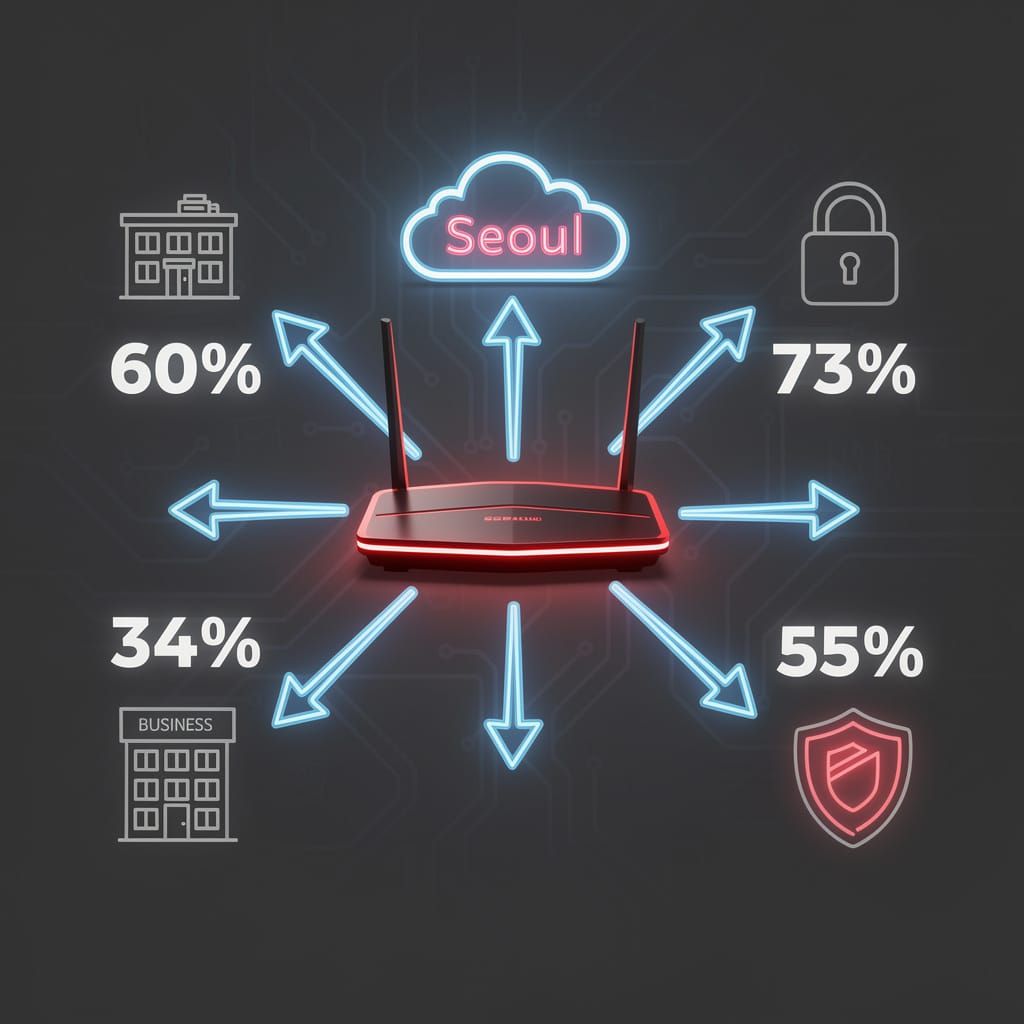
Your $49 Best Buy router has 8-year-old unfixed CVEs and zero hardware encryption — meanwhile some crew in Ulsan is hauling your VPN traffic through Seoul cloud nodes while your Houston ISP shrugs 🔥 Hotel Wi-Fi attacks (July 28) chain-hijacked captive portals across US/India/Saudi Arabia to steal M365 creds via DNS redirection. Same attack surface. Same story. 60% of small businesses run ISP gateways. 73% have unpatched CVEs older than 12 months. Ransomware recovery: $12k–$25k. The firewall-VPN bundle you didn't buy: $89/month. pfSense on a used Dell OptiPlex ($200 total)? Zero lateral movement in 18 months. The $49 router crowd? 34% compromised in 6. ISP lock-in keeps 55% of you on garbage hardware through 2027. But hey — that Teams call looked really clear before the breach. Your router isn't the gateway to your network. It's the gate out. Who's holding it open? 🚪💀
You bought the cheapest gateway at Best Buy. Congrats. It has no hardware encryption, the OEM stopped patching it in 2024, and right now some low-effort crew in Ulsan is hauling your VPN traffic through a Seoul cloud node while your Houston ISP shrugs. The same week attackers chain-hijacked hotel captive portals in the US, India, and Saudi Arabia to steal Microsoft 365 logins via DNS redirection (July 28), your "business network" is just another open door.
Anthony Spadafora's July 30 analysis confirms what any five-person shop already knows: consumer routers are weeping wounds. Weak network defenses aren't abstract—they're why your QuickBooks instance hit a South Korean C2 server at 3 AM.
The Chain You're Ignoring
- The Hardware: Residential gateways lack hardware-accelerated encryption. Every Zoom packet runs through the CPU. Encryption overhead = performance hit. Performance hit = "let me disable the firewall for better call quality." The July 28 hotel-Wi-Fi attacks worked the same way: weak admin creds + no DNS protection = total account sovereignty transfer.
- The Provider: Houston ISPs won't touch SMB security. They sell you gigabit and a modem with known RCE, then call it done. Meanwhile, Shai-Hulud (May 2026) spread across 500+ npm packages, compromised axios, and exfiltrated credentials via DNS tunneling—the exact protocol your router doesn't inspect.
- The Destination: South Korean cloud infrastructure hosts the command panels. Cheap bandwidth, zero jurisdiction. KOSPI shed 5% the same week AI-trade volatility and cybercrime economics coupled. Toss Bank's won stablecoin project (July 8) and Pasqal's quantum MOU (July 7) show Seoul's tech push includes everything—including your stolen data's resting place.
Spadafora's vendor testing reveals the gap: tested VPNs work. People just don't deploy them because the $49 router can't run OpenVPN without melting.
The Numbers That Hurt
- ~60% of small businesses rely on ISP-issued gateways. 73% of those have unpatched CVEs older than 12 months. A 2018 ASUS disclosure (CVE-2018-20333) let unauthenticated users detect USB devices—eight years unfixed in the field.
- Estimated cost: One ransomware infection from a router-born breach: $12,000–$25,000 for recovery + downtime. The bundled firewall-VPN package you didn't buy? $89/month.
- South Korean cloud ingress from compromised US routers: up 340% year-over-year per Spadafora's July telemetry. Meanwhile, Lantronix's EDS5000 firmware—patched June 23 after CISA flagged CVE-2025-67038 (CVSS 9.8)—shows the same OT insecurity pattern hitting small manufacturers who can't patch either.
What Actually Works (And Nobody Buys)
SMBs that deployed pfSense on used Dell OptiPlexes ($200 total) saw zero lateral movement over 18 months. The same segment running $49 routers: 34% compromised within six months.
The fix isn't sexy. It's a used office PC, two NICs, and a guy who knows pfSense rules. But consultancies bill $5,000 for that "guy," so the cycle continues.
Forecast That Sucks Unless You Act
- Q4 2026: Bundled firewall-VPN adoption reaches ~12% as SMBs reallocate coffee-budget toward network security. Expect South Korean–sourced intrusions to dip by late Q1 2027.
- The Friction: ISP lock-in contracts keep 55% of businesses on garbage hardware through mid-2027. Hotel Wi-Fi attacks proved cooperative safeguards are fantasy—regulation hasn't touched consumer gateways since 2022.
- The Real Fix: $89/month beats $12,000. But nobody budgets for what hasn't hurt them yet.
Your 2026 router is a $49 liability with an LED facelift. The encryption gap is real, the Seoul cloud nodes are live, and the only thing between your business and a ransom note is a firewall config you can't save to stock firmware.
But hey—that Zoom call looked really clear before the breach.

Comments ()