$38.53B Loss: OpenAI Faces Fiscal Crisis Amid Leadership Shifts
TL;DR
- $50bn Shein IPO: Hong Kong Listing to Bypass Western Regulatory Friction. Will Shein's pivot to the Hong Kong Stock Exchange protect its $50bn valuation from Western regulatory pressure?
- $38.53 Billion Loss: OpenAI's Fiscal Crisis and Leadership Shift. Can an IPO save OpenAI from a $38.53 billion net loss and ongoing leadership instability?
- 275 Million Fake Reviews: Amazon Launches Massive Purge to Combat Brand Spam. Are you tired of seeing gibberish brand names and fake reviews when shopping on Amazon?
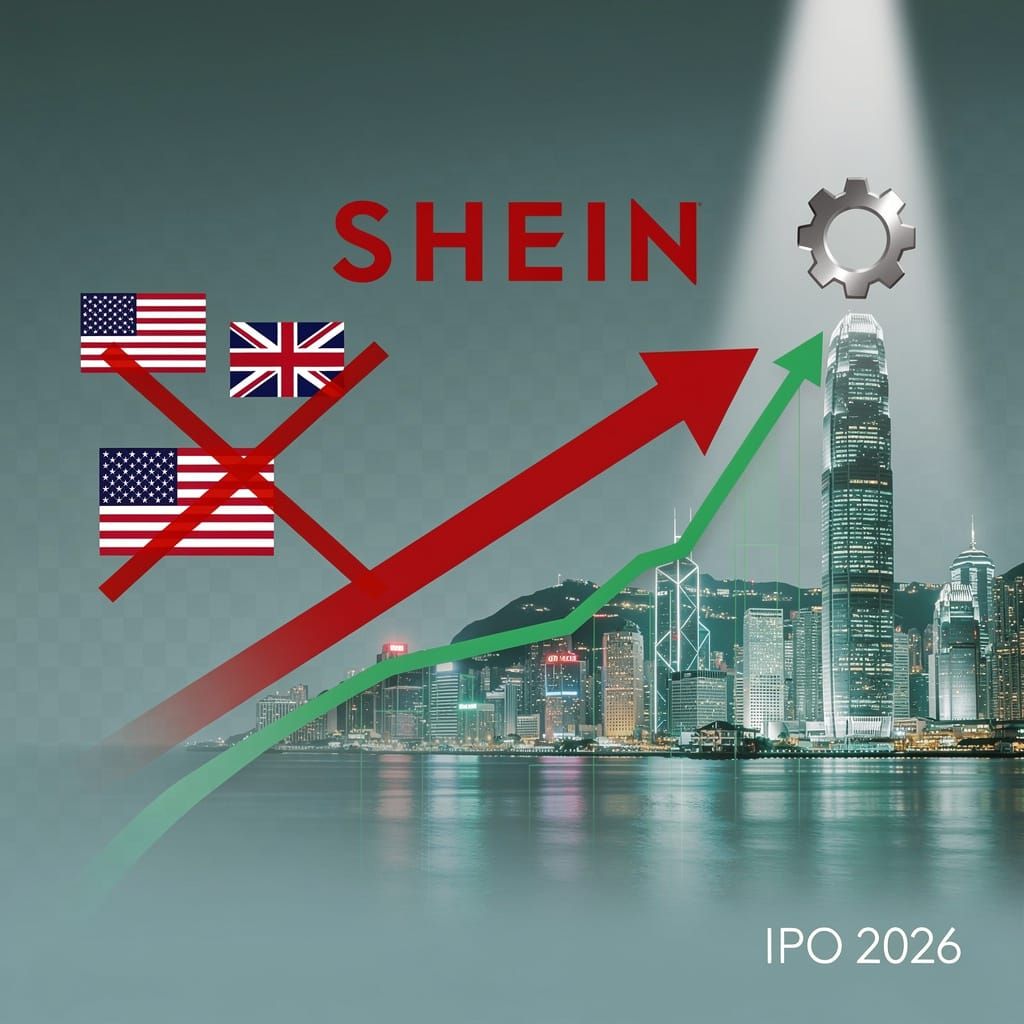
🤯 Shein’s Pivot to Hong Kong: The Great Escape
$50bn valuation—staggering scale! 🤯 That's like 10s of unicorns in one go. After being ghosted by the US and UK, Shein pivots to Hong Kong to dodge regulatory nightmares. Stable capital or just a strategic retreat? Shein investors—do you trust the HK hub more than the West?
After flirting with the US and UK markets only to be ghosted by regulators—including a 2023 US IPO filing and a UK FCA prospectus approval that led nowhere—Shein has finally found a welcoming home. On July 10, 2026, the China Securities Commission (CSRC) gave the green light for Shein Global Holdings to launch its IPO on the Hong Kong Stock Exchange.
Why the change of heart?
Shein didn't exactly choose Hong Kong first; it was more of a strategic retreat. Previous attempts to list in Western hubs crashed into a wall of trade tensions and regulatory friction. By shifting to Hong Kong, Shein bypasses the suffocating compliance costs of U.S.-linked regulations while maintaining a pre-IPO valuation range of $40–$50bn. To signal stability and appease EU regulators, Shein announced compliance with the Digital Services Act on July 9, just before the official CSRC approval, following data breach fines exceeding €200m.
The Causal Chain
- US/UK Rejections → High regulatory friction → Search for alternative issuance routes.
- CSRC Approval → Access to Hong Kong's regulated hub → Circumvention of Western sanctions.
- HK Listing → Inflow of mainland capital → Stabilized overseas operational funding.
Market Impact
Liquidity: Hong Kong equities surged ahead of the listing, positioning HKEX as the primary destination for mainland "new economy" firms. Transparency: Heightened pressure to disclose material risks, specifically regarding supply chain ethics, carbon footprints, and labor practices. Diplomacy: Demonstrates Beijing's tighter control post-Ant Group shutdown, using Hong Kong as a stable offshore hub to balance global access with domestic oversight.
The Outlook
- July 2026: Initial trading volatility; the company begins aggressive investor outreach to secure the listing.
- Q3–Q4 2026: Stabilization of share price as the listing triggers a broader surge in local Hong Kong IPOs.
- 2027 Forecast: Potential for modest valuation growth and deeper penetration into Southeast Asian markets.
While the IPO provides a much-needed cash infusion, Shein remains a bellwether for how geopolitical friction dictates where the world's fastest-growing brands can actually afford to go public.
💸 The OpenAI Shuffle: Financial Bleeding and Leadership Pivots
$38.53 billion lost! 💸 That's a staggering deficit—roughly the GDP of a small nation. OpenAI's burn rate is out of control. Can an IPO save them from this fiscal bleed? B2B pivots and leadership chaos are the new norm. OpenAI — is this sustainable for you?
OpenAI is proving that while its models can generate code, they can't magically conjure a balanced ledger. The company is navigating a brutal financial hangover, reporting a $38.53 billion net loss for 2025. While revenue jumped 3.5x from $3.7 billion in 2024 to $13.07 billion, the burn rate remains astronomical. This deficit is driven by a $20.92 billion operating loss, with R&D eating $19.18 billion and sales and marketing costs hitting $5.73 billion.
Who is steering the ship?
Amidst this fiscal chaos, leadership is in flux. On July 9, 2026, Fidji Simo stepped away for a three-month medical leave to manage advanced Ocular Myasthenia Syndrome. This vacancy forced Sam Altman to redistribute leadership, handing Greg Brockman the keys to business unit expansion.
However, the transition has been bumpy. Simo's departure coincided with lagging revenue tracking systems, resulting in $2.3 million in missed partnership opportunities with Salesforce. To stop the bleeding, Altman executed a tactical pivot, prematurely shutting down a Meta-focused campaign. While this move saved $8 million in resources, it left the company's brand alignment metrics in the gutter.
The Fallout
- Financial: $38.53 billion net loss (2025) → critical sustainability concerns and $20.92 billion operating loss.
- Operational: $2.3 million lost in Salesforce talks → missed strategic revenue.
- Personnel: AI-driven layoffs → workforce reductions mirroring industry trends at Meta and Cloudflare.
What happens next?
OpenAI is in a state of strategic recalibration, fighting a war on two fronts: massive operational deficits and an aggressive legal battle with Apple over intellectual property infringement. Despite the losses, the company is pivoting toward enterprise B2B models and coding tools to reduce consumer reliance, while eyeing a public listing. The company has already filed IPO paperwork with the SEC, positioning itself against competitors like Anthropic.
- July–August 2026: Leadership instability persists as Brockman pushes for new funding.
- Mid-August 2026: Simo's potential return in an advisory capacity pending health clearance.
- Autumn 2026: Projected IPO launch to unlock equity and sustain scale.
- Q3 2026: Projected restoration of revenue tracking and attempts to revive Salesforce negotiations.
📉 The Great Amazon Alphabet Soup
275 million fake reviews: a staggering mountain of lies 📉. Imagine every single person in Indonesia leaving a fake review just to confuse you 🤯. Amazon is finally scrubbing the junk, but 'Knockoff' is already grey-out the gibberish brands. Efficiency vs. Authenticity? Shoppers — are you tired of buying toasters from brands that sound like Scrabble accidents?
Amazon's search results have long looked like a cat walked across a keyboard. You search for a toaster and find a "TOSY" or a "VISCOO"—brands that sound less like companies and more like failed attempts at Scrabble. While these "label farms" typically dominate rankings through paid placements and design theft, a new tool is attempting to scrub the gibberish.
How does it scrub the spam?
Released in 2025, "Knockoff" is a browser extension for Chrome, Firefox, and other Chromium-based browsers that acts as a visual filter for the e-commerce giant. Instead of annoying pop-ups, the tool uses a graphical overlay to grey out or hide product entries. It identifies low-quality listings by analyzing linguistic patterns—fingerprinting the synthetic brand strings that characterize the toxic ecosystem of nameless sellers.
By rendering suspected low-quality listings visually inert, the extension enables a seamless user experience. The tool operates without collecting user data, ensuring privacy while fighting the brand spam that aligns with broader digital authenticity crises. This client-side approach fills a gap left after Mozilla shut down Fakespot, the dominant fake review tracker, in 2024.
Direct Impacts
- User Behavior: Greyed-out listings reduce exposure to deceptive brands, shifting the shopping focus toward verified merchants.
- Security: Mitigates risk by steering users away from low-trust listings often associated with broader phishing-as-a-service trends.
- Privacy: Zero identifiable user data collection via local execution and storage.
What happens next?
While power users are adopting the tool, the broader impact remains a tug-of-war between convenience and trust. Amazon is finally reacting; on July 12, 2026, the company launched anti-fake review measures targeting over 275 million suspicious reviews to restore e-commerce integrity.
- 2025–2026: Knockoff goes viral, establishing a baseline for "visibility engineering" via linguistic fingerprinting.
- Q3 2026: Amazon accelerates systemic takedowns of millions of fake reviews to counter market distrust.
- 2027 Forecast: Integration of similar heuristics directly into browser cores to filter synthetic merchant containers.
Knockoff doesn't fix Amazon's third-party reputation problem, but it does make the shopping experience slightly less like decoding an alien transmission.


Comments ()