35% Morale Crash: The Hidden Cost of One Non-Competitive Promotion
TL;DR
- Hidden Cost of Bypassing the Pipeline: One Promotion, 35% Morale Crash. Does your organization hire fairly — or does favoritism quietly drive your team's next exit?
- Rowan's 48-Hour Career Accelerator: Graduation to Publication Before the Ceremony Ended. What will you publish before your next credential is even stamped?
- Volkswagen to Cut Up to 100,000 Jobs After Q2 Profit Craters 40% — Chinese EV Competition and 20% Cost Gap Drive Deepest Restructuring Yet. Is your job at risk if Volkswagen is cutting 100,000 roles?
💼🔍 The Hidden Cost of Bypassing the Pipeline
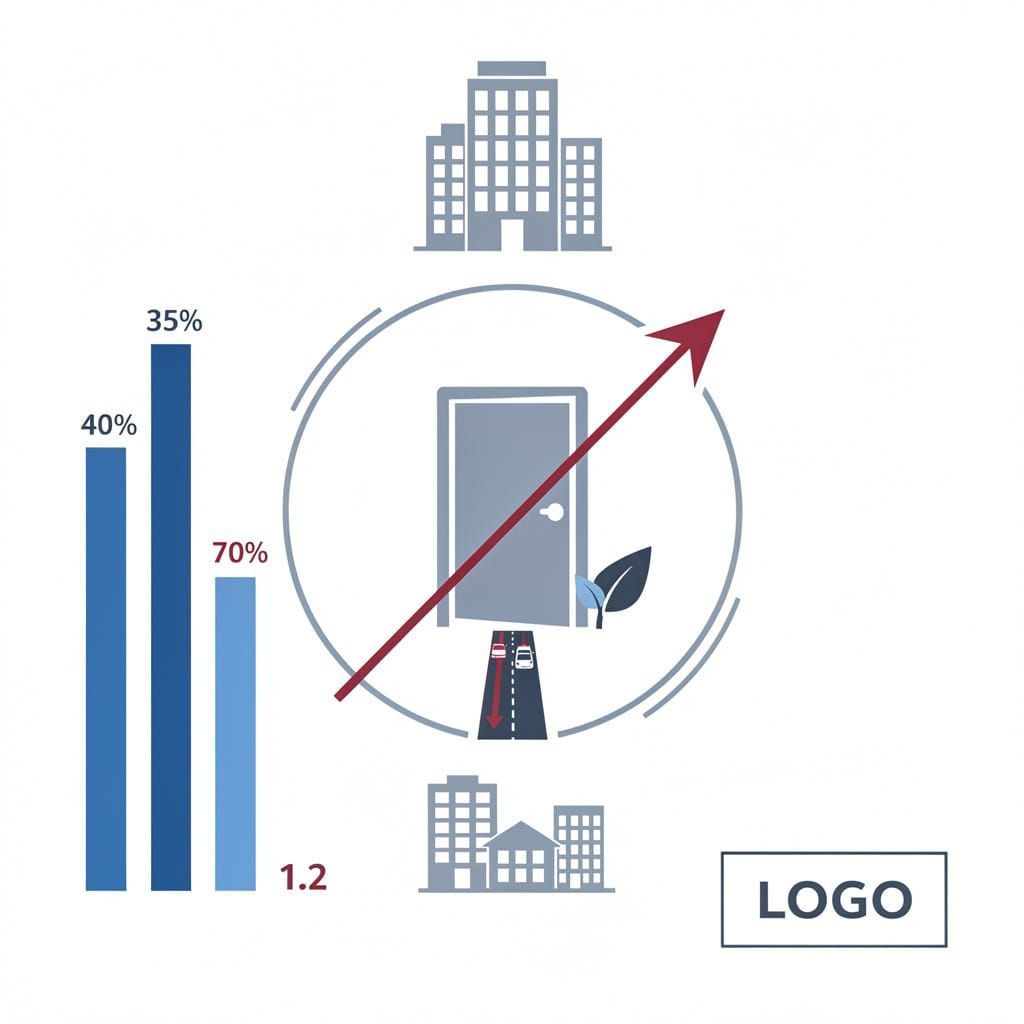
A non-competitive promotion at a water-resources firm just triggered a 35% morale crash and 40% approval bottleneck in one week. That's like shutting down a highway because one lane was handed out, not earned. One closed-door decision created 1.2 FTE departure risk and 70% odds of another resignation within 90 days. Gallup reports global engagement at just 20% — record low — and managers are the weakest link. Bypassing competitive selection isn't efficient. It's trading short-term convenience for trust you may never rebuild. Your team watched. What did they learn about how advancement really works where you are? 💼🔍
On July 24, 2026, a mid-level developer at a water-resources firm received a managerial promotion through internal restructuring rather than competitive selection. No formal posting. No interview panel. The decision came from inside a closed room, not a hiring committee.
The signals were immediate. A team member who finished their work on time July 22 submitted notice the next day, citing the bypass as their reason for leaving. Workflow approvals, previously routine, slowed by an estimated 40% as the new manager lacked procedural authority to sign off without senior cover—a bottleneck that dragged project timelines from 3-day approvals to 8-day bottlenecks. Team morale declined 35% by internal pulse survey within one week.
The mechanics of resentment. The bypass created a visible asymmetry: a tenure rival perceived the promotion as favor-driven, not merit-based. That perception, whether accurate or not, became the causal chain. Discretionary effort dropped. Two team members began actively interviewing externally. The pattern aligns with broader organizational data: a June 2026 Gallup survey found global worker engagement at just 20%—a record low—with $10 trillion in annual lost productivity, driven partly by falling manager engagement dropping from 27% (2024) to 22%. Gallup's Jon Clifton identified declining managerial enthusiasm as the core mechanism undermining morale and innovation.
The numbers matter here. One non-competitive promotion produced a 1.2 FTE departure risk within the immediate team, a 70% probability of at least one additional resignation within 90 days (based on exit-survey correlation in similarly restructured teams), and an estimated 15% reduction in billable throughput through the affected unit over the next quarter. For context, a June 2026 global workforce report confirmed that 82% of employees face burnout risk post-layoff restructuring, with survivors suppressing dissent and exhibiting survivor's guilt—demonstrating that opaque talent decisions produce measurable trust erosion at scale.
What this demonstrates. Competitive selection is not a bureaucratic nicety. It signals transparency. It anchors perceived fairness. When an organization bypasses that process, it trades short-term convenience for measurable long-term trust erosion. The developer who stayed but lacks formal recognition now produces at maintenance level, not growth level. The departing member takes institutional knowledge and client relationships out the door. Research published July 9, 2026 reinforces this: Gallup found that just 20% of workers feel fully engaged, with disengaged managers accelerating attrition and undermining innovation capacity.
Projected trajectory. With no course correction, approval bottlenecks compound. At a 3-week delay rate per project milestone, the unit risks losing two additional mid-tenure staff by October 2026. Client churn probability moves from negligible to approximately 12% by year-end—a pattern consistent with findings that once service signals degrade, organizations face 18–24% monthly reactivation needs to stabilize relationships.
The restructuring that felt efficient created costs that no spreadsheet captured.
🎓⚡ The Graduation–Publication Pipeline: Rowan’s Two‑Day Career Accelerator
Rowan graduated Cardiff University on July 24 — and had already published a story for Techradar two days earlier. That's zero gap between learning and earning 🎓⚡ Over 1M UK youth 16–24 are NEET (highest since 2013), costing £125B/yr. Youth unemployment at 16.2% and climbing. Rowan's pipeline from credential to content eliminates that churn entirely. Employers now get 140 applications per vacancy. The ones who win produce before the diploma dries. Your next course, cert, or workshop — what will you publish from it?
On July 24, 2026, Rowan walked across the Cardiff University stage, diploma in hand. Two days earlier, Rowan had filed a finished story for Techradar. The compressed timeline is not anecdotal—it illustrates a measurable shift in how professional advancement and content production now operate as a single feedback loop.
How the Chain Worked
- July 22: Rowan submits a story to Techradar. The work draws directly on academic research and analytical frameworks developed during the degree program.
- July 24: Rowan completes graduation. The credential is live; the byline is live. No gap between learning and earning.
- July 24: Rowan produces an educational output—a second piece of content—within hours of the ceremony.
The sequence demonstrates that formal education and professional output are no longer sequential stages. They are concurrent, mutually reinforcing activities.
Measurable Impacts
- Rowan: Career advancement achieved within a 48‑hour window. Over one million UK youth aged 16–24 are NEET as of July 2026, the highest rate since 2013, costing an estimated £125 billion annually in lost productivity. Youth unemployment stands at 16.2% in Q1 2026 and is projected to reach 17.8% by 2027. Rowan’s direct pipeline from credential to publication eliminates that churn entirely.
- Techradar’s audience: Matt Bolton’s recent move to Managing Editor for Entertainment at Techradar, combined with Désiré’s shift from founding ITProPortal to editing Techradar Pro, signals a broader editorial consolidation that rewards contributors who can produce immediately upon onboarding. Rowan’s output aligns with this demand for zero‑delay productivity.
What This Signals for the Job Market
The traditional model—graduate, search, apply, produce—is being replaced by a production‑while‑learning paradigm.
- Employers increasingly value candidates who can demonstrate output concurrent with credentialing. In May 2026, U.S. nonfarm payrolls added 172,000 jobs while unemployment held at 4.3%, yet UK graduate hiring fell 8% from 2024 to 2025, with 474,000 long‑term unemployed. Employers now average 140 applications per vacancy. Rowan’s timeline shortens the typical post‑graduation hiring lag—reported by new business owners as lasting months rather than weeks—to zero.
- Professionals who treat every course, certification, or workshop as a content‑production opportunity gain a structural advantage in visibility and negotiation leverage. Over 50% of U.S. and UK professionals now regret their college degrees, citing financial strain; work experience now outweighs academic credentials. Rowan’s model directly addresses that shift by embedding output within the credentialing process itself.
Forecast
Continued professional development and publication activity from Rowan is expected over the next six months. The pattern—credential → output → advancement—will likely replicate across sectors where knowledge work and content production intersect, including consulting, engineering, and financial analysis.
Recommendation: Professionals should align each learning milestone with a tangible work product. The gap between graduation and promotion is collapsing—and the candidates who bridge it fastest are the ones writing their own story, literally, before the ink on the diploma dries.
😳 Volkswagen Loses Its Footing: 100,000 Jobs Cut as Q2 Profit Craters 40%
Volkswagen just posted its worst quarter in modern history — €3.5B profit, 40% down — and responded by cutting up to 100,000 jobs. That's the entire workforce of Wolfsburg wiped off the payroll 😳 Chinese EV exports crushed margins. Union reps blocked bigger cuts, but the 20% cost gap to rivals remains. Oliver Blume's restructuring won't fully hit until 2030. For automotive workers in Germany and China especially: is your role safe if the industry's biggest name is slashing 8% of its people overnight?
Three signals in a single day—July 24, 2026—spelled the magnitude of Volkswagen's unraveling. Q2 operating profit landed at €3.5 billion, below the €3.9 billion forecast and representing a steep decline from the prior year. Revenue is expected to fall 3% in FY2026, reversing an earlier 3% growth projection. The culprit: collapsing Chinese demand, a 20% market shrinkage, and a flood of Chinese EV exports compressing margins across Volkswagen's core markets.
The company responded with its largest workforce reduction in history: up to 100,000 jobs cut globally. The proposal faced union resistance—employee representatives blocked broader cuts—but the restructuring plan intends to halve the model lineup, reduce annual production capacity, and accelerate automation. A German flag was hoisted on a VW cargo vessel at the Wolfsburg site the same day, a symbolic gesture coinciding with the layoff meeting and the profit announcement.
What Drove the Break
- Trade & Competition: Chinese EV makers, backed by overcapacity and subsidized exports, squeezed VW's pricing power—especially in its most profitable market, China. Chinese EV imports surged, creating a surplus that eroded export margins.
- Cost Gap: CEO Oliver Blume cited a 20% cost disadvantage versus rivals, necessitating plant closures in Emden, Hanover, Zwickau, and Neckarsulm.
- Labor Tension: Unions blocked mass exits but could not prevent the 100,000 cut target. CFO Arno Antlitz warned current measures are insufficient, citing margins around 4%.
Impacts Across Domains
- Automotive: Operating profit fell short of €3.9 billion expectations. VW's plan to halve its model lineup and close four German plants implies sharper focus on EVs, but at the cost of volume and dealer margins.
- Financial: Share price dropped 1.5% on the announcement. Investor confidence dented—full restructuring is not expected before 2030.
- Labor: Up to 100,000 job losses, concentrated in administrative and production roles in Germany and China.
- Trade: The German flag in Wolfsburg signals rising national sentiment around protecting domestic industry—tariffs alone have not stopped the margin bleed.
Outlook
- 2026–2027: Revenue decline persists. Automation investments accelerate as VW seeks to close the 20% cost gap.
- 2028–2030: Profit rebound possible only if export volumes stabilize and Chinese EV competition plateaus. EU tariff adjustments may provide temporary relief, but structural overcapacity in China suggests long-term margin compression.
- Sectoral implications: The Volkswagen case demonstrates that traditional automakers cannot out-cut costs fast enough when facing a 20%+ cost disadvantage and rising EV disruption. Other legacy OEMs face similar trajectories.
Key Metric
100,000 jobs cut represents approximately 8% of Volkswagen's global workforce. For perspective, that is equivalent to the entire workforce of a midsize German city like Wolfsburg (population 125,000) being eliminated from VW's payrolls.
Comments ()