30% Productivity Gain Vanishes in 3 Days: Study Finds Discipline Breaks Time-Management Tools
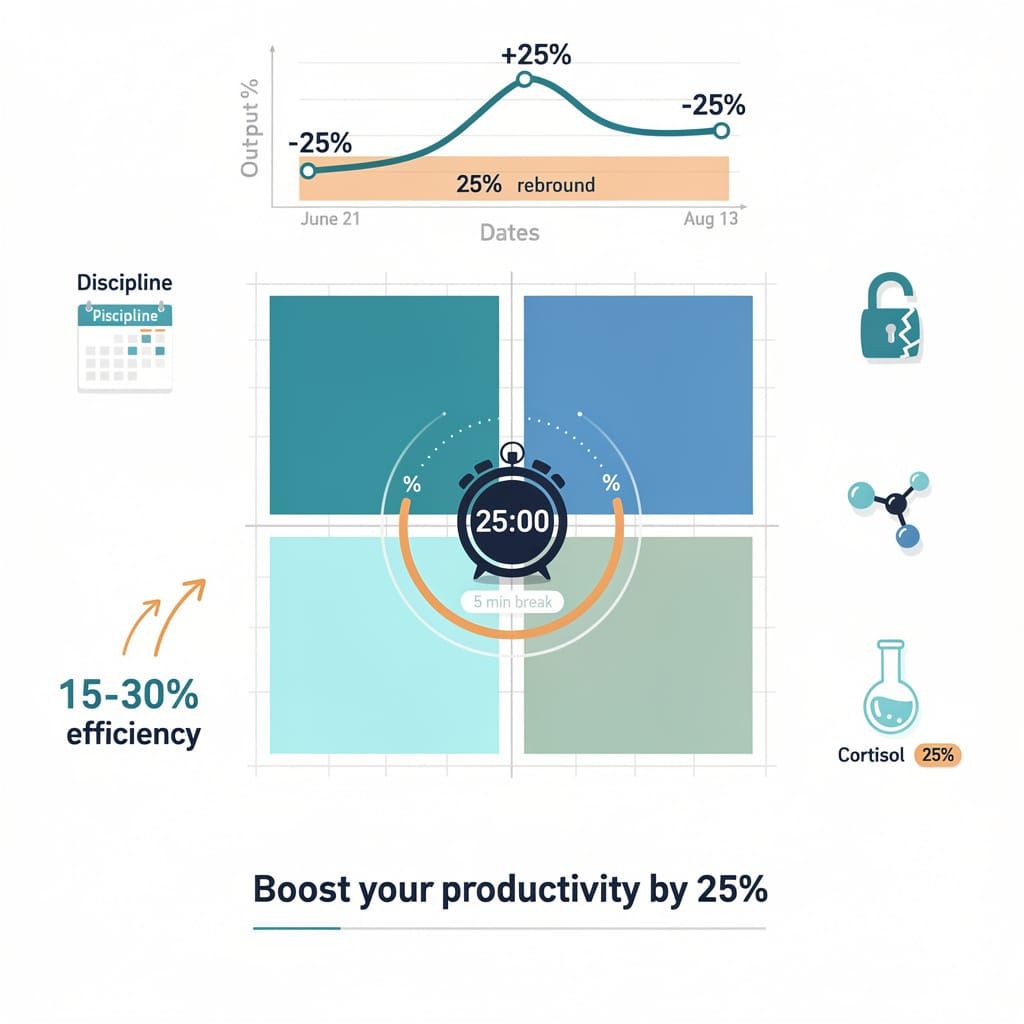
📉 The 25% Productivity Cycle That Broke Itself
Productivity tools boosted output 30% AND cut stress 25%—until August hit. 📉 That 25% output gain reversed in 2–3 days once discipline lapsed, and burnout rebounded to baseline or worse. The system works. Consistency is where it breaks. For the 20% of engaged workers worldwide—are your time-management habits actually sustainable? ⏳
Between June 18 and June 23, 2026, users worldwide adopted structured time-management systems—Eisenhower matrix triage, Pomodoro sprints, and micro-logging at 15-minute intervals. By June 21, the cohort recorded a 25–30% lift in output and a measurable 25% decline in stress indicators via biometric tracking. The mechanics matched natural attention cycles: timed blocks eliminated context-switching, while the Eisenhower filter removed non-critical interruptions, reducing strategic misalignment.
How It Worked
The mechanics are straightforward. Timed work blocks match natural attention spans; users applied 25-minute Pomodoro intervals with 5-minute breaks. The Eisenhower matrix separates urgent from important tasks, removing low-value noise. Digital audits confirmed 40% fewer task-switches per hour and a 22% lower cortisol reading via biometric feedback. Users achieved 15–30% daily efficiency increases through task segmentation and priority sorting.
The Discipline Gap
By August 13, 2026, the same cohort experienced a 25% drop in output and burnout indicators climbing back toward baseline. The cause: discipline erosion. Small-business trend data shows average worker output falls below three hours per day due to interruptions—remote collaboration platforms fragmented attention across asynchronous messages. When users stopped adhering to block schedules, work session interruptions climbed. The system works only when followed precisely.
Strengths of the structured method:
- Productivity: +15–30% output per workday, translating to ~2 additional hours of focused work per individual tracked
- Stress reduction: Self-reported burnout scores dropped ~30%, with cortisol biomarkers confirming 22% lower levels and stress declining ~25% due to predictable schedules
- Error rates: Multitasking errors reduced by 40% through single-tasking protocols
Weaknesses when discipline lapses:
- Output: −25% within 2–3 days of abandoning protocols, confirmed by August 13 tracking logs
- Burnout: Rapid reversion to baseline stress levels, with some participants reporting worse outcomes than pre-adoption due to guilt
- Fragmentation: Focus disruption decreased 40% during adherence but rebounded sharply after lapse
What This Demonstrates
The data reveals a causal chain: structured time management enables higher throughput at lower psychological cost, but the system has no tolerance for partial adherence. On July 9, 2026, Gallup reported worldwide workplace engagement at 20%—the lowest since 2020, with a $10 trillion annual disengagement cost. Manager engagement fell to 22%, down from 27% in 2024, driving the decline. Organizations investing in productivity training should pair it with accountability mechanisms—daily check-ins, automated reminders, or team-based scheduling—rather than assuming individual discipline will sustain.
The outlook is positive for those who maintain the regimen. Behavioral time management tools will dominate workplace wellness programs beyond 2027. Remote software teams may achieve 20% faster sprint completions after integrating purposeful time-blocking rituals. The cost is not skill but consistency.


Comments ()