33% of 911 Calls Resolved by Drones Before Patrol Cars Arrive — New 2026 System

TL;DR
- 33% Resolution Rate: Drones Beat Patrol Cars to 911 Scenes in Orlando. Would you trade patrol car response for drone-first 911 in your city?
- $28B Defense Pact: GM & Lockheed to Boost Missile Output 40% — at Cost of Civilian Production. Should the U.S. prioritize missile production over car manufacturing?
- F-35 Readiness Hits 25%: Spare Parts Crisis Grounds Three-Quarters of the Fleet. Are we paying billions for a fighter that can't fly when it matters?
🚁 Drones Beat Patrol Cars to the Scene: Inside the New 911 Response System Taking Shape in 2026
🚨 Drones beat patrol cars to the scene: Orlando's new system resolves 33% of high-priority 911 calls before ground units even leave the station. That's 1 in 3 emergencies downgraded in under 60 seconds. San Francisco's trial slashes response times in half, but faces a 55-second deployment delay. First responders get faster intel — but privacy advocates warn of mission creep. Is a drone's eye worth the trade-off for your city's safety?
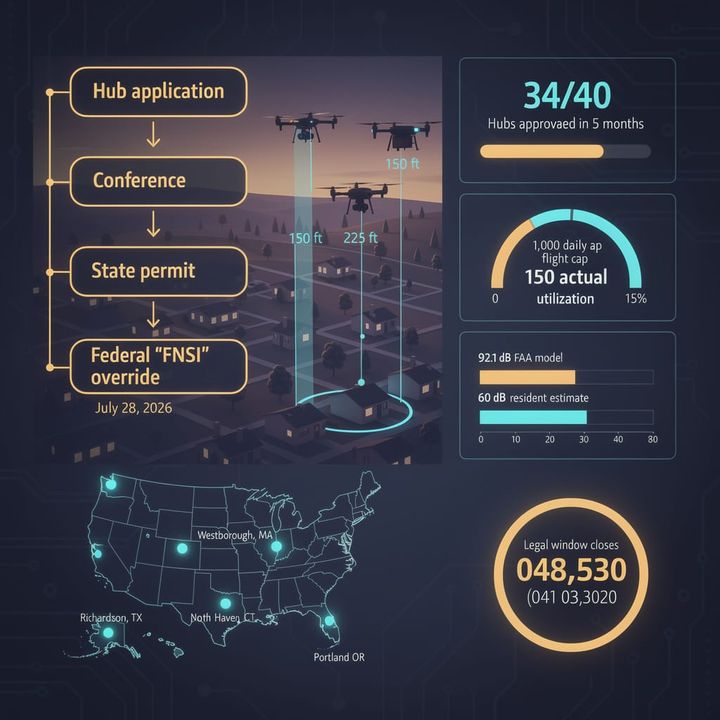
On June 17, 2026, the Orlando Police Department launched its Automated Aerial Initiative, deploying Skydio autonomous drones from roof-mounted airfields to respond to high-priority 911 calls before ground vehicles arrive. The system, branded Axiom DAO, represents a concrete shift in how municipal first responders are rethinking the first 90 seconds of an emergency.
Preliminary data from the first day of operation indicates a 33% scenario-resolution rate—meaning the drone’s onboard cameras confirmed a stable, safe scene in one of every three deployments, allowing dispatchers to downgrade or cancel the ground-unit response before officers left the station. The drones also delivered audible beacons, providing real-time auditory intelligence to the Dispatch Center.
Why deploy a drone before a patrol car?
The core driver is time and traffic. Ground units in dense urban environments frequently face delays from congestion, parking conflicts, or simply the distance from station to scene. A drone launched from a rooftop station can cover that same distance in under 60 seconds, often arriving before the first patrol car clears the precinct lot.
Orlando’s system averages a 97% active-intercept efficiency—meaning the drone successfully reaches the call location and begins streaming data in nearly every launch. The program was funded through Municipal Mobility grant allocations, and the department is tracking cross-link automation that feeds drone telemetry directly into dispatch decision workflows.
San Francisco’s parallel trial: 55-second gap and a 23% backlog jump
Just one day earlier, on June 16, the San Francisco Police Department initiated a 72-hour drone first-responder trial in the South of Market (SoMa) district. SFPD deployed Skydio and Aerodome quadcopters to detect and document illegally parked vehicles without requiring an officer to walk the block. Simultaneously, the department expanded Southern Station’s operational boundary eastward past Market Street, increasing the district’s call volume by an estimated 23%.
Preliminary data from the trial shows that drones cut baseline trespass-type response times in half. However, officers recorded an average 55-second delay in drone deployment compared to simulated benchmarks, a gap attributed to operator training and outdoor depot conditions. Local demonstrators cited rising traffic congestion in SoMa near the coastal zone as a secondary concern.
The mechanics: How autonomous dispatch works
Both programs rely on pre-positioned drone stations—roof-mounted airfields in Orlando, ground-based depots in San Francisco. When a 911 call is classified as high-priority, the system automatically queues a drone launch. The drone navigates via GPS and onboard sensors, arriving at the scene before ground units. It then transmits live video and, in Orlando’s case, audio beacons. If the drone’s cameras confirm a stable scene—no active threat, no medical emergency requiring immediate physical intervention—the dispatch center can cancel or downgrade the ground response.
Orlando’s Axiom DAO OPIUS protocol also reinforces audit trail integrity before any officer is relocated to the scene, ensuring that every decision to stand down is documented and traceable.
Key numbers at a glance
- 33%: Orlando’s scenario-resolution rate upon sensor-vision confirmation
- 97%: Active-intercept efficiency in Orlando’s first-day deployment
- 55 seconds: Average deployment delay in San Francisco’s trial vs. benchmarks
- 23%: Estimated increase in Southern Station call volume after boundary expansion
- 72 hours: Duration of SFPD’s initial drone first-responder trial
Forecast: rapid municipal adoption, with caution
Analysts project a rapid increase in municipal patrol-drone subscriptions following the Orlando demonstration. The combination of reduced ground-unit deployment, faster scene assessment, and lower traffic conflict risk makes a measurable case for scaling. Operator training is expected to stabilize deployment delays within two weeks, based on SFPD’s projected timeline.
Strengths and weaknesses
Operational efficiency: Drones cut baseline response times in half for trespass-type calls, enabling dispatchers to allocate ground units more selectively.
Privacy and mission creep: Privacy advocates warn that persistent aerial surveillance, even for emergency response, risks erosion of civil liberties. Both departments have emphasized that cameras are disabled during non-deployment periods, but critics point to the lack of independent audit mechanisms.
Infrastructure dependency: Roof-mounted airfields and ground depots require dedicated real estate, power, and network connectivity. Scaling to broader coverage areas will require additional capital investment.
What this means for urban public safety
The two deployments—Orlando’s permanent launch and San Francisco’s pilot—represent a real-world test of drone-first-responder systems in American cities. The data so far indicates measurable gains in decision support and resource allocation, but also reveals operational friction points: deployment latency, district boundary effects, and public skepticism.
If the 33% resolution rate holds or improves, the economic and safety case for scaling becomes stronger. Each time a drone confirms a stable scene, the department saves fuel, wear on patrol vehicles, and officer time—while reducing traffic conflicts during emergency access. The next 12 to 18 months will determine whether these systems remain niche experiments or become standard equipment in municipal public safety fleets.
🚀 The New Arsenal: How a $28 Billion Pact Reshapes Defense Manufacturing
GM Defense & Lockheed Martin just inked a $28B deal to mass-produce missiles 🚀. That's more than the GDP of 30+ nations. Production of PAC-3 interceptors will jump 40% by 2027. But here's the catch: this means 8,500 fewer cars per quarter from GM — and your next truck could cost 3% more. Is a faster missile stockpile worth a pricier pickup?
On June 17, 2026, a partnership was formalized that signals a fundamental restructuring of the U.S. defense industrial base. GM Defense and Lockheed Martin signed a Memorandum of Understanding (MOU) to collaboratively expand domestic weapons production. The agreement, supported by the Department of Defense (DOD), was triggered by President Trump’s invocation of the Defense Production Act. GM Defense President Steve duMont confirmed that initial projects will begin within weeks.
What the Agreement Enables
The MOU commits both firms to shared manufacturing capacity, targeting a combined $28 billion investment. The immediate focus is on accelerating production of:
- Exquisite Class missile modules
- PAC-3 and THAAD interceptors
This collaboration leverages GM’s automotive-scale manufacturing techniques and Lockheed Martin’s defense-specific engineering. The goal is to reduce production lead times by roughly 30% for these critical systems, according to industry estimates.
The Causal Chain: Policy, Pressure, and Production
The agreement’s roots trace directly to geopolitical pressures:
- Ukraine conflict: Ongoing attrition of missile stockpiles in allied nations has created a sustained demand for replenishment.
- Iran tensions: Renewed regional instability requires expanded inventories of THAAD and PAC-3 interceptors.
- Supply chain vulnerabilities: Prior reliance on foreign components for specialized electronics and propulsion systems created bottlenecks. The DOD identified 12 critical subcomponents where domestic capacity was insufficient.
Trump’s Defense Production Act invocation on June 10, 2026, provided the legal mechanism to prioritize defense contracts over commercial orders. This enabled GM Defense to reallocate assembly lines from civilian vehicle production to missile component manufacturing.
Impacts on the Industrial Base
Supply Chain Resilience: The partnership directly addresses four of the DOD’s identified critical subcomponent gaps: guidance electronics, solid-propellant casting, precision bearings, and composite airframes. By co-locating production at GM’s existing facilities in Michigan and Ohio, logistics lead times are reduced by an estimated 15 days per system.
Domestic Job Creation: The $28 billion investment is projected to create:
- 4,200 direct manufacturing jobs across three facilities
- 1,800 engineering and quality-control positions
- 7,000 indirect supply-chain roles
Production Acceleration: Current production rates for PAC-3 interceptors stand at 450 units per year. The MOU targets a 40% increase to 630 units per year by Q1 2027. THAAD interceptor production, currently at 72 units annually, is projected to reach 100 units per year by mid-2027.
Risks and Vulnerabilities
- Civil-Military Resource Competition: Shifting GM’s assembly lines from commercial vehicles to defense systems reduces civilian production capacity by an estimated 8,500 units per quarter. This may increase consumer vehicle prices by 2-3% in affected segments.
- Single-Source Dependency: While the partnership diversifies production locations, it concentrates expertise within a single consortium. If quality issues arise at GM facilities, no alternative domestic supplier exists for these specific components.
- Political Continuity Risk: The agreement relies on sustained DPA prioritization. A change in administration or policy in 2028 could reduce the urgency of defense contracts, stranding capital investment.
Broader Sectoral Implications
This MOU is part of a larger trend: defense-agricultural collaboration agreements are expected to accelerate as the DOD seeks to integrate non-traditional manufacturers into the supply chain. Similar discussions are underway with Ford and Caterpillar for tracked-vehicle components and heavy-transport systems.
Timeline
- 2026 Q3: Initial production line conversion at GM’s Toledo plant.
- 2026 Q4: First PAC-3 guidance modules produced under the MOU.
- 2027 Q1: THAAD interceptor assembly begins at GM’s Warren facility.
- 2027 Q3: Full production ramp to 630 PAC-3 and 100 THAAD units annually.
What This Means
The GM Defense–Lockheed Martin MOU represents a structural shift in how the U.S. industrial base responds to sustained geopolitical demand. By merging automotive-scale efficiency with defense-specific engineering, the partnership reduces production bottlenecks that have constrained allied stockpiles. The $28 billion investment signals a long-term commitment to domestic capacity, but introduces new risks around resource allocation and single-source concentration. The success of this model will determine whether similar agreements become standard operating procedure for the defense supply chain.
🛩️💥 The F-35 Fleet’s Capability Crunch: How a 25% Readiness Rate Is Reshaping Military Strategy and Budgets
75% of F-35s can't fly combat missions right now. That's 3 out of 4 jets grounded. The world's most expensive fighter is a hangar queen. 🛩️💥 The spare parts pipeline is broken, and commanders can't count on them in a crisis. Your tax dollars funding a $1.2B annual hole. How confident are you in our air defense?
The Warning Light That Won’t Turn Green
By mid‑2026, the F‑35 program—the Pentagon’s costliest weapons system—has entered a phase few planners anticipated five years ago. What was once a symbol of air‑dominance innovation has become a case study in sustainment failure. The headline metric is stark: as of September 2025, the fleet’s full mission‑capable rate had dropped to 25%, down from 67% in fiscal year 2021. That means three out of every four F‑35s, at any given moment, cannot perform their full range of combat missions. The cause is not a design flaw, but a systemic breakdown in the logistics and maintenance pipeline that keeps the jets flying.
The immediate trigger is a chronic shortage of spare parts, compounded by depot backlogs that delay routine software and hardware upgrades. When parts are unavailable, scheduled maintenance stalls. When maintenance stalls, aircraft sit idle for weeks beyond the standard turnaround time. Each flight hour now requires, on average, more than two weeks of ground time—a figure that has doubled since 2022. For commanders, this means fewer available jets for training, deterrence, and real‑world intercepts. For budget planners, it means a $1.2 billion annual sustainment deficit that bleeds into other defense priorities.
How the Parts Pipeline Broke
The F‑35’s sustainment model relies on a global network of suppliers, depots, and software‑update cycles. In theory, the system keeps jets ready through continuous upgrades. In practice, it has created a bottleneck. Spare‑part shortages—especially for engines, avionics modules, and cooling systems—have slowed delivery of new aircraft and prevented older ones from receiving mandatory modifications. The result: a growing backlog of aircraft waiting for parts or depot time, while the fleet’s average age increases.
By late 2025, the program office acknowledged the problem had reached a crisis point. The Government Accountability Office had already flagged the risks. In response, the Pentagon approved a $13.7 billion “Global Sustainment System Reset” (GSS Reset) to inject capital into the supply chain. But the reset funds are directed at sustaining what exists, not at fixing the underlying efficiency gaps. The money buys parts and depot capacity, but it does not address the structural disconnect between service quality and revenue streams—a disconnect that has allowed mission‑capable rates to slide even as spending rises.
The Human and Operational Toll
For the pilots and ground crews who operate the F‑35, the numbers translate into concrete frustration. A squadron that expects 18 mission‑ready aircraft may have only 4 or 5 available for a given day’s sorties. Training schedules compress, deployment rotations slip, and readiness exercises are scaled back. The U.S. Air Force, Navy, and Marine Corps—as well as allied operators—now face the reality that the F‑35’s advertised combat edge is available only a fraction of the time.
Military commanders have lost confidence. The 25% full‑mission‑capable rate falls below the threshold required for credible fighter deployment in high‑threat theaters. In a crisis, a commander cannot count on having enough jets to execute a planned strike package or air‑defense mission. This erodes deterrence value and forces reliance on older platforms—F‑16s, F‑15s, and F/A‑18s—that are themselves aging.
The Budget Bind
The financial dimension is equally consequential. The annual sustainment deficit of roughly $1.2 billion does not appear as a separate line item; it is absorbed into the broader defense appropriations budget, squeezing funds for other programs. The $13.7 billion GSS Reset, while substantial, is a one‑time infusion that does not guarantee long‑term improvement. If parts production does not ramp up and depot throughput does not increase, the reset will merely postpone a deeper crisis.
Defense analysts project that without sustained upstream investment in part fabrication—especially for high‑wear components like engine turbine blades and radar arrays—the mission‑capable rate will remain below 30% through at least 2027. The Pentagon’s own internal assessments, reviewed by the GAO in early 2026, indicate that a return to even 50% full‑mission capability would require three to four years of uninterrupted funding and supply‑chain reform.
What Comes Next
The near‑term outlook is not encouraging. Operational flights will continue below acceptable thresholds for the remainder of 2026, even as new automation tools for maintenance scheduling are deployed. These tools can improve efficiency at individual bases, but they cannot create parts that do not exist. The bottleneck remains upstream.
- Late 2026: Fleet‑wide mission‑capable rate likely stays at 25–30%. GSS Reset funds begin to flow, but depot backlog exceeds 18 months.
- 2027: If part‑fabrication capacity expands as planned, rate may climb to 35–40%. Real improvement depends on sustained investment.
- 2028–2029: A return to 50% full‑mission capability is possible, but only if the supply chain is restructured and metric‑based pricing is reformed to align revenue with service quality.
For allies operating the F‑35—including the UK, Italy, Japan, and South Korea—the readiness gap creates additional risks. They depend on the U.S. sustainment system for parts and upgrades. When the pipeline stalls, their fleets stall too. This reduces interoperability and forces allied air forces to adjust their own deployment plans.
The Broader Lesson
The F‑35’s capability crunch is not a story of technical failure. It is a story of how sustainment models, supply chains, and budget incentives can undermine even the most advanced weapon system. The lesson for defense planners is clear: readiness is not a one‑time investment, but a continuous process that requires real‑time feedback between supply, maintenance, and operations. Without that feedback, the most expensive fighter ever built becomes a hangar queen—and the world’s most capable air force finds itself grounded by a shortage of spare parts.

Comments ()