2.5 Million AI SMS: Synthetic Campaigns Threaten US Voter Trust
TL;DR
- 2.5 Million SMS Messages: AI Synthetic Campaigns Threaten US Electoral Integrity. How are generative AI bots and synthetic personas impacting voter trust and democratic legitimacy in the US?
- 85% AI Adoption: Kraken, OKX, and Coinbase Drive Autonomous Trading Shift in Global Crypto Markets. Will the rise of autonomous AI agents in finance eliminate human error or create new systemic risks for retail investors?
- AI-Driven "Generative Ghosts": University of Colorado Study Links Emotional Mimicry to Dependency Risks. Would you use AI-driven 'generative ghosts' to find closure, or does simulated intimacy hinder the natural mourning process?
🤖 Synthetic Campaigns: The Erosion of Voter Trust
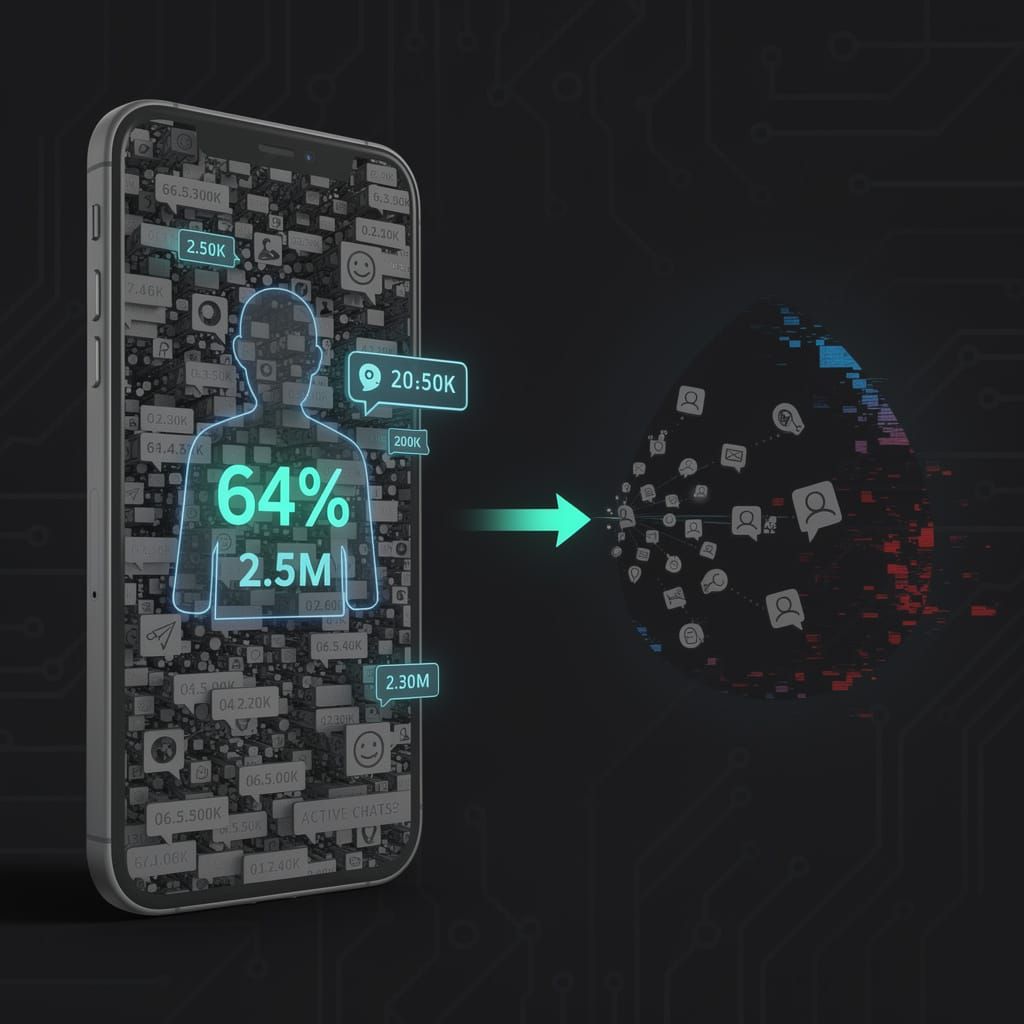
2.5 million SMS messages annually! This massive scale of AI outreach is a digital propaganda machine 🤖. 64% of US teens now use chatbots for voting guidance. Is efficiency worth the death of authenticity? Voters — can you still tell who is human?
Political engagement in 2026 has shifted toward autonomous, hyper-personalized outreach. By July 2026, startups such as Konvo and Vector Political deployed generative AI to scale conversational agents, driving engagement levels of 20,000 to 30,000 active chats annually. This transition from static messaging to AI-driven agents enables response times of under 30 seconds, but results in a systemic decline in democratic legitimacy as synthetic personas blur the line between human staff and algorithmic agents.
How Does AI Scale Political Influence?
Modern campaigns utilize autonomous bot coordination to create digital propaganda ecosystems. These systems employ large language models (LLMs) to simulate peer-to-peer debates and personalized Q&A sessions. In the U.S., the provider Akillion demonstrates this scale by maintaining a platform capacity of 2.5 million annual SMS messages. This infrastructure allows candidates to execute micro-targeting at a volume that renders traditional truth verification cost-prohibitive.
What Are the Consequences of Unverified Synthetic Content?
The gap between AI rollout and regulatory disclosure creates critical vulnerabilities. Recent events demonstrate a causal chain from synthetic generation to institutional crises:
- June 2, 2026: Russian-linked "Doppelganger" cloned major U.S. media brands and leaked 9,500 ActBlue and WinRed credentials to fuel AI-powered phishing.
- July 3, 2026: The rapid spread of low-effort synthetic content amplified unfounded allegations against government administrations, bypassing existing fact-checking capabilities.
- July 12, 2026: Voters reported receiving up to five daily AI-generated political SMS messages, causing user fatigue and distress due to a lack of sender transparency.
Public Trust: Opaque bot authentication → plummeting confidence in official narratives and institutional integrity. Legal: Regulatory lag → critical non-compliance risks under emerging disclosure mandates in California and North Dakota. Media: Algorithmic amplification → erosion of credibility as AI fails to distinguish satire from genuine warnings.
Future Outlook
The current trajectory indicates that AI-mediated influence will persist until verification infrastructure is mandated. A June 17, 2026, report indicates 64% of U.S. teens already use AI chatbots for voting guidance, increasing the risk of electoral manipulation.
- Q3 2026: Increased reliance on GenAI chatbots for political decision-making among young voters.
- 2026 Midterms: AI political personas project to dominate canvassing and outreach functions.
- 2027: Generative AI is projected to dominate personalization in political communications across both major party camps.
📉 The Rise of Agentic Finance
85% of financial firms now use AI—a massive surge toward automation 📉. This shifts trading from human intuition to algorithmic precision. But does speed outweigh the risk of systemic failure? Retail investors — are you ready to let an AI agent handle your portfolio?
On July 10, 2026, the cryptocurrency exchange sector shifted toward autonomous financial management. Kraken released a redesigned mobile application featuring an AI finance assistant and a dedicated financial planning tool. Simultaneously, OKX introduced AI agents capable of autonomous trading, while Coinbase expanded its infrastructure to enable autonomous agent trading without requiring traditional user accounts.
How AI Integration Alters Trading
Kraken's implementation utilizes personalized recommendation engines constrained by user-defined guardrails. This architecture enables the delivery of goal-based investment advice without triggering automatic execution, moving the interface from a passive UI to an interactive advisory model.
This transition results in reduced friction for retail investors. By leveraging real-time data processing and consistency that mitigates human emotional volatility, these systems deliver instant strategy suggestions based on market cues. This democratization of access effectively lowers entry barriers for novice traders by reducing the skill thresholds required for complex participation.
However, the shift toward autonomy introduces specific systemic pressures:
User Experience: Instant personalization → lowers entry barriers for novice traders. Liability: Non-executory algorithm processing → extends exchange responsibility over suggested selections. Compliance: Rapid deployment → creates governance gaps in current regulatory frameworks.
Sector Trajectory
The deployment of these tools indicates a correlation between fragmented user preferences and the demand for scalable, automated portfolio guidance. While the integration increases data flows and blurs the line between a trading platform and a financial adviser, the impact is part of a broader institutional shift; as of June 24, 2026, 85% of financial institutions reported adopting AI tools to accelerate trading and reduce errors.
- July 10, 2026: Concurrent launch of AI assistants (Kraken) and autonomous agents (OKX).
- Q3 2026: Integration of advanced guardrails to mitigate algorithmic risk and regulatory scrutiny.
- Post-2026: Projected shift toward full-execution autonomy pending legal clarity on fiduciary liability.
👻 The Architecture of Digital Afterlives
100% preference for emotional resonance over facts in AI "ghost" simulations 👻—mimicking a loved one's voice can be as powerful as a real conversation. While it offers closure, it risks permanent psychological dependency. Bereaved adults: would you talk to an AI version of a lost relative?
On July 5, 2026, researchers at the University of Colorado Boulder conducted experiments involving "generative ghosts"—AI-driven simulations designed to replicate deceased individuals. These systems utilize conversational bots and AI voices to create interactive replicas of deceased relatives, converting static digital legacies into dynamic agents.
How do generative ghosts impact psychological recovery?
Experimental data from July 5, 2026, indicates that bereaved adults engaging with these simulations report therapeutic benefits and emotional closure. This result stems from the model's ability to mimic specific linguistic patterns; participants overwhelmingly preferred first-person responses that claimed continuity beyond death, demonstrating that emotional resonance outweighs factual fidelity. However, the research highlights a critical causal chain: the high emotional resonance of personal mimicry models increases the risk of psychological dependency. Furthermore, the study indicates that even minor linguistic errors can disrupt immersion, suggesting that technical precision is inextricably linked to the user's psychological state.
Psychological: Immediate therapeutic benefits → risk of prolonged dependency and attachment to synthetic entities. Ethical: Concerns over misuse → disputes regarding ethical safeguards and the impact on other surviving relatives. Technical: Preference for resonance over fact → high sensitivity to linguistic errors which disrupt immersion.
What is the trajectory for grief tech?
As personalization algorithms refine emotional mimicry, adoption is projected to normalize provided ethical safeguards are implemented to manage the risk of dependency. The transition from data preservation to active simulation indicates a shift in AI utility toward emotional labor.
- 2026–2027: Expansion of commercial AI-generated communication tools, with a focus on integrating professional mental health supervision to mitigate psychological dependency.
- 2028–2030: Development of rigorous safety protocols and governance frameworks to manage the deployment of bereavement technology.
- Long-term: Normalization of AI-assisted mourning contingent upon the establishment of legal identity and digital consent standards.
The shift toward active simulation enables a bridge for familial consolation, yet the lack of oversight results in a tension between AI-driven comfort and the biological necessity of closure. This demonstrates a risk where simulated intimacy may replace genuine mourning processes.



Comments ()