17% Efficiency Drop: Visibility Gap Risks Professional Merit in Global Workplaces
TL;DR
- 17% Efficiency Drop: The Visibility Gap and Merit Decay in Corporate Leadership. Is your professional growth based on measurable performance or simply proximity to power?
- 18% Promotion Surge: Walmart's Trust-Based Mentorship Models Tackle Retention Risks. Can structured, trust-based mentorship frameworks significantly increase promotion rates and employee retention in AI-driven workplaces?
- 10.7% DOD Workforce Cut: Administrative Latency Stalls Defense Career Growth. How is the current DOD workforce reduction and administrative latency impacting your professional growth and promotion timelines?
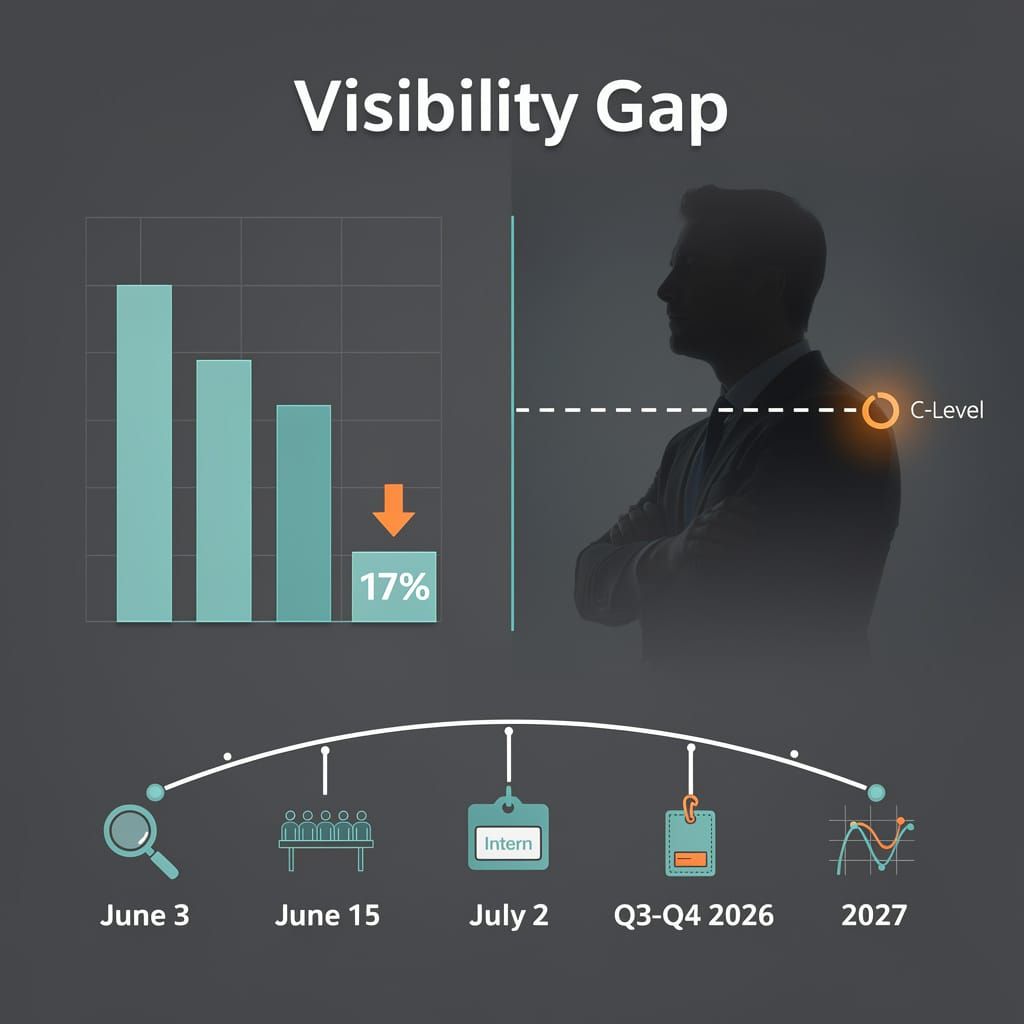
📉 The Visibility Gap: Decoupling Performance from Progression
17% operational efficiency drop: a staggering loss equivalent to nearly one full workday every week 📉. Merit is being decoupled from progression as the 'Visibility Gap' grows. Meritocracy or proximity to power? High-value executors — is your hard work actually being seen?
Recent organizational shifts indicate a growing divergence between functional output and professional advancement. While technical contributions drive operational success, the mechanisms for leadership ascent are becoming increasingly opaque. This results in a "visibility gap" where high-performing talent is marginalized while positions are filled based on proximity to power or rapid-appointment cycles rather than measurable merit.
How is Visibility Managed?
Data demonstrates that praise for deliverables does not consistently translate into strategic inclusion. On July 2, 2026, an analyst implemented an organization-wide change transformation and a standardized onboarding portal, yet remained excluded from C-level quarterly gatherings. This indicates a structural bias where execution is delegated to marginalized groups while strategic presence is reserved for a select few.
Parallel trends appear in erratic appointment cycles. The appointment of a former intern to an executive-director role on July 2—lacking a defined value system—triggered workflow delays. This demonstrates that positional cues are outpacing skill alignment. This instability is compounded by a broader corporate trend; on June 22, 2026, analysts Phil LeBrun and Dr. Jana Werner warned that companies cutting headcount to boost "productivity" are pursuing hollow efficiency narratives rather than real innovation.
What Are the Systemic Risks?
When leadership gaps are filled inconsistently, organizational stability declines:
Authority Erosion:
- Power Asymmetry: Newcomers bypassing seniority without oversight lead to public conflict and eroded trust.
- Legitimacy Deficits: Rapid appointments—such as the VP of Engineering on June 15—often dismiss operational pain points, creating diagnostic gaps.
Cultural and Regulatory Decay:
- Compliance Risks: The June 3 EEOC update to MD-715, which removed mandatory demographic reporting, reduces visibility into workforce composition and heightens the risk of undetected bias in AI hiring tools.
- Recognition Failure: Employees receiving positive reviews but omitted from high-visibility slots experience reduced engagement, while 64% of LGBTQ+ workers report self-censoring due to declining DEI momentum.
Professional Outlook
- Q3 2026: Increased regulatory uncertainty as the removal of EEOC reporting tools complicates discrimination prevention.
- Q4 2026: Higher rotation of high-value executors as revenue per employee falls (averaging a 12% YoY decline in affected sectors).
- 2027 Forecast: Transition toward adaptive leadership frameworks and data-backed progression to mitigate the 17% decline in operational efficiency caused by employee experience crises.
Operational Impact:
- Efficiency: Centralized decision-making accelerates short-term progress but increases emotional strain on senior operators.
- Retention: High-value executors face stagnation when corporate culture prioritizes efficiency narratives over experimental health.
📈 The Mechanics of Authentic Help-Seeking
18% boost in promotions is a massive leap—nearly a fifth of a workforce accelerating. 📈 This is the power of structured mentorship over transactional requests. While AI optimizes tasks, human trust remains the ultimate competitive edge. Is your company investing in people or just processes? Walmart employees — how has mentorship changed your path?
Professional collaboration frequently suffers from a transactional gap where requests for assistance function as performative gestures rather than genuine attempts to solve problems. This friction results in superficial mentorship and rushed outcomes. To counter this, the "How to Ask for Help" framework published on July 1, 2026, shifts the focus from project-centric demands to trust-based human value, treating relational infrastructure as a critical asset amid rapid technological change.
How does authentic assistance function?
The framework identifies three core principles that differentiate sincere help-seeking from transactional aid. First, it prioritizes human value over immediate demands. This aligns with perspectives from Dr. Nicky Ringland, who indicates that building communities serves as a primary competitive advantage in AI-driven environments. Second, it requires sincerity backed by proof of effort. Third, it emphasizes cultural fit and shared values.
When professionals apply these principles, the causal chain moves from genuine connection to deeper collaboration. This is evidenced by corporate applications: Walmart's Women in Product mentorship program, utilizing structured pairing and sponsor advocacy, resulted in an 18 percentage point increase in annual review promotions. Additionally, synchronous workshops demonstrate a 60% boost in retention, while reverse mentoring increases engagement by 43%.
Operational Impacts
- Collaboration: Trust-based models → increased mentorship efficacy and reduced transactional friction.
- Retention: Structured mentorship → higher engagement scores (+18% YoY) and improved stability in high-churn sectors.
- Adaptability: Community-centric networking → mitigation of AI-driven job displacement anxiety and enhanced ethical responsibility via "User Advocate" roles.
What is the trajectory for professional guidance?
The transition toward decentralized, authentic networking indicates a decline in rigid mentoring structures in favor of fluid, personalized guidance. This shift occurs as AI integration in academia and the workplace increases efficiency but reduces critical engagement and original thought.
- Q3 2026: Integration of authentic help-seeking principles into peer-to-peer groups and adoption of real-time sentiment feedback systems.
- Q4 2026: Projected growth in personalized guidance models to combat the 21% three-year retention rate seen in the financial sector.
- 2027: Expansion of reciprocity-based networks; Walmart projects its inclusive leadership model could reach 1,000 additional mentees by the end of the fiscal year.
📉 The Friction of Ascent: Navigating Administrative Latency in Specialized Careers
82,940 positions gone: a staggering 10.7% workforce cut in the DOD 📉. This is like losing an entire small city's workforce overnight. Strategic guidance is viral, but the administrative machinery is broken. Skills are ready, but the queue is frozen. DOD professionals — how is this latency affecting your promotion timeline?
Professional advancement in high-stakes sectors—particularly defense and technology—increasingly depends on a paradox: while strategic guidance is more accessible, the administrative machinery required to execute moves remains rigid. Recent data indicates that personalized career roadmaps fail to accelerate promotion timelines when institutional bottlenecks and workforce contractions persist.
Why Does Guidance Not Equal Growth?
On July 2, 2026, the distribution of targeted career guidance via social platforms provided personnel with frameworks for Bilateral-Based Advance criteria. However, this transparency reveals a systemic gap: a roadmap does not eliminate processing delays.
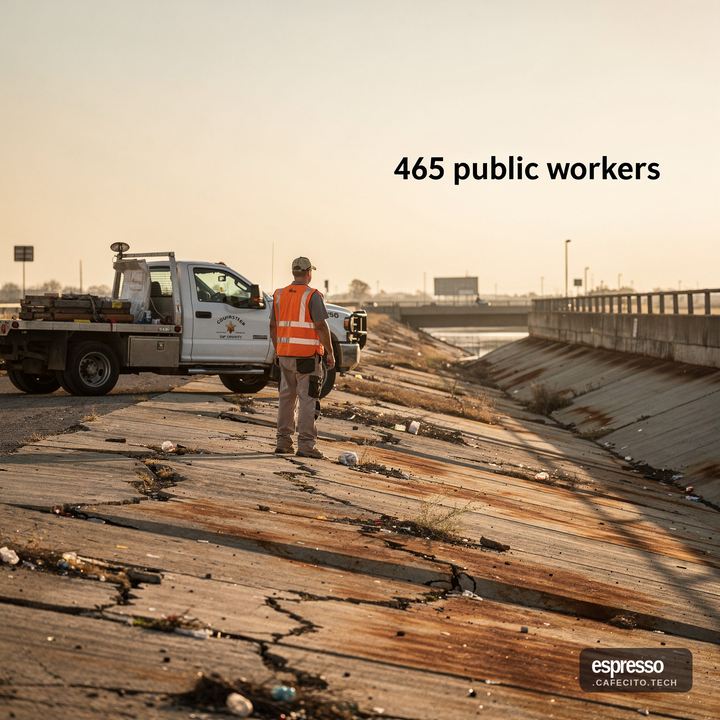
This latency is compounded by a shrinking administrative floor. A June 23, 2026, GAO report confirmed a 10.7% reduction in the DOD civilian workforce, with 82,940 positions lost since December 2024. Driven by the Department of Government Efficiency (DOGE), this shrinkage creates a causal chain where proactive skill-building leads to a queue rather than a promotion. This strain extends to those exiting the sector; a June 10 report of a former Air Force pilot struggling to transition to civilian roles demonstrates the resulting professional uncertainty and documented stress impacts.
Career Progression Timeline
- June 5–7, 2026: Executive endorsements and defense tech pivots initiated.
- June 10, 2026: Implementation of "Joint Warfighting Evaluation" for O6$→$O7 promotions.
- July 2, 2026: Deployment of viral guidance scripts to standardize qualification submissions.
- Q3–Q4 2026: Promotion cycles projected to follow standard timing, though administrative shrinkage may increase execution delays.
The Impact of Systemic Strain
The correlation between high-level strategic shifts and ground-level administrative failure indicates a fragmented progression model. While the June 17 NDAA injected $1.2 trillion into defense and adopted AI for security clearances, the human element remains strained. The Army reduced permanent change of station (PCS) moves by 12,000 in FY2026, capping mobility for those seeking rapid ascent.
Furthermore, structural volatility introduces unpredictable risk. Secretary Hegseth removed multiple officers from promotion lists in early June 2026, while the Pentagon set an August deadline to phase out Anthropic’s AI tools from classified systems, forcing immediate technical pivots for specialized staff.
Administrative Latency: 10.7% workforce cut $→$ slower processing $→$ reduced personnel mobility. Guidance Efficiency: Viral communication $→$ lower inquiry volume $→$ increased candidate readiness. Strategic Risk: Political intervention and tool phase-outs $→$ promotion removals $→$ erosion of merit-based trust.
For the modern professional, the primary hurdle has shifted from acquiring skills to navigating the institutional latency and political volatility governing the application of those skills.


Comments ()