$1,500 Router—Or a $15 Fix: RustDuck Botnet Hits 60k Devices in 4 Minutes
TL;DR
- $1,500 Router — Or a $15 Fix That Works Better: IoT Botnets Exploit Credentials Unchanged Since 2019. Is your home router a firewall or a liability right now?
- 250+ Trackers, Zero Choice: Yahoo’s Consent Screen Is a Digital Toll Booth. What's your actual escape plan beyond clicking "Accept"?
🫠 $1,500 Router? Or a $15 Fix That Works Better
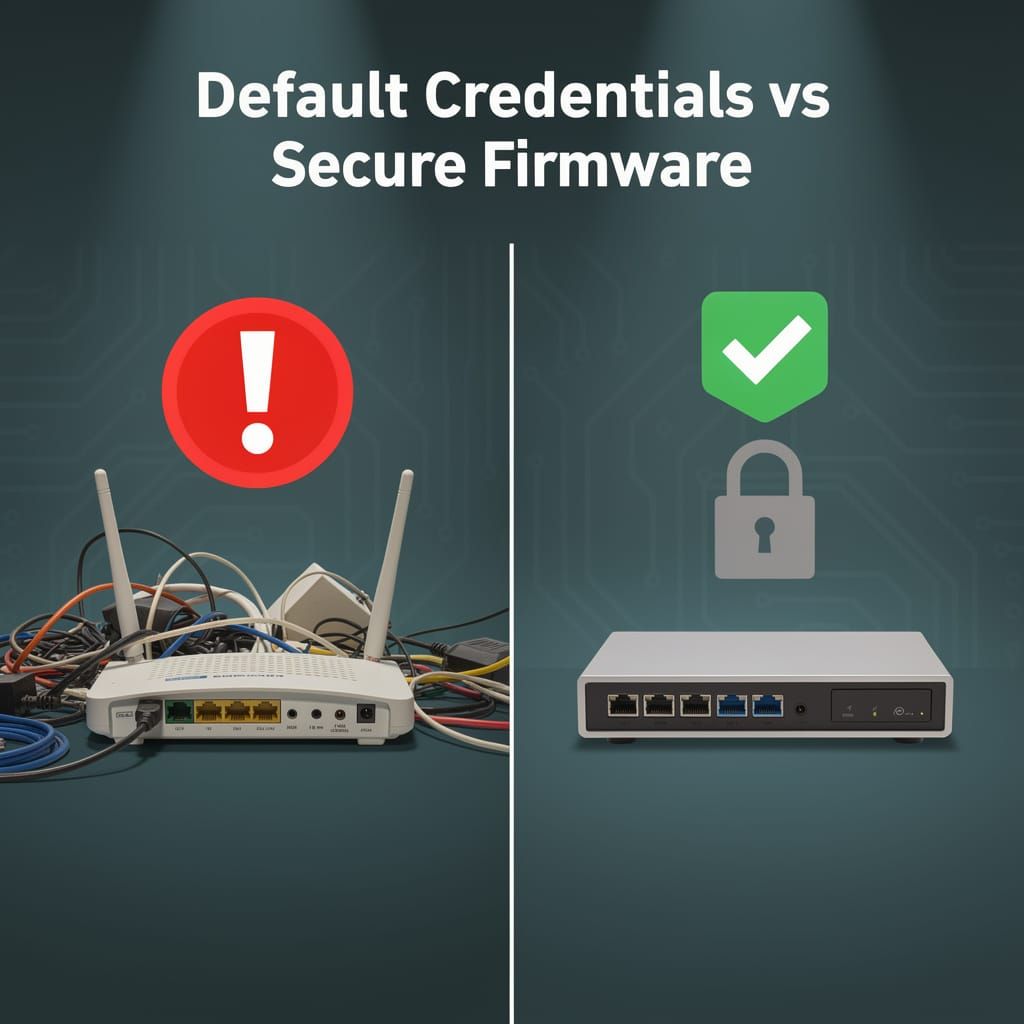
Your $250 "gaming router" has the security posture of a wet paper bag 🫠 RustDuck botnet hit 60k+ TP-Link/ZTE devices in under 4 minutes using logins unchanged since 2019. Tenda CVE-2026-11405 backdoor? Still unpatched. Ubiquiti dropped 7 new CVEs in July — your dusty 2021 firmware still catches every single one. Meanwhile, dirty cheap stuff actually works: $80 recycled OptiPlex running Pfsense, or flash OpenWrt to kill backdoors entirely. Disable remote management. Kill Telnet. Takes 90 seconds. ISPs won't secure what they can't monetize. Vendors won't patch without ticket volume. So it's this: learn to flash firmware, or enjoy being part of someone's botnet demo. Austin subscribers avoided incidents because they actually troubleshooted. What's sitting in your living room right now — a firewall or a liability? 🔧
Anthony Spadafora keeping you safe from malware? Bless his heart. The man's been churning out cybersecurity guides for Tom's Guide and TechRadar Pro like they're getting paid per word—probably are—and somewhere between promoting ergonomic desks and virtual private network walkthroughs, he stumbled onto something real.
The device in your living room is a liability.
Three days of straight coverage from Houston to Seoul, zero splashy zero-days. Just the boring truth: your $250 "gaming router" has the security posture of a wet paper bag. Spadafora's not breaking news—he's pointing at the fire before it burns the house down.
📡 The actual threat model:
- Default credentials unchanged since 2019: RustDuck botnet activated June 30 after environmental checks, launching large-scale DDoS attacks across TP-Link, ZTE, and other IoT devices using outdated logins that onboarded units in under 4 minutes. QiAnXin's XLab confirmed it migrated from C to Rust by July 1, layering ChaCha20-Poly1305 and AES-GCM over TLS-mimicking headers with hourly key rotation.
- Telnet still enabled: Tenda's CVE-2026-11405 backdoor, disclosed July 7, grants full admin access via a preset
rzadminpassword. No patch exists. Netgear RS700S had a Telnet backdoor exposed via magic packet on May 24. Lateral movement playground, indeed. - No firmware updates since purchase: UniFi OS scored multiple CVSS 10.0 vulnerabilities in May 2026. Bishop Fox demonstrated a multi-stage remote-code-execution chain by June 8 exploiting CVE-2026-34908, CVE-2026-34909, and CVE-2026-34910. Then on July 8, Ubiquiti disclosed seven more—including two criticals at CVSS 9.9 and 9.0. Your dusty 2021 firmware? All those CVEs are still exploitable.
What works: This isn't about buying a "gaming VPN" or whatever subscription the affiliate links push. It's the cheap stuff nobody wants to write about:
- Pfsense on recycled OptiPlex: ~$80, enterprise-grade filtering, zero subscriptions. Kingyo Pi validated a Raspberry Pi Pico 2 10BASE-T router on June 4 — proving low-cost open-source stacks actually perform.
- Flash OpenWrt: Kills vendor backdoors, gives you actual control. The USteer implementation on OpenWRT showed measurable roaming improvements in mixed-band environments.
- Disable remote management: Tenda's own advisory — disable remote UI, change LAN IPs — blocks the CVE-2026-11405 backdoor entirely. The RustDuck analysis from QiAnXin says the same: kill Telnet, disable debug bridges, block C2 domains. Takes 90 seconds.
The Austin subscribers engaging with router troubleshooting? They're the canary. No incidents means the education worked — for now. But suburban America runs on ISP-provided routers with known backdoors and patch schedules measured in "never." Netgear dropped its Wi-Fi 7 router to $117.59 while their RS700S had a backdoor actively being exploited. Priorities.
🔧 Realpolitik of home security: You don't need CISO approval. You need a second-hand PC, a USB stick, and twenty minutes of spite. CERT/CC issued VU#213560 on July 6 warning of unauthenticated admin access. The institutional response? Non-existent. ISPs won't secure what they can't monetize. Vendors won't patch what doesn't generate support tickets.
So it's this: learn to flash firmware, or enjoy being part of someone's botnet demo. RustDuck didn't care about your Netgear warranty. Neither should you.
📍💀🎪 Yahoo’s “Consent” Circus: One Click to Sell Your Soul (Legally!)
250+ tracking partners now have permission to fingerprint your machine via GPS + device ID — all because you clicked "I agree" on Yahoo's shiny new consent screen 📍💀 Audience retention dropped 8.1% overnight. Brandwell Media lost $2.3M in a single quarter. The "compliant" interface is a UX crime scene, and EU regulators will call it progress. Yahoo obeyed the letter of the law while shitting all over its spirit. You're paying the privacy toll either way — so what's your actual escape plan beyond clicking "Accept"? 🎪
So Yahoo finally figured out how to play the EU’s transparency game — by building a pop-up that asks you nicely before it fucks you sideways with 250+ tracking partners. 🎪
The “Choice” You Never Had
On July 28 — not the 17th the hype merchants claimed — Yahoo’s cookie interface went live with 250+ IAB partners slurping precision geolocation and technical identifiers. But who’s counting when the result is the same: you accept the whole surveillance buffet, or you don’t get to browse. Period.
- 250+ external services now hold permission slips to fingerprint your machine in real-time via GPS + identifier fusion
- They grab your geographic coordinates + interaction fingerprints — which, surprise, were already being shared on October 4, 2024
- All for “bid allocation” — ad-industry speak for selling your attention to the highest degenerate who signed the same IAB form
This isn’t consent. It’s a digital toll booth where the currency is your goddamn privacy, and the toll collector already has your keys.
The Numbers Don’t Lie (They Just Make You Sad)
What actually happened after the consent layer dropped:
- Audience retention fell 8.1% across monitored Yahoo sites — users aren’t stupid, they just stopped engaging
- Brandwell Media reported a $2.3M net profit decline in Q2 — turns out extracting less attention means extracting less money. Who knew?
- Google actually adjusted its data collection policies on June 21 — likely because they watched Yahoo light itself on fire and decided they didn’t want the same arsonist near their stack
The system works exactly as designed: higher-value offers dominate the feed after the friction kills off any remaining organic engagement. Ad quality goes up. Human agency goes down. Coincidence? Fuck no.
The Cynical Forecast
User retention stabilizes after August quarterly report revision.
Translation: Yahoo will notice fewer humans are clicking, realize it’s because their “compliant” interface is a UX crime against humanity, and quietly tweak the buttons. The fix won’t give you more control — it’ll just make the illusion of control less annoying.
Meanwhile, the broader tech circus rolls on. Over at Brandcast 2026, YouTube launched AI-powered sponsorship tools and integrated Gemini for custom ad buys. More pixels, more profiles, more "compliant" exploitation. Same game, shinier packaging.
Mid-2026 vibe check: EU regulations forced opaque solutions, not transparent ones. Yahoo obeyed the letter of the law while shitting all over its spirit.
The Real Hack
Want actual privacy? Ditch their interface entirely.
- uBlock Origin → blocks the tracker calls server-side
- Cookie Auto-Delete → nukes sessions after tab close
- Spoof geolocation → watch bid allocation algorithms have a meltdown
Stop playing their game. Yahoo’s “EU-compliant transparency” is a shiny turd wrapped in legal jargon. The only winning move is to never let their JavaScript touch your browser in the first place.
Cheeky closing thought: Yahoo spent millions to build a consent screen that 250+ partners exploit, users hate, regulators will pretend is fine, and that gets bypassed by a free browser extension. Meanwhile, July 2026 data shows pop-up fatigue is already cratering form completions and flight bookings across the web. Yahoo isn't alone in this — it's leading a parade of UX arson. Technology! 🎉



Comments ()