🇬🇧 Britain Cuts Corporate Red Tape, Exempting SMEs From Bloated Annual Reports
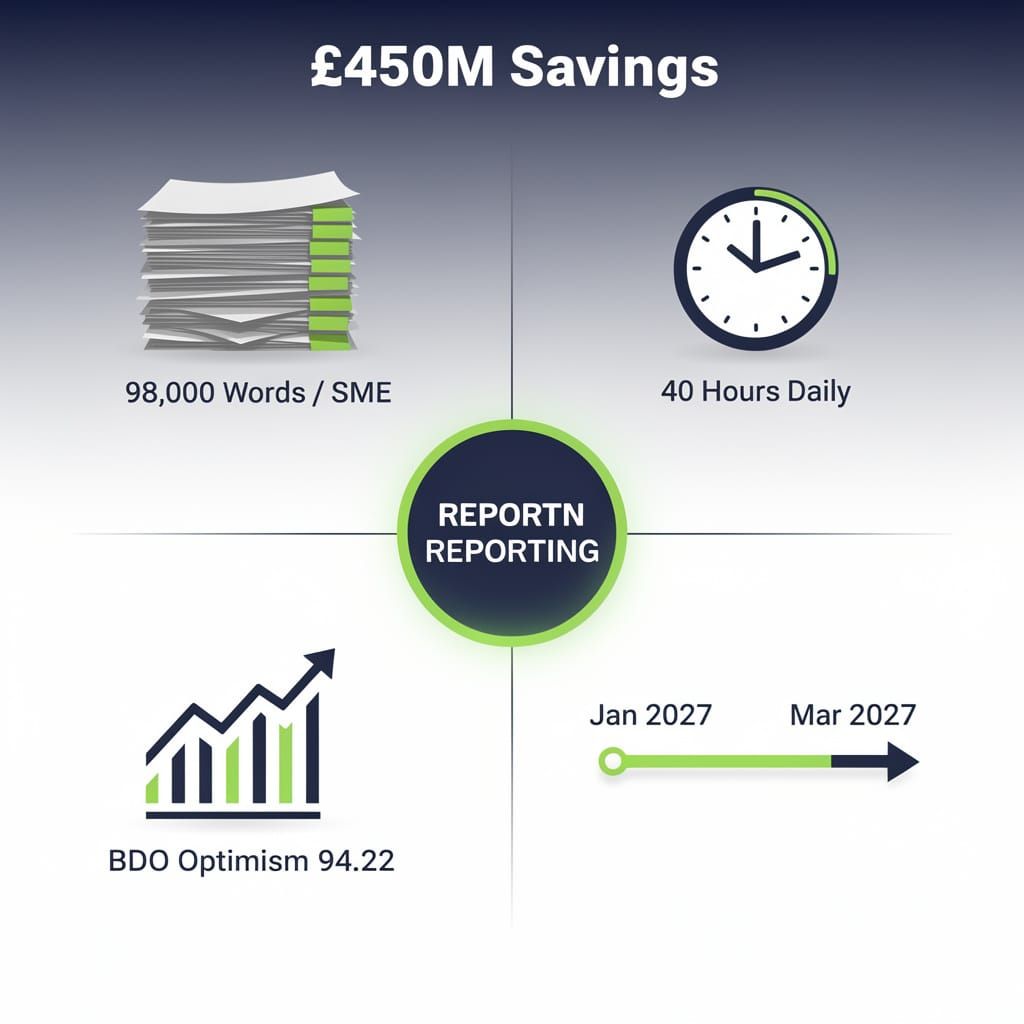
Britain's SMEs have been drowning in ~98,000-word annual reports — longer than The Hobbit. 🇬🇧 As of Sept 5, the government started cutting that red tape for real: exempting small businesses, scrapping mandatory director minutes, targeting admin costs below £450M. 53,756 UK firms are in critical distress. Every hour not spent on paperwork is an hour keeping a business alive. Does your country make starting or running a business this unnecessarily hard?
The United Kingdom did something last week that sounds boring, feels seismic, and saves real money: it started cutting corporate reporting rules with a seriousness that actually hurts.
The Signal Arrived September 5
September 5 — Business Secretary Jonathan Reynolds announced simplifications targeting the annual administrative expenditure that for years hovered near half a billion pounds. The target: push it below £450 million nationally.
September 6 — The government confirmed small and medium-sized enterprises would be exempt from routine paperwork. Not streamlined. Not digitized. Exempted. The average annual report for a small business currently runs to roughly 98,000 words — longer than Tolkien's The Hobbit (95,300 words). FTSE 100 firms average 152,000 words, thanks to ESG disclosures and executive pay breakdowns. That last bit feels particularly rich given that top FTSE executives now earn nearly 130 times the average worker's salary — an eight-year peak.
September 7 — The Ministry of Justice published draft legislation that kills the mandatory director meeting requirement. No more filing minutes for the sake of filing minutes. Consultation runs until November 30, 2026.
The Math Makes People Happy
Here's what happened when the announcement landed:
- Administrative waste: Annual reports bloated to ~98,000 words per SME (a 31% increase), with FTSE 100 firms clocking 152,000. That's roughly 40 hours of nonsense per business every single day.
- Corporate confidence: The BDO business optimism index hit 94.22 in September — a two-year high — buoyed by the services sector reaching an output index of 98.37, its highest since January 2025.
- Annual savings: Administrative costs projected to fall below £450 million. The government's own estimate: save businesses over £450 million per year by scrapping directors' reports entirely and granting audit exemptions to medium-sized firms.
What Actually Changes
The old system incentivized form-filling over decision-making. A director would sign off on a meeting that existed only on paper, file it with a body that stored it in a warehouse, and call that governance. The new framework replaces that with a digital-first approach, including electronic shareholder communications — and leaves the door open for AI-driven compliance automation down the road.
The regulatory risk assessment published alongside the draft legislation shows negligible short-term exposure. Translation: the government ran the numbers and found almost zero chance this blows up.
Rollout and Reality
| Milestone | Date |
|---|---|
| Legislation effective | January 2027 |
| Full compliance expected | March 2027 |
That three-month window lets the system phase out paper processes without a cliff edge. Businesses that want to keep filing minutes? They can. Everyone else simply stops.
The Slightly Brutal Take
This is a win. A genuine one. But let's be honest — £450 million is still £450 million. The UK didn't discover a magic loophole; it just stopped paying people to shuffle paper that nobody reads. The real test comes in 2027 when the digital transition either works or turns into a different kind of bureaucratic nightmare.
Timing also matters: 53,756 UK firms sit in critical financial distress as of August 2026, with London alone accounting for 204,851 significant distress cases. Every hour not spent on paperwork is an hour a cafe owner or furniture maker can spend keeping their business alive.
For now: fewer forms, faster decisions, happier finance teams. That's not nothing.



Comments ()