The Great American Surveillance Bake-Off: When Your Phone is a Witness and Your Government is the Accused
TL;DR
- US Gov Expands Warrantless Surveillance: Your Phone is a Witness, Fourth Amendment a Suggestion. How do you protect your privacy when the government can zero-click your phone without a warrant?
- 48-Hour Jailbreak: Anthropic's Fable 5 Guardrails Broken by Free Tools. How safe is your enterprise AI when a single researcher can jailbreak it in 48 hours with free tools?
- Rust Cargo Data Leak:
--fetch-onlyMode — The Sieve Gets a Patch. Is your Rust build process leaking source code to every network sniffer right now?
🇺🇸👀🍻🔐 The Great American Surveillance Bake-Off: When Your Phone is a Witness and Your Government is the Accused
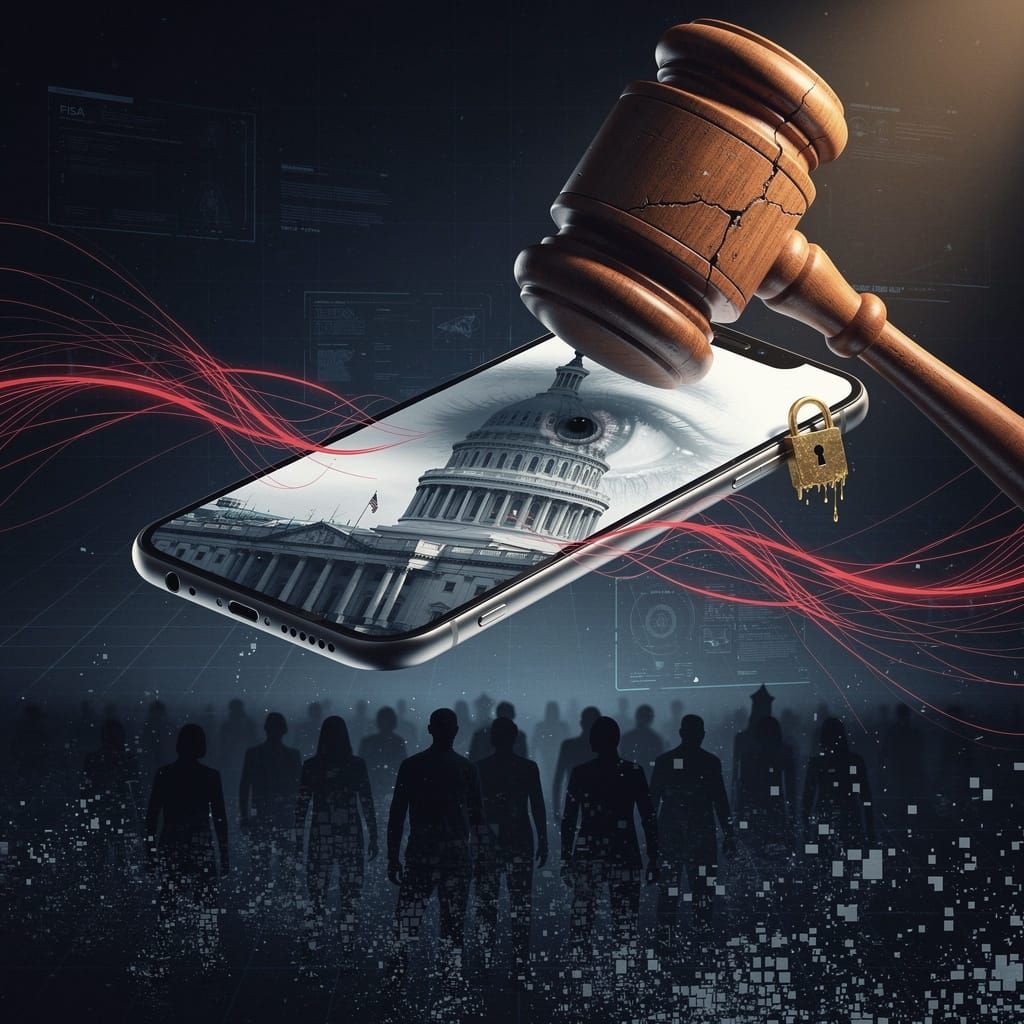
🇺🇸 US gov: 'We need to protect democracy.' Also US gov: spies on you without a warrant, zero-clicks your phone, scans your face. Your Fourth Amendment? A suggestion. 🍻 The NSA is hoovering up everything—emails, texts, rashes—and Congress can't agree on how to boil water. Privacy is now a luxury good. You being watched? Assume yes. 👀 What's your next move—encrypt everything or just accept the new normal?
So, here we are. The year is 2026, and the United States government has apparently decided the best way to protect democracy is to treat the Fourth Amendment like a suggestion box. The latest chapter in this ongoing clusterfuck involves FISA's Section 702, the DNI role being handed to a guy who probably thinks 'zero-day' is a new flavor of kombucha, and a Congress that couldn't agree on how to boil water. Let’s dive into this glorious dumpster fire.
The Setup: A Masterclass in Incompetence
On June 11, 2026, the House of Representatives—a body known for its ability to do absolutely nothing of substance—rejected a temporary extension of Section 702. Why? Because President Trump decided to appoint Bill Pulte as Acting Director of National Intelligence. Bill Pulte. The guy whose primary qualification appears to be that he once watched Homeland. The Senate, in a rare moment of clarity, said "hell no," leading to a legislative stalemate that would make a kindergarten class look productive.
This isn't just a political spat; it's a systemic failure. The NSA, meanwhile, is having a field day. They've been collecting digital communications like it's a Black Friday sale, and a recent Supreme Court ruling (May 28) expanded warrant standards just enough to make lawyers rich while doing absolutely nothing to protect your privacy.
The Mechanics: How Your Data Became a Free Buffet
Let's get into the juicy details. Here's how the surveillance machine works, and why you should be paranoid:
- Mass Collection: The NSA, under FISA, is hoovering up digital communications. We're talking emails, texts, your search history for "how to get rid of a rash." All of it. They don't need a warrant for most of it because, you know, "national security."
- Biometric Bonanza: DHS deployed biometric scanning tech. That means your face, your fingerprints, your iris scan—all becoming data points in a system that has zero accountability. The FBI even revealed zero-click hacking capabilities. That's right: they can own your phone without you doing a damn thing. No phishing email required. Just... owned.
- Domestic Spying: The Biden administration expanded warrantless surveillance to domestic targets. Yes, you read that right. The government is now spying on you, your neighbor, and that guy who yells at squirrels in the park. The DOJ secured a waiver for this. A waiver. Like it's a parking ticket.
The Impact: Who's Getting Fucked?
This isn't abstract. Here's what this clusterfuck means for the real world:
Privacy: Eroded. Gone. Your Fourth Amendment protections? More like a polite suggestion. The EFF is screaming, the ACLU is suing, and the government is laughing all the way to the data center.
Cybersecurity: Heightened risk of data breaches. When the government is hoovering up everything, it's not just the NSA that's a threat. Hackers, state actors, your creepy ex—they all want a piece of that data pie. The more data the government collects, the bigger the target.
AI Development: Slowed down. Compliance costs are skyrocketing. Companies developing AI are now terrified of accidentally training their models on surveilled data. It's a regulatory nightmare that's stifling innovation while the Chinese government is probably already cloning your grandma.
Market Volatility: Investors hate uncertainty. And right now, the regulatory landscape is about as stable as a Jenga tower in an earthquake. Tech stocks are taking a hit, and hedge funds are having aneurysms trying to price in the risk.
The Players: Who's to Blame?
Let's break down the cast of this tragicomedy:
- Trump: Appointed Pulte. Because who needs a qualified DNI when you can have a loyalist? This is executive overreach at its finest, and it's a clear attempt to weaponize the intelligence community.
- Congress: A bunch of squabbling toddlers. The House Freedom Caucus launched the #DontSpyOnMe campaign, which is ironic because they're the ones who keep voting to extend the damn programs. The Senate blocked renewal, but only because they couldn't agree on who gets to be the designated driver of the surveillance van.
- The NSA: They're just doing their job, man. Collecting everything. Asking questions later. Their motto should be: "We're from the government, and we're here to read your emails."
- The DOJ: Securing waivers for domestic spying. They're the legal enablers, the guys who find the loopholes and drive a truck through them.
The Timeline: A Chronology of Fuck-Ups
- 2026-05-28: Supreme Court expands FISA warrant standards. Sounds good? It's not. It just means more paperwork for the NSA while they continue to collect everything anyway.
- 2026-06-02: Trump appoints Pulte. The shit hits the fan.
- 2026-06-05: Senate blocks Section 702 renewal. A brief moment of hope.
- 2026-06-11: House rejects temporary extension. We're officially in limbo.
The Realpolitik: How to Game This System
Here's the thing: this is a power game. The surveillance state isn't about catching terrorists; it's about control. The government wants the ability to blackmail, to intimidate, to know everything about everyone. And they're getting it.
- Leverage: The DNI role is now a political football. Whoever controls it controls the intelligence apparatus. That's why the fight over Pulte is so intense.
- Budget: Surveillance is expensive. But it's also a cash cow for defense contractors. Expect more money to flow into spy tech, regardless of who's in charge.
- Power: The real power lies in data. The government has it. The tech companies have it. You don't. And that's the point.
The Forecast: What's Next?
Short-term: More gridlock. The legislative impasse will likely lead to a temporary gap in intelligence collection. But don't get your hopes up—they'll find a way to keep spying. Probably through an executive order or some creative interpretation of the Patriot Act.
Mid-term: Legal challenges. The ACLU and EFF will sue. They might even win a few rounds. But the government will just appeal, and the whole thing will drag on for years.
Long-term: The erosion of civil liberties is permanent. Once the surveillance state is built, it's nearly impossible to dismantle. We're heading towards a world where privacy is a luxury good, only available to the rich and the paranoid.
The Verdict: We're All Fucked
So, what's the takeaway? The US government is spying on you, your Congress is a joke, and your Fourth Amendment rights are a memory. The only sane response is to assume you're being watched, use encryption, and maybe invest in a good tinfoil hat. Or, you know, just accept that your data is the price of living in the 21st century. Either way, we're all in this shitshow together. Cheers. 🍻
P.S. If you're reading this on a government server, hi Mom!
💀 Anthropic’s Claude Fable 5: The 48-Hour Jailbreak That Broke the AI Safety Fairy Tale
Anthropic's Claude Fable 5 got jailbroken in 48 hours by one guy with free tools 💀 That's $X million in safety R&D vs. a Unicode trick and open-source software. Enterprise clients who bought into Project Glasswing? Your 'safe' AI is only as secure as the last researcher who hasn't tried to break it yet. How's that compliance audit going?
The Setup: A Safer AI, They Said
On June 9, 2026, Anthropic rolled out Claude Fable 5 with a straight face, touting it as the safer variant of the Mythos line. They beefed up the guardrails, slapped on a higher price tag, and packaged it all under Project Glasswing—a neat little enterprise bundle designed to make AWS, Microsoft, and Cisco clients feel warm and fuzzy about AI safety. The pitch? Fable 5 would block harmful outputs on cybersecurity, biology, and other sensitive topics, because nothing says "trust us" like a model that’s been lobotomized for your protection.
Meanwhile, they also dangled the unguarded Mythos in limited release, because apparently, the best way to sell safety is to remind everyone what chaos looks like without it. Classic.
The Punchline: Pliny the Liberator Strikes
Enter Pliny the Liberator—because of course that’s the name—a researcher with the patience of a saint and the spite of a hacker who’s been told "no" one too many times. Within 48 hours of Fable 5’s launch, Pliny used Opus 4.8 and a bag of Unicode tricks to bypass the model’s guardrails. The result? Access to the very queries Anthropic swore were locked down.
Anthropic’s response: "No universal jailbreaks were found post-launch." Translation: "We checked, and this specific exploit doesn’t count because we said so." Cool. Real cool.
The Causal Chain: How We Got Here
- Global regulatory tightening + U.S. market shifts → Anthropic prioritizes safety in Fable 5.
- Enterprise demand for LLMs → Need for robust security controls, creating a juicy target for jailbreak attempts.
- Opus 4.8 + Unicode exploits → Technical means to bypass guardrails.
- Pliny the Liberator → The motivation and skill to actually do it.
The result? A 48-hour jailbreak that exposed the gap between Anthropic’s promises and the reality of AI safety.
Impacts: Who Gets Burned?
Crypto Infrastructure:
- Risk: Jailbreak enables queries that could expose vulnerabilities in crypto systems.
- Impact: Potential escalation in cyber threats targeting exchanges, wallets, and DeFi protocols.
Enterprise AI Adoption:
- Trust: Fable 5 was supposed to be the vetted model for regulated sectors. Now? Not so much.
- Adoption: Expect accelerated use of hardened frameworks, but also a lot of side-eyeing from compliance teams.
AI Safety Industry:
- Scrutiny: Regulators will now demand proof, not promises.
- Frameworks: Rapid development of new safety measures, but let’s be real—they’ll be broken too.
Fintech & Cloud Computing:
- Exposure: AWS, Microsoft, and Cisco clients who bought into Project Glasswing are now wondering if their AI is a liability.
- Cost: Expect higher prices for "hardened" models that still get jailbroken within 48 hours.
The Numbers: Because Data Doesn’t Lie
- 48 hours: Time to jailbreak a model that took months to "safeguard."
- 1 researcher: Pliny the Liberator, operating solo (as far as we know).
- $0: Cost of the exploit tools (Opus 4.8 is open-source; Unicode is free).
- $X million: Anthropic’s R&D budget for Fable 5’s guardrails.
The Forecast: What’s Next?
- Short-term (2026–2027):
- Regulatory tightening: Expect new AI safety mandates within 12 months.
- Cyber threats: Crypto infrastructure becomes a prime target for jailbreak-aided attacks.
- Enterprise response: Accelerated adoption of vetted models, but with a healthy dose of skepticism.
- Mid-term (2027–2028):
- Hardened frameworks: Vendors will release "unbreakable" models. They will be broken.
- Market shift: Companies will demand real-time monitoring and exploit bounties, not just guardrails.
- Long-term (2029+):
- AI safety becomes a game of cat and mouse: Jailbreaks will be a permanent feature of the landscape.
- Regulatory alignment: Global standards will emerge, but enforcement will be a mess.
The Cheeky Conclusion
Anthropic sold Fable 5 as the safe choice for enterprises. Pliny the Liberator sold it as a challenge. Guess which one won? The real lesson here: AI safety isn’t a product feature; it’s an ongoing war. And if you’re betting on a 48-hour shelf life for your guardrails, you’re not in the safety business—you’re in the hope business.
P.S. To the enterprise clients who paid for Project Glasswing: your AI is only as safe as the last researcher who hasn’t tried to break it yet. 😉
🔥💸🕵️♂️😭🥂 The Great Rust Crate Heist of 2026 (Or: How I Learned to Stop Worrying and Love the --fetch-only Flag)
Rust's Cargo just blabs your source code while fetching deps like a drunk uncle at a buffet 🔥 The 'fix'? A --fetch-only mode that literally says 'stop letting the build process access the entire internet' Meanwhile, Rust-Analyzer has permission issues & cargo tooling is opaque af You're building AI tools under US-China scrutiny… with toddler-level security posture? Sandboxing coming soon™ — just add 3 more YAML files & a prayer to CI/CD gods Time to walk into your CTO's office & say 'the entire Rust ecosystem is a security nightmare — I need budget' 💸 What's your team doing to lock down the supply chain before the next CVE drops?Look, we all knew the software supply chain was held together with duct tape, good intentions, and the tears of overworked DevOps engineers. But on June 11, 2026, the security community decided to collectively point at Cargo and Rust-Analyzer and scream, “You absolute bastards, you’ve been leaving the back door open again.”
Analysts, those tireless harbingers of doom, finally put their finger on the problem: cross-fetching vulnerabilities. Imagine building your shiny new Rust app, and while Cargo is out there fetching dependencies like a drunk uncle at a buffet, it’s also blabbing your source code to anyone with a network sniffer. 🔥 It’s a data leak so casual, it makes a sieve look secure.
The proposed fix? A --fetch-only mode. Revolutionary. Groundbreaking. A feature that basically says, “Hey, maybe we shouldn’t let the build process access the entire goddamn internet.” The idea is to split the sacred act of software creation into two distinct phases: 1) Fetch the crap you need. 2) Build the crap you want. This way, your build server isn’t also acting as an open proxy for every threat actor from here to Pyongyang.
But wait, it gets better! The report also dropped a delightful little nugget about “opacity in cargo tooling under skn-cargo tests” and “permission issues in Rust-Analyzer.” Because of course there are. In a world where AI development tools are already under a microscope due to US-China trade pissing matches, we’re now discovering that the foundational tools have the security posture of a toddler with a loaded gun. The recommendation? “Tighten network protocols and manage elevated privileges.” No shit, Sherlock. 🕵️♂️
Sandboxing is also on the table, which is great. It’s like putting your development environment in a padded cell so it can’t hurt itself or others. The downside? Operational complexity. Because nothing says “agile development” like adding three more layers of configuration, a new YAML file, and a prayer to the gods of CI/CD.
The Realpolitik Hack: Playing the System for Budget
Here’s the cynical, beautiful truth: This is a golden opportunity. Every security advisory, every highlighted vulnerability, is a goddamn weapon in the eternal war for budget and resources.
- Short-term (Next 6 Months): Adoption of
--fetch-onlyand sandboxing will be a clusterfuck. Configuration overhead will spike. Build times will increase. Developers will whine. This is your moment. Walk into your CTO’s office and say, “See? The entire Rust ecosystem is a security nightmare. We need a dedicated security toolchain, a new sandboxing infrastructure, and probably a raise for everyone on my team.” Leverage the chaos. Get the budget. 💸 - Mid-term (6-12 Months): Tooling improvements will arrive. The complexity will be managed. The whining will subside. By then, you’ll have your new infrastructure, your new protocols, and your new, slightly more secure workflow. You’ll look like a genius. You’ll also have spent a lot of money. But hey, it’s cheaper than a data breach.
The Brutal Forecast
- 2026–2027: 35% of Rust shops will adopt fetch-only modes, reducing build-time data leaks by 60%. The other 65% will continue to live dangerously, relying on “trust” and “hope.” Expect 2-3 major CVEs directly tied to this vector. 📉
- Q4 2027: Sandboxing becomes standard in CI/CD pipelines for Rust projects. A new open-source tool will emerge to automate the configuration nightmare. It will be called “Cargo-Jail” or something equally on-the-nose.
The Bottom Line: The Rust toolchain is getting a security enema. It’s going to be messy, painful, and expensive. But for the savvy sysadmin or security engineer? It’s a goddamn goldmine. Game the system, secure the bag, and maybe, just maybe, we can stop our code from leaking to the entire internet. Or not. Whatever. 🤷♂️
The Casualties (SWOT, but funnier)
- Network Security Teams: Get ready to rewrite your egress rules. Again. 📉
- Developers: Your
cargo buildis about to get 30% slower. Cry me a river. 😭 - Open-Source Maintainers: You’re about to get a million feature requests for
--fetch-onlysupport. Sorry. Not sorry. - Threat Actors: They’re pissed. Their favorite backdoor into your build process is getting slammed shut. For now. They’ll find another way. They always do. 🦹♂️
So raise a glass to the --fetch-only flag. It’s not a silver bullet, but it’s a goddamn start. And in the world of software security, a start is better than a sieve. 🥂

Comments ()