NASA's Swift satellite reentered after failed Katalyst rescue, scattering debris over Sumatra
NASA's Swift satellite reentered over Sumatra on Nov. 4 after a $30M rescue attempt by Katalyst Space failed, scattering debris across the Indian and Pacific Oceans with no reported injuries.

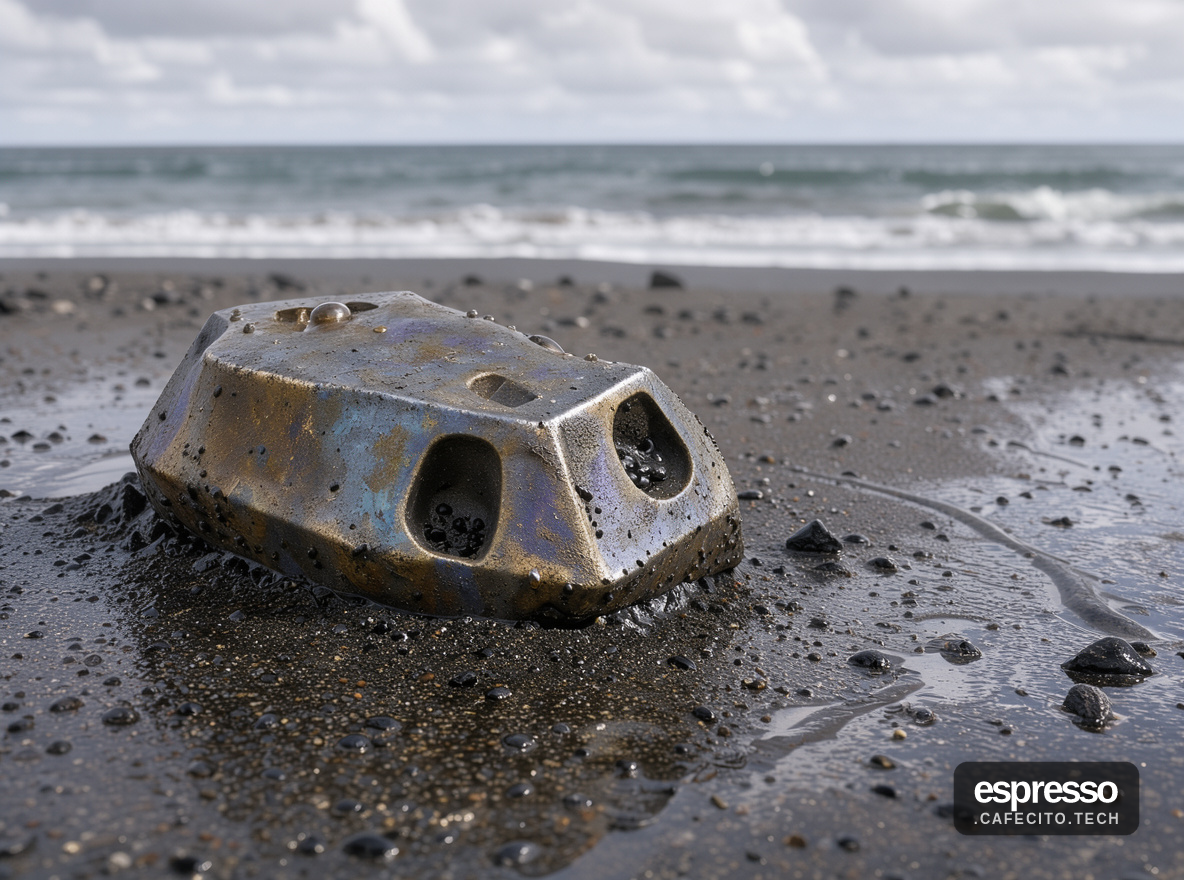
NASA’s Swift Gamma-Ray Burst Explorer disintegrated over northern Sumatra on November 4, 2026, ending a 22‑year mission and a high‑stakes commercial rescue attempt. The craft’s 1,470‑kg frame mostly burned up, though dense tungsten parts and optics may have survived and scattered across a 20.6° north‑south band. Most debris fell into the ocean, with a statistical risk of about 1 in 2,100 of hitting a populated area, and no injuries have been reported.
The swift loss of Swift stems from a cascade of orbital decay and engineering limits rather than a single shock. A series of solar‑activity‑driven drag episodes pushed the spacecraft below 171 mi (275 km) by late October, leaving it unable to maintain stable pointing. NASA and the private contractor Katalyst Space tried to offset the decay with a $30 million “Link” robotic rescue mission launched in July. Link came within a few miles of Swift but suffered reaction‑wheel failures and a faulty valve that disrupted attitude control and communications. With insufficient fuel to close the gap, the rescue was abandoned in August. Without a successful boost, the aging observatory spiraled down into an uncontrolled reentry.
The mechanics of the descent
Atmospheric drag accelerated as solar activity heated the upper layers of Earth’s atmosphere, dropping Swift’s altitude to roughly 275 km by October 20. The craft entered safe mode because its reaction wheels could no longer compensate for drag and maintain pointing. Katalyst’s Link spacecraft, equipped with a three‑armed capture system, was meant to rendezvous, latch on, and fire thrusters to raise Swift’s orbit. Instead, in‑flight malfunctions left Link tumbling and unable to get close enough to capture the satellite. By August, NASA concluded the rescue was no longer feasible and ceased active effort. With no maneuvering capability left, Swift followed a ballistic trajectory that ended in a fiery breakup over Sumatra.
Debris and risk
Most of Swift’s mass disintegrated during reentry, with a surviving fraction expected to include heavy tungsten components and telescope optics. Modeling suggests the debris footprint lies in the ocean between 20.6° north and south latitude, overlapping parts of the Indian and Pacific Oceans. The 1 in 2,100 probability of a ground impact reflects the vast oceanic area and the likelihood of atmospheric ablation for lighter parts. No confirmed human casualties or property damage have emerged so far. The event underscores the difficulty of predicting where uncontrolled satellite reentries will land and the challenge of executing autonomous rendezvous and capture in a decaying orbit.
Response and outlook
Swift’s scientific archive remains a valuable resource, having produced over 2,000 gamma‑ray burst detections and roughly 7,000 peer‑reviewed papers. NASA has indicated that lessons from the failed rescue will inform future commercial servicing efforts, such as the planned ClearSpace‑1 and ELSA‑M missions aimed at active debris removal. The incident has already prompted calls for stricter deorbit policies, including controlled burns or full atmospheric ablation to reduce uncertainty in reentry zones. Until such protocols are adopted, satellites like Swift will continue to rely on unpredictable solar cycles and the narrow window for successful robotic rescue. The next major test will be whether Katalyst or other providers can close the gap between a rescue attempt and actual capture in a real‑time, drag‑laden environment.