Bit Reactor Furloughed 80% Before Its Game Sold 1M Copies
Maryland studio Bit Reactor furloughed ~80% of its staff weeks before Star Wars: Zero Company shipped, after running out of money. The game then hit #3 on Steam's best-sellers list and sold about a million units in its first month, bringing over half the team back by early October. The launch…
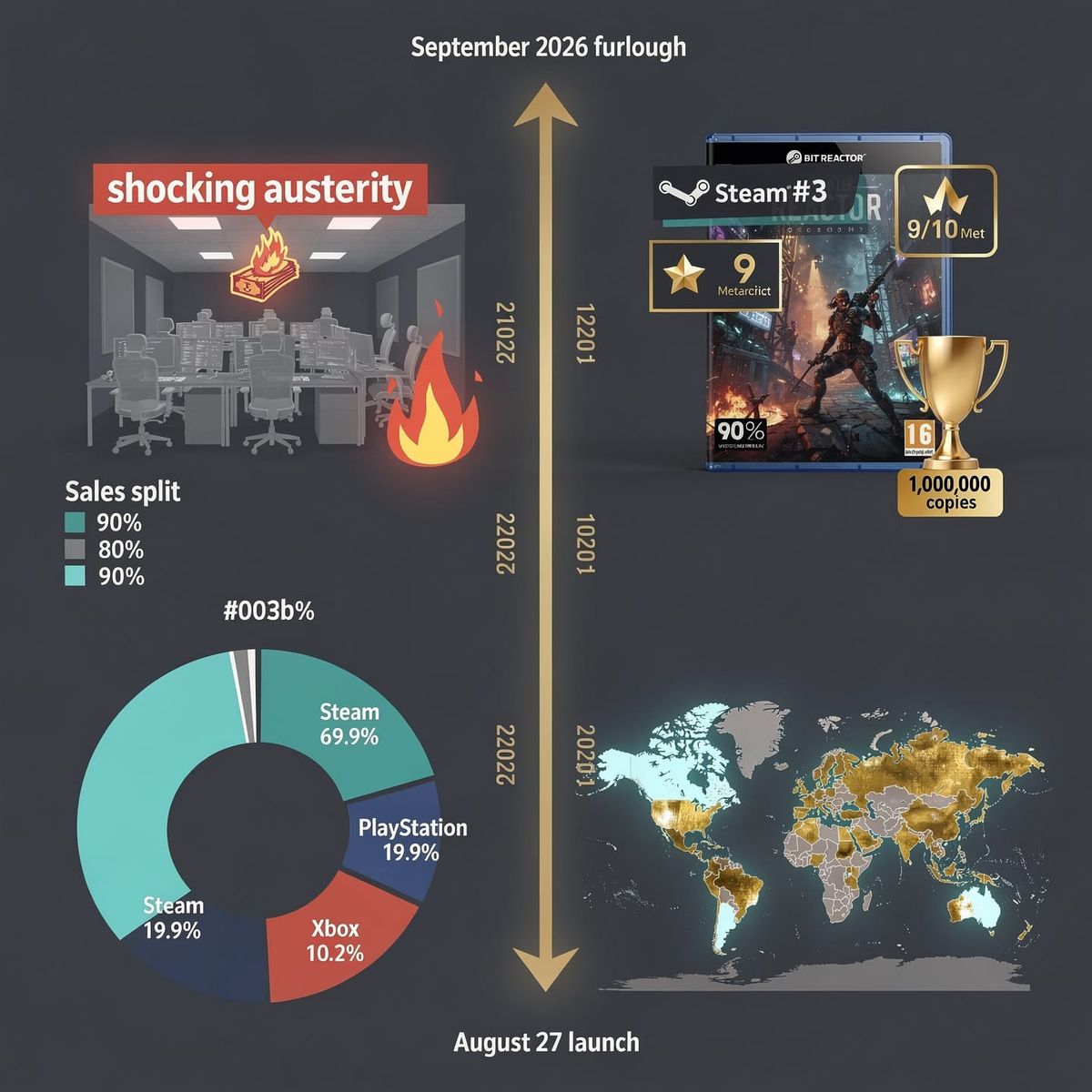
In early September 2026, the Maryland studio Bit Reactor sent home roughly 80% of its workforce as it ran out of money ahead of the launch of Star Wars: Zero Company. Weeks before release, the studio was burning through its last cash, most of the team was furloughed without pay, and the company looked finished. Former technical artist Zachariah Scott described severe budget constraints and a development process run under what he called "shocking austerity." Then the game shipped, hit #3 on Steam's best-sellers list, and sold about a million copies in its first month—and Bit Reactor started bringing people back. The sequence is a blunt illustration of how a studio with no shipped catalog lives or dies on a single release, and how quickly the launch date and the funding runway can stop aligning.
The dependency that nearly broke them
Bit Reactor, founded in 2019 by developers who'd come through XCOM and Battlefront, had no shipped product before Zero Company. A studio stuck in development that long runs on milestones and outside money, not revenue: no catalog, no live-service base, no predictable income, only the next external payment. When those payments stall, headcount is the only lever leadership can pull quickly.
That's what made the September furlough so drastic. Sending four of every five employees home—with staff not getting paid during the critical stretch—isn't a trim, it's an operating halt. Stephen Totilo reported at Game File that the decision was made internally, a deliberate choice of furlough over an external layoff process. A skeleton crew stayed on payroll to handle post-launch bugs while most of the team sat out.
What let the studio contemplate it at all is precisely what made it fragile: the game was far enough along that a small team could still ship it, and the release itself was the only plausible route back to solvency.
What the launch actually changed
Zero Company launched on August 27 and did what the studio needed. It reached #3 on Steam's best-sellers list, earned a 9/10 Metacritic score, and sold roughly a million units in under a month. The split mattered too: Steam alone accounted for about 69.9% of sales—roughly $50 million at list—with PlayStation at 19.9% and Xbox at 10.2%. Nearly 90% of players were in North America or Europe, with under 5% in Asia, where the lack of localization and voice-over held the game back.
For a studio whose survival hinged on the next check, those sales translate into something concrete: cash. Around a million units at near-full price comfortably covers the fixed costs of a much smaller team, and the return of furloughed staff is the direct observable consequence—by early October, over half the team was reportedly back, and the studio said it would keep sharing updates as the recovery continued.
The part of the story that hasn't resolved
The launch validated the product but didn't cure the studio. The furlough itself created a legal rift: cofounder and former COO Alison Kelly filed a lawsuit against CEO Greg Foertsch over compensation and studio ownership, alleging Foertsch pushed her out without proper payout; Foertsch counter-sued. The case is scheduled for trial in early 2027—parallel to, not resolved by, the game's commercial success. Reputational damage from the furlough also followed the launch: Foertsch was at Gamescom discussing the studio's next project while colleagues were still on leave, and some furloughed workers remained in limbo even as others returned.
The measurement question matters here. A game topping best-seller lists in its launch window is not the same as a studio becoming stable. The near-million sales answered one survival question for this quarter. Whether a strong debut turns into the run of cash that pays the bills a year out depends on retention and continued revenue after the launch spike, not the spike itself—and on the founder dispute resolves on its own timeline in 2027. Zero Company's launch rescued a studio that had essentially stopped operating weeks before. Whether that leaves the studio intact or quietly hollowed out is a question only the next operating cycle will answer.
Comments ()