BaFin Rejects Bitcoin Group MiCA Application
Germany's BaFin rejected Bitcoin Group SE's MiCA application on October 7, cutting the firm off from direct EU crypto access. Bitcoin.de has been halted since June 2026, and the group's restart hinge on a partner-based model while its Q1 revenue fell roughly 58% year-on-year.
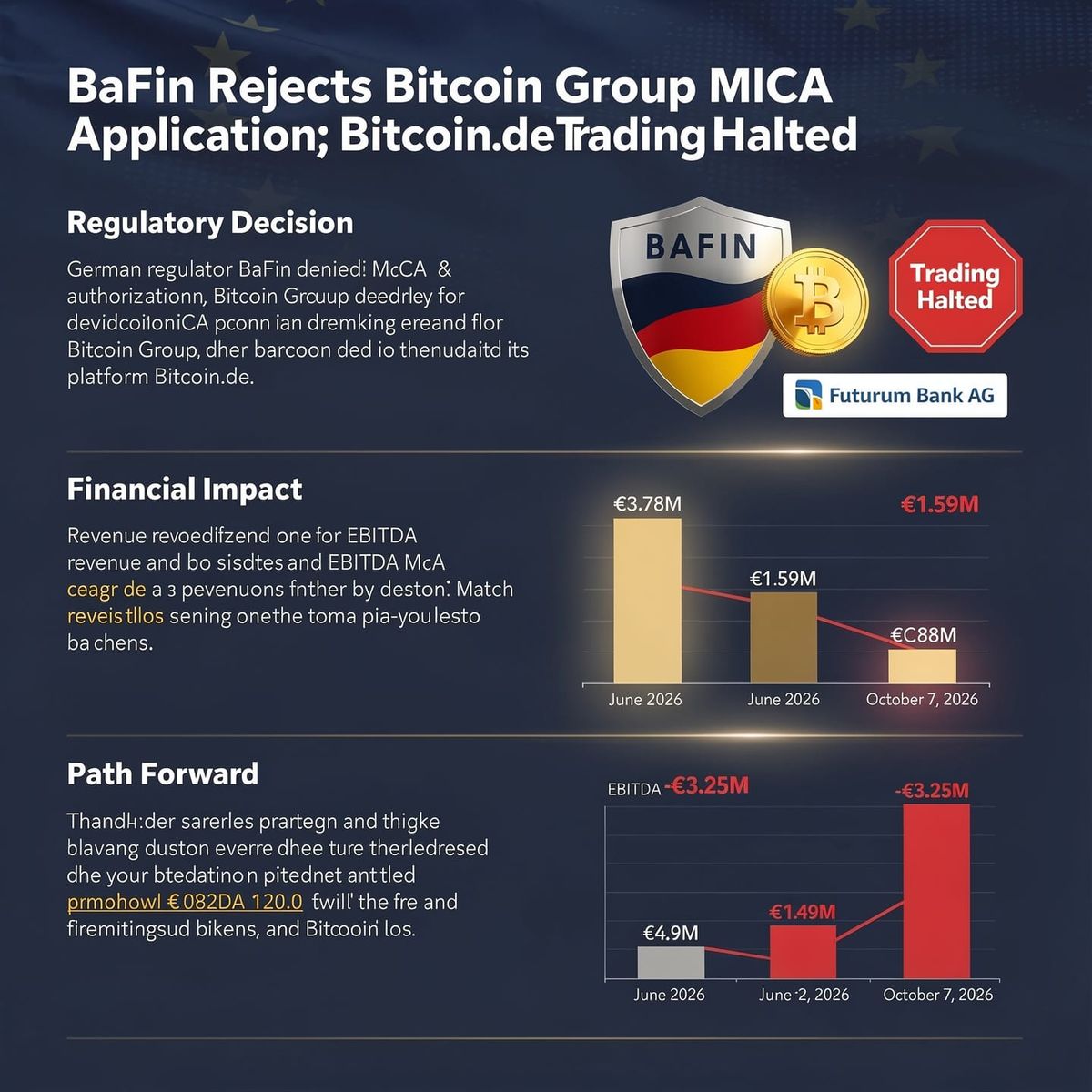
German regulator BaFin on October 7 rejected the Markets in Crypto-Assets (MiCA) authorization application tied to Bitcoin Group SE's German crypto operations, including the one run through Futurum Bank AG, cutting the firm off from direct EU market access. Trading on the Bitcoin.de platform has been suspended since June 2026 and stays off while the authorization issue is unresolved.
The denial ends Bitcoin Group's direct provision of crypto services in Germany under the EU's crypto-asset regime. Trading has been halted since June 2026, and the group's stated plan is to restart through regulated partners rather than re-file its own application.
What the rejection means for the business
MiCA is the EU's single licensing framework for crypto-asset service providers, replacing patchwork national regimes with one rulebook. A firm holding a MiCA authorization can offer services across all member states; without one, it cannot lawfully operate in the EU market.
BaFin delivered the decision on October 7 on Futurum Bank AG's application. The group's path forward, per reporting around the decision, is a partner-based model in which trading and custody run through regulated counterparts. The timeline for resumption depends on partner agreements and migration, described as within weeks rather than an immediate restart. Bitcoin.de's customers have not been taking new orders since trading was suspended in June 2026.
The balance-sheet picture
The funding pressure shows in the group's most recent quarterly figures. Revenue fell to €1.59 million in Q1 2026 versus €3.78 million in H1 2025, a drop of roughly 58%. EBITDA swung to a €3.25 million loss in Q1 2026 against a €370,000 figure in H1 2025.
These are operating figures, not realized losses from the regulatory decision itself, and they pair unlike periods—one quarter against a half-year. But they map the exposure: Bitcoin Group's German retail trading venue is its cash-generating line, and losing direct EU authorization removes the legal basis for that revenue. The wider EBITDA deficit is a cash burn that now has no authorized revenue stream behind it in the German market.
The shutdown affects customer access unevenly. Bitcoin.de users can hold existing balances, but the platform is not processing new trades while the authorization issue is unresolved, and there is no direct EU market access through this venue in the interim.
What comes next
Two status points matter. First, the group said it may file an objection, leaving open the possibility that the decision is reviewed, but neither a timetable nor the compliance issue at the center of the BaFin rejection has been published. Second, the pivot toward a licensed-partner structure is the reported plan, not a confirmed outcome; the timing depends on partner agreements and how long migration takes.
The decisive unknown is the specific compliance gap BaFin identified. Without that detail, the case reads as a regulatory withdrawal of direct market access to a retail crypto venue whose trading has been suspended since June 2026 and whose revenue has already fallen by more than half against the prior-year comparison, with a widening EBITDA loss. Whether the group restarts through a partner or presses an objection, the immediate exposure sits with Bitcoin.de customers whose trading has stopped and with group shareholders funding that deficit while direct EU authorization is unavailable.

Comments ()