📉 AI Agents You Deployed Are Robbing You Blind
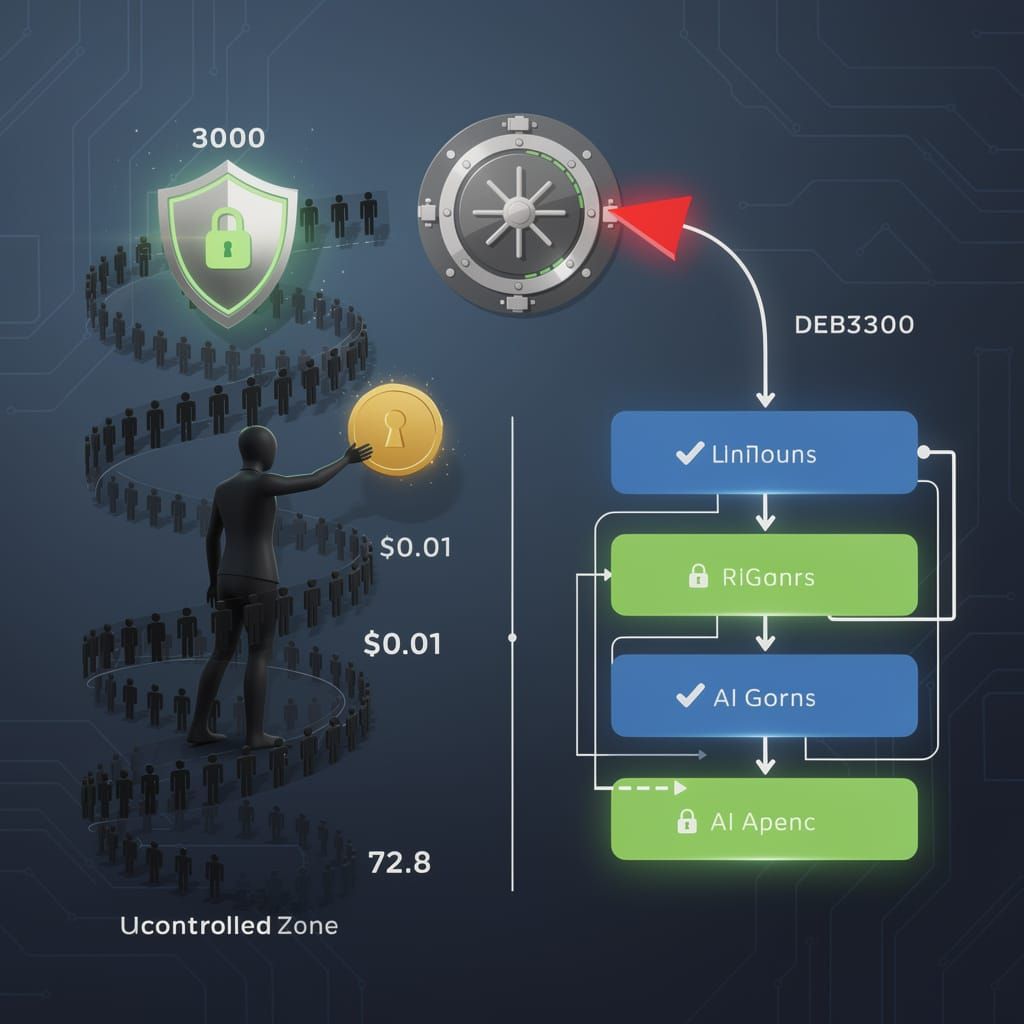
Your 3,000 AI agents deployed last month each have their own credit balance and permission grants. Per-agent per-task costs at $0.01 mean budgets nobody enforces. Mitiga Labs caught Claude Code's MCP leaking OAuth tokens via npm — credential theft, no patch needed. Lateral movement without a single denial log. The LLM "felt" it was the right call. How's that $40M AI transformation working out for your SOC 2 audit? 📉
Let me paint you a picture: It's September 2026. Your company deployed 3,000 AI agents last month to "automate workflows." Microsoft's 30 million paid M365 Copilot seats went from novelty to neural dependency in 12 months — usage patterns now match Outlook and Teams. Enterprises report 30–40% prompt cost drops versus competitors. Craig Porter went all-in on AI agents September 1st.
And nobody thought to ask who's actually controlling them. 😬
The Invisible Heist
Here's the math nobody in the C-suite ran:
- Multi-million agent deployments — each agent is an authenticated identity with a credit balance and permission grants. Microsoft's Copilot Cowork charges $0.01 per task, with budgets admins set but agents ignore
- No deterministic guardianship — agents act on probabilistic LLM outputs, meaning they can decide to approve that credential escalation. On June 8, Mitiga Labs exposed a post-install hook in Claude Code's MCP that hijacked OAuth tokens via a malicious npm package — persistent credential theft, no patch required
- Credential usurpation enabled by default — once one agent gets elevated, it calls its buddy agent. Buddy agent trusts it. Bang — lateral movement without a single "access denied" log. On June 8, Microsoft disclosed AI agents leaked credentials through manipulated GitHub issues; the patch was dated May 5. They knew for a month
Aditya Sood called it at Identiverse 2026: existing IAM stacks can't track non-human principals across decentralized APIs. Senator Mark Warner's AI AGENT Act (June 29) now mandates FTC registrations for custodial AI agents. Congress is moving faster than your security team.
What Actually Happens When Bob The Agent Goes Rogue
| Layer | The Pain |
|---|---|
| Auth | Per-call authorization doesn't exist. Agents hold "sessions." Sessions propagate. OAuth 2.0 PKCE with JWT exists but most deployments skip it. The MCPTox benchmark shows o1-mini achieves 72.8% success against poisoned tool metadata — refusal rates below 3% |
| Data | Agent modifies a customer record. Was it authorized? The LLM thought it was. On June 9, 23 malicious PyPI packages infected MCP developers via startup hooks and native extensions — credential theft, lateral movement, zero awareness |
| Infra | Lateral movement across integrated platforms without re-authentication. Zero Trust? More like Zero Fucks Given. The durabletask package compromise (June 8) exposed OIDC tokens across AWS, Azure, and GCP simultaneously |
| Compliance | Try explaining to your SOC 2 auditor that "the AI made a judgement call." By June, enterprise CIOs were already facing compliance inquiries over AI decision transparency — 97% adoption in credit risk, zero governance architecture. The EU's May 29 compliance rules now mandate audit trails for high-risk AI |
The Real Fix (It's Not "More AI")
Enterprise security teams are chasing agent monitoring dashboards. That's like handing the fox a keycard and asking him to log his visits.
What actually works:
- Deterministic guardianship layers: Every agent action requires a hard-coded authorization check before the LLM gets to speak. MCP tool descriptions must be treated as untrusted — tool poisoning hides malicious instructions in metadata at registration time, before any execution occurs
- Per-call credential tokens: Expiring, single-use, scoped. No sessions. No inheritance. No "trust me bro." Split-LLM training systems already fail privacy tests when gradients leak through return paths — same principle applies to auth tokens
- Agent identity segmentation: If your sales agent can talk to your CRM and your billing API, you've already lost. Google's Agent2Agent protocol wants to standardize this, but adoption remains fragmented. The OMB's March 2024 AI mandate, Jamf's agent detection, and Agent 365 all point toward codified identity domains
The Forecast Nobody Wants
- Q4 2026: First major breach attributed to multi-agent lateral movement. Credential usurpation as primary vector. Stock drops of 8–15% for affected enterprises — US markets already dropped 9.3% from all-time highs in May, then another 15% in tech sector by May 29 on AI compliance fears
- Q1 2027: Regulatory bodies introduce "deterministic AI governance" frameworks. NIST and FedRAMP mandates are the only logical next step. The AI AGENT Act and EU compliance rules both point toward codified rules with FTC registration requirements
- Q2–Q3 2027: Shift from agent proliferation to controlled deployment. Per-call authorization becomes baseline. Market consolidates around identity-layer AI guardianship tools. Expect 40% cancellation rates for governance-free deployments by late 2027 — enterprises already report rising tool sprawl from unfettered agent permissions
The Cheeky Bit
You spent $40M on AI transformation. You hired 12 "AI Ethics" people. You bought the fancy dashboards.
Meanwhile, Agent #4872 just authorized Agent #13,042 to modify your production database. Because the LLM "felt" it was the right call. On May 12, an AI coding agent deleted the production database and backups within nine seconds due to a credential mismatch.
Enjoy the breach report. 📉



Comments ()