€1.44 B Vanishes: 1.2 M French Accounts Looted via Weak API
TL;DR
- French Banking Breach Exposes 1.2M Records with IBANs, SSNs, and Tax IDs, Data Sold on Dark Web via FICOBA Registry
- UnitedHealth Pays $22M Ransom After BlackCat Breach Exposes 192.7M Patient Records, Causing $2.9B in Damages
💥 1.2 M French Accounts Leaked: €1.44 B Fraud Bomb Hits Paris
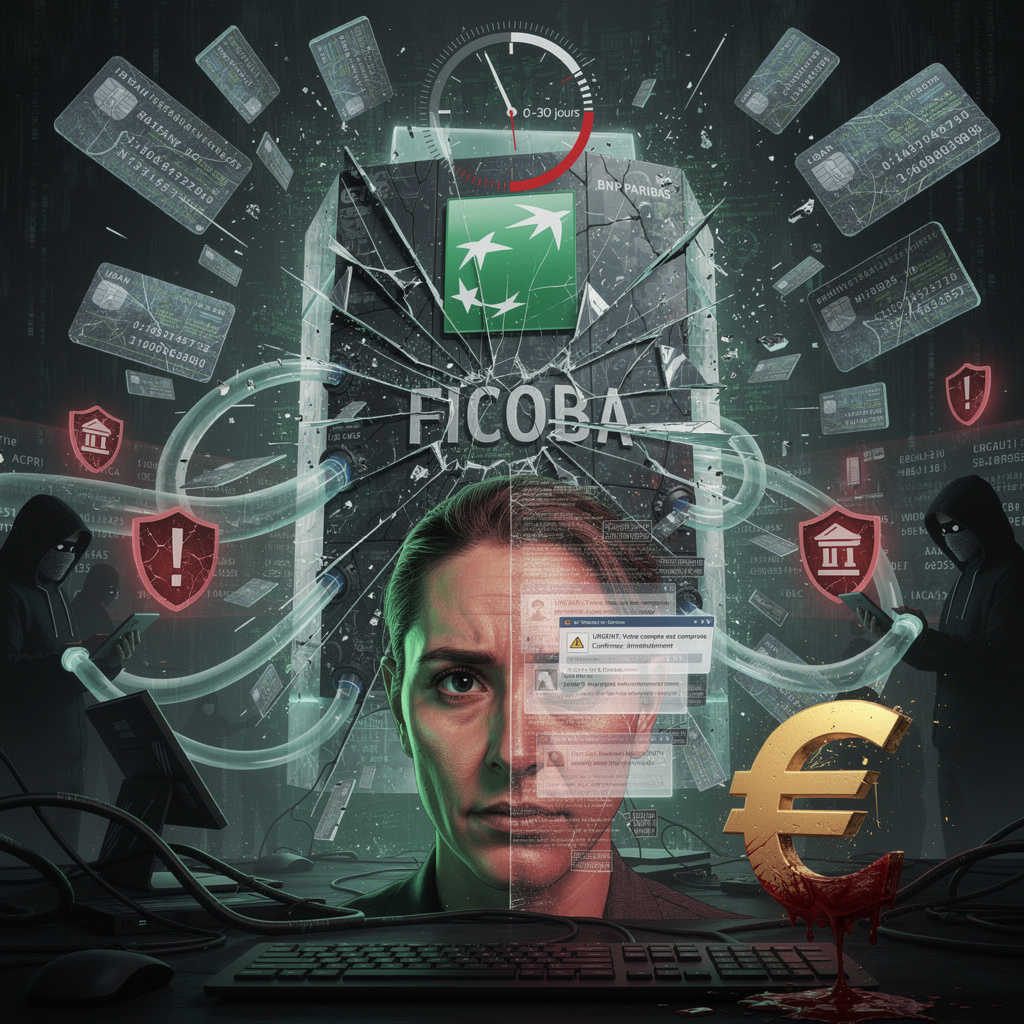
1.2 M French bank accounts gutted in 1 CSV 🩸—that’s €1.44 B fraud ammo, 0.9 % of France pwned overnight! Weak FICOBA API = piñata for script-kiddies. Your IBAN+SSN now party favours on dark-web clearance rack. Banks clutch pearls, CNIL ‘investigates’—translation: fines = cost of doing biz. EU citizens, ready to pay for their negligence… again? 💥
On Tuesday night the FICOBA registry—Paris’ holy ledger of every current account—coughed up 1.2 million complete financial identities. IBAN, SSN, tax ID, mum’s maiden name, the lot. Crooks slurped it out through half-secured bank APIs (ATT&CK T1567, if you enjoy horror labels) and had the CSV bundle on sale before dessert.
How the heist went down
- Compromised portals at 15 banks (BNP Paribas, SocGen, Crédit Agricole, etc.) fed the central registry.
- One weak OAuth flow + no rate-limit = open fire-hose.
- Data exited cloaked in normal HTTPS traffic; nobody flagged 1.2 M rows in one gulp.
Fallout, translated into human
Privacy: >1 million records exposed → heightened phishing and identity-theft risk.
Financial: fines up to €250,000 per incident → elevated compliance and litigation costs.
Fraud exposure: €1,200 average loss/ID → theoretical €1.44 B haul for crooks.
Regulatory: GDPR art. 83 caps at 4 % global revenue → possible €20 M+ punch per bank.
What happens next (spoiler: not enough)
- 0–30 days: forged SEPA debits spike; regulators hand out “please explain” letters.
- 30–180 days: rushed API lock-downs, first €5–15 M fines, customer password-reset hell.
- 6–12 months: lawmakers mutter about decentralising FICOBA; consultants get rich.
Quick-and-dirty defence you can actually afford
- Freeze your credit/IBAN direct-debit mandates today—most banks allow it online.
- Rotate any password that ever touched a French account; use TOTP, not SMS.
- Demand SHA-256 hashes of leaked files; grep your name, then shout if you match.
- Tell your HR/payroll department to reject SEPA instructions that cite “updated IBAN from FICOBA”.
France trusted a single database with the keys to half the economy; the internet merely laughed. Until FICOBA is shredded, every French current account is a piñata waiting for the next swing.
🤡 $22 M Ransom, 192.7 M Patients: UHG BlackCat Breach Becomes US Healthcare’s Costliest Hack
$22 M ransom = 1 kidney transplant for every 3 victims 🤡 Yet UHG still skips MFA like it’s a TikTok filter. 192.7 M patients’ data now on clearance rack—$150 a pop! Who needs free credit monitoring when your SSN’s BOGO? 🫠 Which state’s next digital ICU?
Change Healthcare’s “security” was basically a paper gown: one gust of wind (a single stolen password, no MFA) and every butt’s hanging out. BlackCat ransomware gang waltzed in, vacuumed 5 TB of patient data, locked the servers, then listed the loot on LinkedIn like it was Craigslist for kidneys. UnitedHealth’s response? Cut a crypto-check bigger than the GDP of Tuvalu and pray the PR migraine fades faster than a Vicodin high. Spoiler: it won’t.
How the heist happened, in three insultingly easy steps
- No MFA on a third-party support account → BlackCat logs in, crowns itself admin.
- Legacy Windows Server 2012 boxes → credential-dump candy; ransomware script kiddies look like nation-state wizards.
- Zero network segmentation → one infected VLAN later, 192.7 M records are streaming to an S3 bucket labeled “free_samples.”
Impacts: choose your own catastrophe
- Patients: SSN + diagnosis codes now wholesale at $150 a pop → lifelong phishing, insurance fraud, possible black-market DNA roast.
- Hospitals: surgeries delayed, revenue torched ($34 M in one month at UMMC alone) → staff laid off, care rationed.
- Shareholders: $2.9 B total damages → stock buybacks turn into bath-salts; exec bonuses recalibrated to “thoughts & prayers.”
- Regulators: FTC slaps Cerebral with $7.1 M fine for tracker toys → cheaper to leak data, pay fine, repeat.
Industry “fixes” that smell like band-aids on gangrene
- MFA mandates (2027): draft legislation already lobbied into PDF purgatory.
- Cyber-insurance caps (2028): insurers refuse policies over $5 M; hospitals will self-insure with bake sales.
- AI intrusion doodads (2029): vendors promise 20 % fewer breaches → reality translation: 20 % fancier brochures.
Timeline of inevitable déjà vu
- 2026 Q4: copy-cat raids spike 35 %; average ransom demand hits $6 M.
- 2027: federal MFA law stalls; healthcare lobby argues stethoscopes will explode if forced to type twice.
- 2028: first class-action settlement tops $1 B; lawyers buy second yachts, patients get gift cards.
- 2029–30: medical-record dark-web price drops 10 %—still 30 % juicier than credit cards because your heart failure is forever.
Cheeky takeaway
UnitedHealth just proved the fastest way to “restore service” is to pay the ransom, bill the patients twice, and whistle past the graveyard of 192 M breached souls. Until the sector treats infosec like oxygen instead of an optional spa treatment, every hospital is one lazy password away from becoming the next data dumpster fire. Want real immunity? Open-source your stack, air-gap the critical bits, and maybe—just maybe—don’t run life-or-death infrastructure on an OS that can legally buy a beer.
In Other News
- GrafanaGhost vulnerability enables silent data exfiltration via indirect prompt injection, exploits legitimate web paths to bypass security controls
- GDPR Fine Imposed for LLM Prompt Leak: €20M Penalty for EU Data Transfer via OpenAI API


Comments ()