13,000+ Warrantless Searches: FBI Lost Track as Reform Bill Faces Trump Resistance
TL;DR
- Senate Reintroduces Government Surveillance Transparency Act Amid FISA 702 Expiration Deadline
- Senate Republicans block SAVE America Act with 60-vote filibuster threshold, as bill requiring nationwide voter ID and proof of citizenship fails to advance
🔍 13,000+ Warrantless Searches: Bipartisan Senate Bill Forces FBI Notification of Surveillance Targets as FISA-702 Sunset Looms
13,000+ warrantless searches of Americans' communications last year. FBI couldn't even track them all. That's like searching every person in a sold-out NBA arena—twice. The Govt Surveillance Transparency Act just dropped with bipartisan muscle, forcing agencies to finally notify targets & unseal secret warrants. But here's the catch: Trump wants FISA extended, reformers want it transformed. Who wins—security or your inbox? — Would you want to know if the feds read your texts?
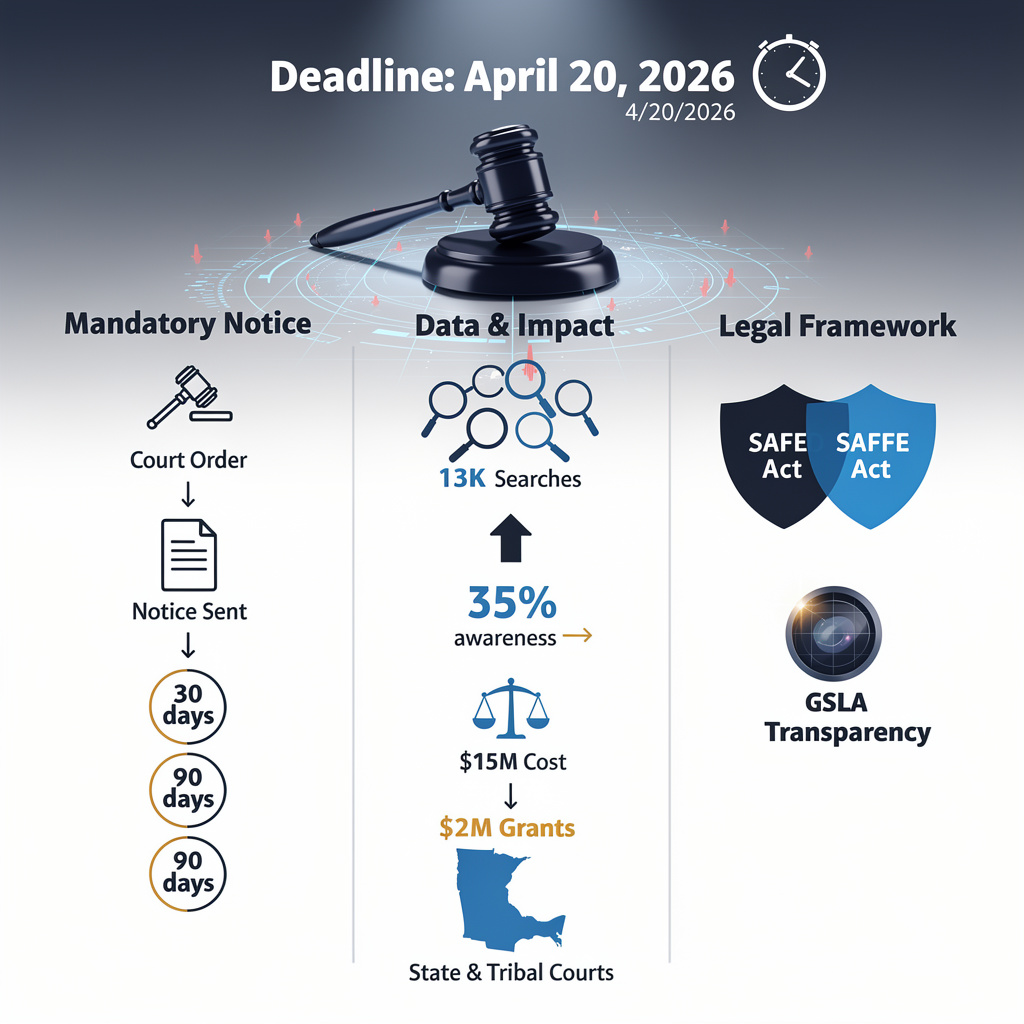
The Senate reintroduced the Government Surveillance Transparency Act on February 26, 2026, with a hard deadline looming: Section 702 of the Foreign Intelligence Surveillance Act expires on April 20, leaving Congress fewer than eight weeks to reconcile competing visions of accountability and security. The bipartisan bill—backed by senators spanning Oregon to Utah—would compel federal agencies to notify Americans when they become targets of electronic surveillance and unseal the underlying court applications once investigations conclude.
How would notification and unsealing work?
The GSLA establishes concrete procedural obligations. Law enforcement must issue written notice to surveilled individuals after executing any warrant, subpoena, or FISA order unless a court-approved gag order intervenes. Agencies then face a 30-day window to file redacted applications with courts after investigative relevance ends, with full unsealing permitted following a 90-day cooling-off period. A newly created Senate-appointed Surveillance Transparency Committee would gain subpoena power over FBI and CIA compliance records. The bill also allocates $2 million annually to state and tribal courts for case-management upgrades and training—enabling an estimated 12 state and four tribal courts to adopt compatible electronic filing systems by fiscal year 2027.
What do the numbers indicate?
- Volume: Over 13,000 Section 702 searches occurred in 2024, with the FBI acknowledging thousands of warrantless queries of U.S. person communications that it tracked incompletely.
- Cost: Implementation runs $15–20 million annually, per Center for Democracy & Technology estimates—roughly equivalent to two hours of federal surveillance spending.
- Operational impact: Agencies project 5–7 additional days per surveillance request for documentation and redaction.
- Legal exposure: Civil suits against intelligence agencies could rise 15–20 percent.
- Transparency gains: Mandatory notification may increase public awareness of surveillance activity by approximately 35 percent.
How does this compare to parallel efforts?
| Approach | Mechanism | Scope |
|---|---|---|
| GSLA | Post-surveillance notification and unsealing | Applies to all electronic surveillance |
| SAFE Act | Closes data-broker loophole for bulk searches | Targets acquisition methods |
| SAFFE Act | Requires warrants for content access | Raises threshold for collection |
The GSLA complements rather than replaces these measures, focusing on procedural transparency where others address collection authorities.
What lies ahead?
- March–April 2026: Congressional negotiations will likely bundle GSLA provisions with Section 702 reauthorization; a floor vote before April 20 appears probable, with amendments for terrorism-related exemptions.
- Q3 2026: Department of Justice standard operating procedures for notification and unsealing; compliance audits commence.
- Q4 2026: State and tribal court grant applications open.
- 2027–2028: Full implementation could establish notice-first norms influencing successor legislation; early court challenges will shape gag-order precedent.
The GSLA's bipartisan architecture and concrete funding mechanisms position it as a viable bridge between civil-liberties advocates and intelligence hawks. Whether it survives the legislative gauntlet will indicate whether Congress can impose accountability structures on surveillance powers it has repeatedly renewed with minimal transparency.
🗳️ SAVE Act Stalled: 50 GOP Votes Fall 10 Short of Filibuster-Proof Majority in Senate
218-213 House passage. 50 Senate GOP votes. 60 needed. The SAVE Act is 10 votes short of even reaching the floor—despite 83% national support for voter ID. A filibuster designed for compromise now kills bills the public wants. 21 million Americans lack birth certificates; 69 million women face name-mismatch risks if it ever passes. Collins backs the bill but won't kill the filibuster. Trump demands action. Thune admits defeat. Who wins when process buries policy—voters or the veto?
The SAVE America Act cleared the House 218–213 on February 13, yet sits frozen in the Senate. Despite 53 Republican senators and a president demanding passage, the bill mandating nationwide photo ID and citizenship proof for voter registration lacks the 60 votes required to break a filibuster. The arithmetic is stark: 50 Republicans publicly support the measure, zero Democrats do, and the 10-vote gap shows no signs of closing.
How procedural mechanics shape outcomes
Senate rules require a three-fifths supermajority—60 votes—to invoke cloture and end debate. With 47 Democrats united in opposition and at least three Republicans expressing reservations, Majority Leader John Thune concedes the bill is "not even close" to the threshold. Senator Mike Lee's "talking filibuster" proposal would force continuous debate but still demands 60 votes to conclude. A rules change to simple-majority voting, floated by some Republicans, remains theoretical; no formal amendment has been introduced, and Senator Susan Collins—while backing the bill—explicitly opposes eliminating the filibuster.
What the policy would affect
- Documentation barriers: ≈21 million Americans lack ready access to birth certificates; 2.6 million lack government-issued photo ID.
- Gender-based discrepancies: 69 million women could face name-mismatch issues if ID documents do not reflect recent name changes.
- Geographic variation: ~10 states already require photo ID; the bill would standardize this nationwide, overriding more permissive state regimes.
Where Republican consensus fractures
| Faction | Position | Strategic implication |
|---|---|---|
| National conservatives (Lee, Trump-aligned) | Prioritize passage; willing to consider rules changes | Elevates intra-party tension over Senate traditions |
| Institutionalists (Collins, Thune) | Support bill, defend filibuster | Limits procedural options; maintains 60-vote barrier |
| Access-focused Republicans (Murkowski) | Oppose bill on voter-access grounds | Reduces GOP working majority to 52 for this vote |
Timeline: What happens next
- March–May 2026: Continued procedural maneuvering; "talking filibuster" attempt likely fails to secure cloture.
- Summer 2026: House Republicans attach election-security provisions to must-pass legislation (e.g., appropriations) to bypass standalone filibuster.
- 2027–2028: Bill reintroduced with possible revisions (narrower ID specifications, phased implementation) to attract bipartisan support; intra-GOP filibuster reform discussions intensify if deadlock persists through next Congress.
The broader institutional signal
The SAVE America Act's paralysis demonstrates that Senate majorities do not guarantee legislative victories. With 83% national support for voter ID measures—including 71% of Democrats—the policy enjoys public backing that procedural architecture overrides. For Republicans, the impasse removes a potential 2026 midterm rallying point; for Democrats, it preserves state-level flexibility in voter-access rules. The standoff also fuels longer-term questions about the filibuster's durability, as repeated failures to advance majority-supported legislation may eventually erode institutional resistance to rules changes.
In Other News
- DHS Shutdown Enters Third Week as House Votes on Funding Amid $150B Anti-Immigration Bill Passage
- US Cyber Command Nomination Delayed as Sen. Ron Wyden Objects to Joshua Rudd's Lack of Cybersecurity Experience
- Senate GOP advances SAVE America Act requiring proof of citizenship and nationwide voter ID ahead of 2026 midterms
- DOJ sues Utah and 28 other states over refusal to share unredacted voter registration databases for SAVE Act enforcement


Comments ()