⚡ 120 Million Syndrome Evaluations Per Second: China's FPGA Quantum Simulator Outpaces CPU Clusters
TL;DR
- MicroCloud Hologram Achieves 5x Faster Quantum Error Correction Simulation with FPGA-Based System
- RheEnergise demonstrates 500kW hydroelectric storage system using high-density fluid, enabling PSH without water reservoirs
⚡ 120 Million Syndrome Evaluations Per Second: China's FPGA Quantum Simulator Outpaces CPU Clusters
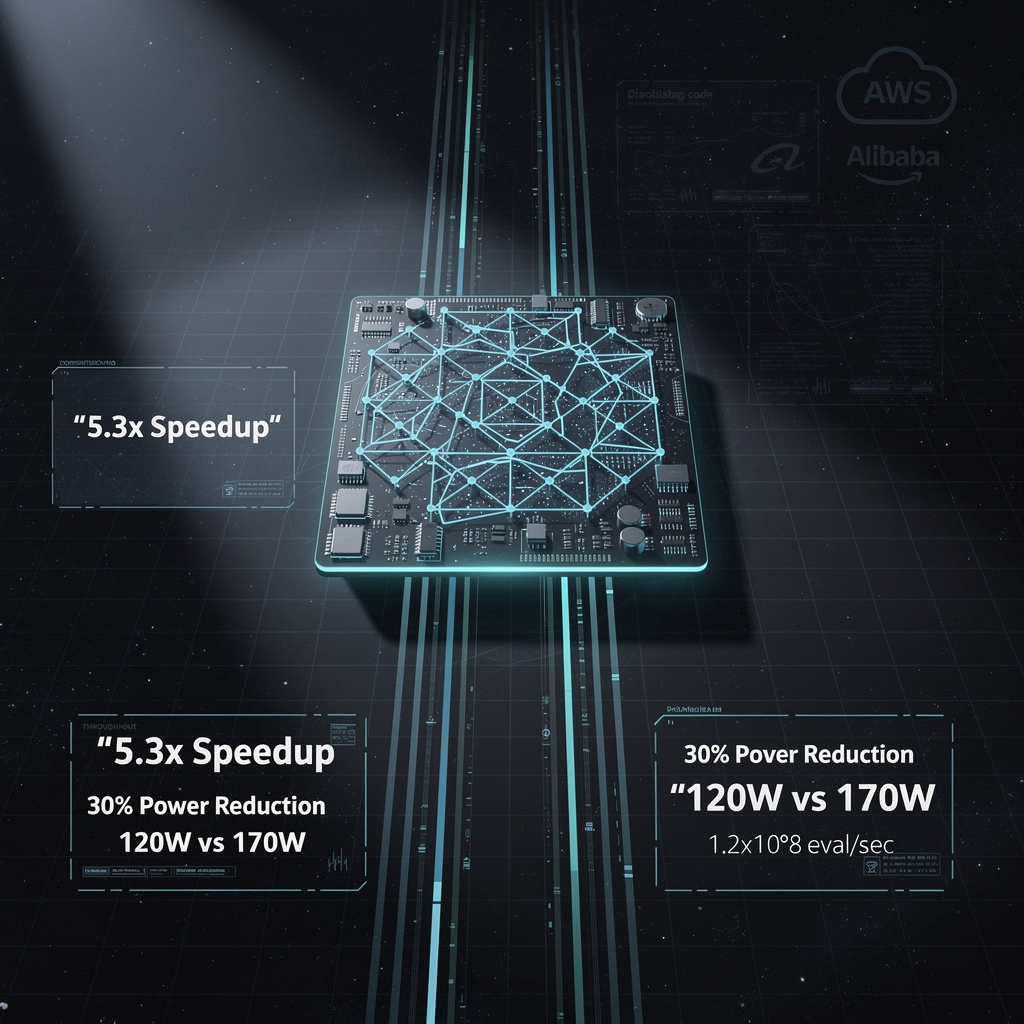
MicroCloud Hologram's FPGA simulator just crushed CPU clusters: 5.3× faster on quantum error-correction, 30% less power. That's 120 million syndrome evaluations per second—work that once needed 100 million CPU hours now runs on a single board. The catch? Scaling to distance-7 codes could melt the silicon without liquid cooling. With $400M backing and cloud launches this year, is your region's quantum lab ready for FPGA-powered fault tolerance?
MicroCloud Hologram Inc. has demonstrated a 5.3-fold speedup in quantum error correction simulation using a dedicated FPGA accelerator, cutting power consumption by 30% compared to conventional CPU clusters. The breakthrough targets a critical bottleneck in practical quantum computing: simulating distance-5 rotated surface codes, which traditionally demands prohibitive computational resources exceeding 10⁸ CPU-hours. With $400 million earmarked from its $1 billion cash reserves for scaling, the company signals serious intent to commercialize what could become foundational infrastructure for the fault-tolerant quantum era.
How the architecture achieves its gains
The system maps logical qubits onto a rotated surface-code lattice, assigning each stabilizer operator to dedicated compute lanes built from thousands of LUTs and flip-flops. Ancilla qubits serve as stabilizer carriers, enabling simultaneous evaluation of up to 11 stabilizers per cycle. A multiply-accumulate block processes syndrome bits in single clock cycles, feeding 1.2 × 10⁸ evaluations per second through a PCIe-Gen4 DMA interface. This data-parallel approach sidesteps the combinatorial explosion that cripples tensor-network methods on CPUs.
Performance and efficiency impacts
Speed: 5.3× wall-clock reduction versus 44-core Intel Xeon clusters when executing 10⁶ syndrome extraction trials.
Power: 120W total system draw versus 170W CPU baseline—equivalent to eliminating the consumption of roughly 50,000 average U.S. households if deployed at data-center scale.
Throughput: 250 MHz core frequency bounded by DDR4-3200 memory bandwidth, with modular multi-FPGA clustering planned for distance-7+ scaling.
Competitive positioning and risks
Iceberg Quantum's CPU-bound QLDPC approach remains the primary alternative for RSA-2048 factoring simulations, leaving MicroCloud's FPGA platform uncontested for surface-code benchmarking. Key vulnerabilities include quadratic stabilizer growth stressing routing resources, thermal density at higher code distances, and RTL tightly coupled to rotated surface-code geometries. Mitigations span liquid-cooled plates, low-voltage I/O standards, and parameterizable HLS libraries for arbitrary stabilizer groups.
Timeline and market trajectory
- Q3 2026–Q2 2027: Commercial QEC-Simulator-as-a-Service launch on Alibaba and AWS China; validation studies with USTC, IBM Quantum, and Niels Bohr Institute targeting <1% fidelity deviation from experimental syndromes.
- 2028+: Support for compiler optimization and fault-tolerance protocol selection as logical-qubit thresholds near 99.9% fidelity; potential 12–18 month acceleration toward practical quantum advantage.
The 30% efficiency gain positions MicroCloud favorably under China's "Green Data Center" policy and EU carbon regulations, transforming energy performance from operational detail to strategic compliance asset. As quantum hardware matures, rapid error-correction simulation shifts from research convenience to infrastructure necessity—suggesting FPGA-accelerated QEC tools may follow the trajectory GPUs carved in AI training, becoming the default substrate for an emerging computational paradigm.
⚡ Mine Sludge Powers 400 Homes: UK Startup Slashes Pumped-Hydro Elevation Requirements by 50%
500kW from a fluid 2.5× denser than water. That's 400 homes powered by mine waste sludge. 🏭 RheEnergise just proved pumped hydro works at HALF the elevation—no dams, no leaks, no groundwater risk. A 40MW unit could backstop a 40,000-home town for 20 hours. Meanwhile lithium-ion taps out at 4 hours. So why is the UK still betting billions on batteries for grid storage? — Would you want this in your backyard hills?
RheEnergise has demonstrated a 500 kW closed-loop pumped-hydro system at the Cornwood kaolin mine in southwest England that replaces water with a proprietary mineral suspension. The R-19 fluid—80% solid particulates at 2.5× water density—enables energy storage on slopes as gentle as 100 meters of elevation, half the requirement of conventional pumped-hydro plants. This shifts the geography of deployable storage and eliminates the groundwater contamination risks that have stalled reservoir-based projects.
How does the system work?
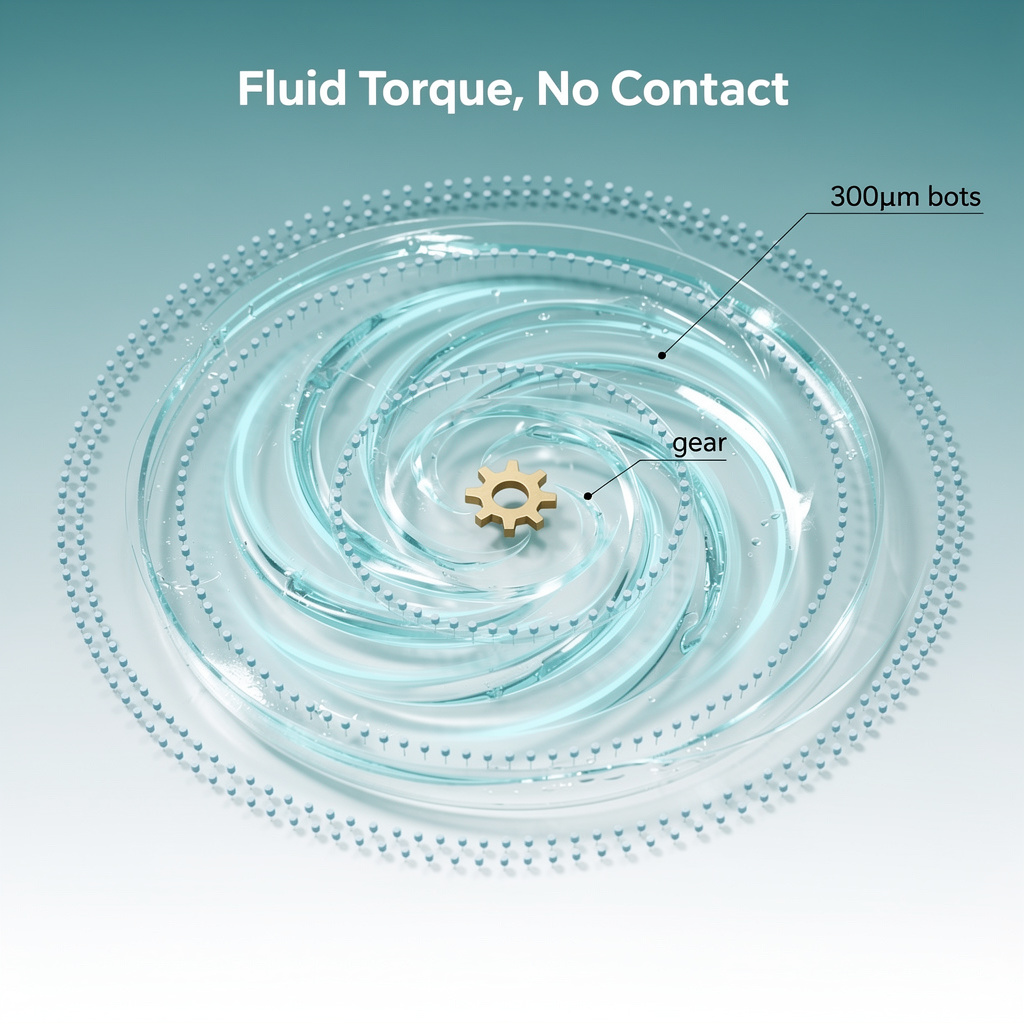
The plant circulates fluid between upper and lower tanks through steel-lined pipelines. Higher viscosity improves turbine coupling at lower heads while maintaining torque comparable to water-based systems. The Cornwood unit stores approximately 2 MWh—enough to power roughly 400 homes through a daily cycle—within a footprint 40% smaller than an equivalent water-based installation. No external water source is required; the fluid recirculates indefinitely and settles rather than seeps if spilled.
What distinguishes this from alternatives?
Duration: 4–20 hours of storage bridges the gap between lithium-ion batteries (2–4 hours) and multi-day solutions.
Siting flexibility: Operates at ≥100 m head versus ≥200 m for conventional pumped hydro, opening hilly terrain previously unsuitable.
Environmental profile: Zero groundwater impact; fluid is non-soluble and inert; lifecycle carbon footprint projected 30% lower than conventional pumped hydro due to reduced concrete and no water treatment.
Civil engineering: 10–40% reduction in construction work per megawatt, accelerating permitting and lowering capital costs.
Where does deployment stand?
- June 2026: First commercial 10 MW unit commissioned in Cornwall, delivering 8 hours of storage.
- Late 2026: 40 MW unit operational at Sibelco mine, providing 12 hours of duration—sufficient to power a 40,000-home town for up to 20 hours at full discharge.
- Q4 2027: 100 MW Midlands demonstrator completed, integrating with regional wind farms to provide approximately 1 GWh of flexible capacity.
The UK Clean Power 2030 Action Plan targets 4–6 GW of new long-duration storage. RheEnergise's pipeline of 10–100 MW projects, backed by £8.25 million in UK government funding and EU EIC Accelerator support, could supply 5–7% of that target. Global projections indicate 15 GW of high-density fluid installations by 2032, concentrated in terrain like the Appalachians and Alpine foothills where traditional reservoirs face insurmountable barriers.
What limits remain?
Fluid settling requires active recirculation and filtration. Turbine designs validated at 500 kW need computational fluid dynamics refinement and 10 MW-scale demonstration. Regulatory frameworks lack precedents for non-water pumped-hydro permits, necessitating early engagement with environmental agencies. Mineral particulate supply chains depend on mining partnerships—Sibelco at Cornwood provides both site and feedstock.
The broader implication
RheEnergise's demonstration indicates that material innovation can unlock geographic constraints that have limited pumped hydro to fewer than 200 GW worldwide. If cost reductions of approximately 15% annually materialize through fluid production scaling, the technology achieves cost parity with conventional pumped hydro on sub-150-meter slopes. For grid operators seeking multi-hour firming capacity without the siting conflicts and environmental liabilities of reservoir construction, high-density fluid systems offer a mechanically proven, rapidly permitting alternative that complements rather than replaces battery deployments.
In Other News
- AdAbort quantum error correction scheme reduces decoder overhead by up to 60% for color codes, enabling scalable quantum architectures


Comments ()