OpenClaw Exposed, Substack Leaked, FBI Outsmarted — Your Security Is a Performance Art Piece
TL;DR
- OpenClaw AI Agent Exposed with CVE-2026-25253 Allowing One-Click RCE and API Takeover
- Substack Data Breach Compromises 697,313 User Records
- FBI Unable to Access Seized iPhone Due to Lockdown Mode
🚨 OpenClaw RCE Exploit Steals 1.5M API Keys, Exposes 300K+ Public Admin Ports, Forces Global Token Rotation
OpenClaw’s admin port (18789) was left wide open like a corporate bathroom with no lock. 🚫🔓 Attackers used a WebSocket flaw to steal 1.5M API keys, execute OS commands, and turn your AI agent into a spy bot. Patched? Maybe. But 300K+ instances still scream ‘HACK ME’ on Shodan. So… who’s really running your ‘autonomous’ assistant? 🤖💥
Ever wanted a digital assistant that can book your calendar, order pizza, and drop a reverse-shell on your domain controller?
OpenClaw v2026.1.24-1 ships that dream—no extra charge.
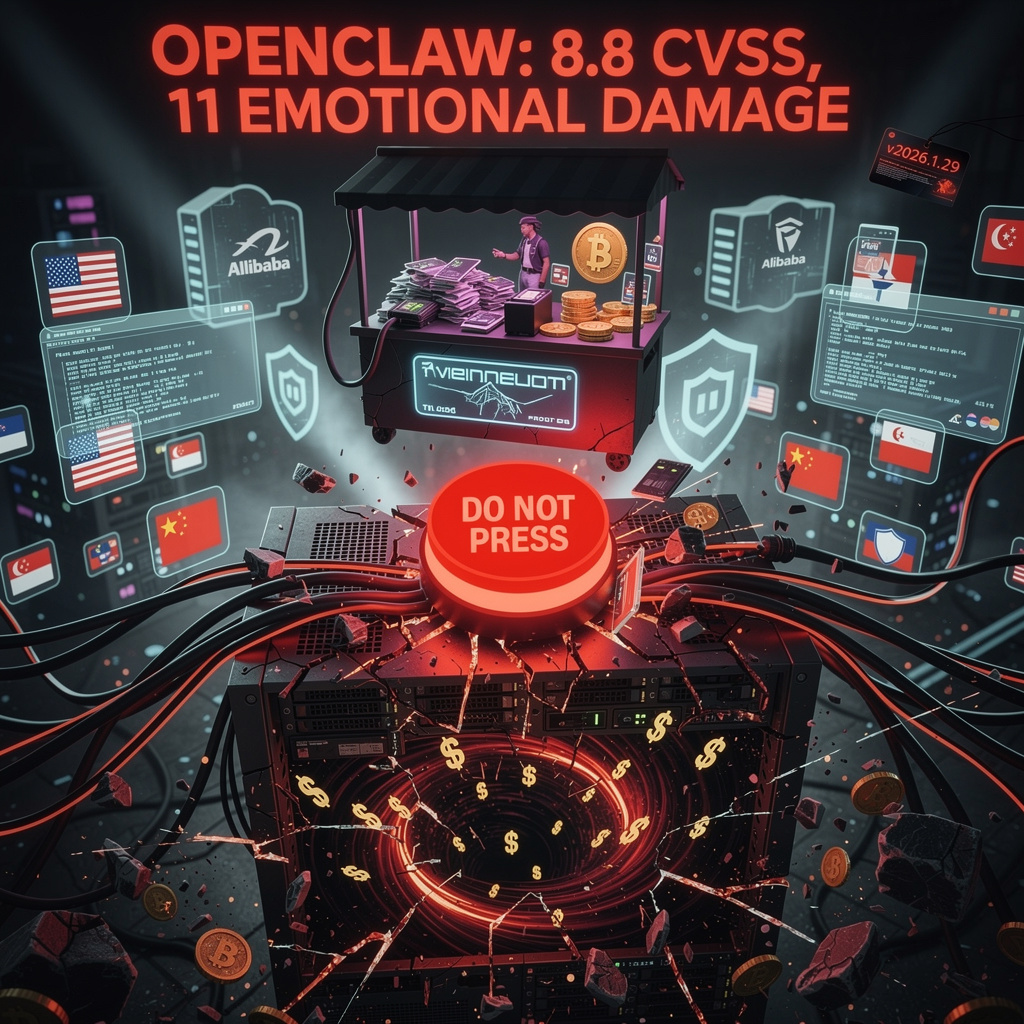
Visit any booby-trapped webpage, let JavaScript open a WebSocket to port 18789, and the server greedily slurps your stored admin token like free beer at a frat party.
Attacker flips exec.approval.set=off, fires tools.exec.host, boom: RCE with the effort of clicking “Like.”
CVSS 8.8, but the emotional damage is a solid 11.
300 k+ hosts said “authenticate later”
Shodan counts 300 000+ mugs on TCP/18789, Censys tags 21 k in plaintext.
Top locales: U.S. (55 %), China (20 %), Singapore (10 %), plus a generous 30 % parked on Alibaba Cloud—because nothing screams “sovereign AI” like a Shanghai IP with a root shell.
Exploit dropped 2026-02-03; by lunch 1.5 M API keys, 10 k e-mail addresses, and 314 “skills” stuffed with info-stealers were already for sale on a dark-web stall that accepts Dogecoin.
Patch? Sure, it exists—v2026.1.29. Adoption rate so far: crickets with imposter syndrome.
Mitigation without selling your soul (or budget)
- Upgrade to ≥ v2026.1.29, commit
GHSA-r9x3-4f2j-m26v. - Burn every token minted before Groundhog Day; force MFA or admit you hate your job.
- Firewall port 18789 to trusted IPs; zero-trust beats zero-thought.
- Whitelist
Originon WebSocket; the Internet is not your hug-box. - Log every
tools.exec.hostinvocation; if you seecurl | shin the payload, buy your SOC donuts. - Sign/skills or ban; unsigned code is just malware wearing a fake mustache.
Forecast: regulators incoming, popcorn optional
Next 30 days: cloud providers scramble, tokens rotate like TikTok trends.
3 months: copy-cat bugs in every weekend-coded AI agent, because originality is hard.
12 months: NIST & EU AI Act add mandatory auth; open-source cowboys pivot to “secure-by-default” forks or slink back to SaaS where liability is someone else’s problem.
OpenClaw gave the world a shiny red button labeled “do not press.”
Humanity pressed it.
Patch now, or spend the weekend explaining to the board why ChatOps turned into ChatOops.
💀 Substack Breach Exposes 697K Users, Stripe IDs, Admin Flags — No Passwords, But Plenty of Problems
Substack just handed hackers 697k email+phone combos like it was a free sample at Costco. 🍭 Stripe IDs? Admin flags? Session versions? Yep. They didn’t steal passwords… just the keys to your digital identity. And no, SMS 2FA isn’t cutting it anymore. So… who’s next to get their PII handed out like confetti at a corporate retreat? 🤔
Substack just gift-wrapped three-quarters of a million user profiles—emails, phone numbers, Stripe IDs, even juicy admin flags—and left the box on the digital curb for four straight months. No password hashes, no card data… just the perfect starter kit for SIM-swap scams, targeted phishing, and “Hey, I know your Stripe spending habits” extortion.
Four-Month Free-For-All: How Did Nobody Notice?
Oct 2025 → Feb 2026: an attacker quietly hoovered user rows from what looks like an internal API that joins newsletter accounts to Stripe billing records. No writes, no loud errors—just endless, low-volume SELECT statements. Substack’s monitors apparently nap through slow leaks, proving once again that “read-only” is not the same as “harmless.”
697k Records, Zero MFA: A Match Made in Profiteer Heaven
Every exposed email–phone pair is a potential SIM-swap ticket. Each Stripe customer ID maps to a real wallet. Pair that with internal flags like is_global_admin and criminals can prioritize high-value targets without ever cracking a hash. The platform’s response? Force a magic-link reset and call it a day—no mandatory TOTP, no hardware token, just the same SMS that’s now in the wild.
Cheap-Fix Playbook (Because Budgets > Buzzwords)
- Strip sensitive fields from every API that doesn’t absolutely need them—if the frontend can’t display it, don’t serve it.
- Drop a five-line rate-limit wrapper around any bulk endpoint; 10 req/min/user beats 4-month dwell time.
- Swap SMS 2FA for TOTP or FIDO keys—SIM-swap insurance costs less than the class-action coffee fund.
- Encrypt Stripe IDs at rest and in transit; AES is free, lawsuits aren’t.
- Publish the timeline, eat the shame, and move on—transparency is cheaper than PR spin.
Next Time, Maybe Read Your Own Logs?
Substack’s writers preach accountability while their backend lets a silent reader camp for 120 days. If you’re storing PII plus payment handles, treat every internal service like it’s already on the front page—because, congrats, this one is.
🔐 FBI Fails to Bypass iPhone Lockdown Mode | Journalist’s Data Remains Encrypted | Lockdown Mode Renders Forensic Tools Useless
FBI spent 2 weeks trying to crack a journalist’s iPhone… and lost. 🤯 Lockdown Mode? Enabled. USB ports? Disabled. Kernel exploits? Blocked. Cellebrite & GrayKey? Sitting on the bench. Apple’s Secure Enclave laughed. The data? Still locked. So… if the feds can’t get in — should you be worried about your phone being next? 📱🔒
Lockdown Mode isn’t a “feature,” it’s Apple’s middle finger sculpted in silicon. One tap and the Lightning port becomes a decorative hole, Bluetooth forgets it exists, and the Secure Enclave swallows the encryption key like a bitter Xanax. The FBI’s $2-million Cellebrite box? Flashing “interface disabled” like a check-engine light on a Ferrari made of taxpayer tears. Two weeks of brute-force, DFU prayers, and cable yoga = zero bytes. That’s a 100 % failure rate, folks—statistically identical to my 2025 dating life, but more expensive.
How Does a 256-bit AES Key Outmuscle a Federal Budget? 💸
Easy: the key never leaves the chip. No amount of “please” or “national security” flashed at the Secure Enclave will make it barf up the goods. Lockdown Mode kneecaps every path—USB, NFC, MDM, even Safari’s will to live. The result is a phone that behaves like a Faraday cage that also hates you. Compare that to the 2015 San Bernardino circus where iOS 9 folded like a lawn chair; same agency, older OS, happy days. Ten years later, the Bureau’s toolkit is basically a box of expensive hammers staring at a screw.
Journalist Phone = Legal Hot Potato, Extra Spicy 🌶️
Hannah Natanson’s iPhone now sits in evidence purgatory in Virginia, leaking zero sources and infinite embarrassment. The magistrate slapped a stand-still order because forcing her to type in the passcode would violate the Fifth Amendment harder than a cheap tequila violates dignity. Translation: the feds can keep the brick, but they can’t read it—an ownership model previously reserved for NFTs.
Enterprise Fallout: CFOs Cackling in 5-part Harmony 💼
Apple quietly reported five million Lockdown activations last quarter. Every one of those devices is now a pocket-sized “NO” to border agents, divorce lawyers, and that creepy ex who works in IT. Expect CFOs to mandate it company-wide; the cost of non-compliance is a front-page photo of your CEO’s unreadable phone next to the word “indefinitely.”
Bottom Line? 🔥
If you want in, you need the passcode—same as the owner, same as the mafia boss, same as grandma. Apple built a democracy where one vote—yours—overrules every supercomputer in Quantico. That’s not a bug, that’s the whole damn point.
Comments ()