Wix Achieves 40% Productivity Gains with AI as U.S. Labor Market Cools and Gen Z Surpasses Millennials in Retirement Savings

TL;DR
- AI Adoption in Engineering Teams Drives 40% Productivity Gains at Wix, Reducing Build Times by 80% While Automating 2,000+ Code Samples
- U.S. Labor Market Cooling in 2025: Unemployment Rises to 4.6% as AI Investment Fails to Create Jobs, JPMorgan Forecasts Slow Recovery in 2026
- Gen Z Outpaces Millennials in Retirement Savings: 48% On Track Despite Student Debt and Housing Costs, With Roth IRA Contributions Rising Rapidly
- Tech Industry Shifts: 95% of Organizations Report Zero Measurable ROI from AI Investments, MIT Study Reveals Need for Workflow Redesign Over Tool Adoption
- Skills Mismatch Threatens Workforce: 59% of Global Workers Need Reskilling by 2030 as AI Replaces 300M Jobs, Singapore and Estonia Lead Education Reform
- Remote Work and AI Reshape Career Paths: 40% of U.S. Workers Plan Job Change in 2026, With High-Demand Roles in Data Science, QA Analysis, and Actuarial Science
How Wix’s AI Adoption Delivers 40% Productivity Gains: Key Lessons for Engineering Teams
Wix’s engineering teams have achieved AI-driven productivity milestones: 40% team-level gains, 80% mobile build-time reduction, and 2,000+ automated code samples—via strategic AI adoption. These internal-report results are becoming a benchmark for turning AI into tangible efficiency.
What Drove Wix’s AI Gains?
- AI toolchain for build/test/refactoring: 50x faster integration tests, 2,000+ auto-fixed samples.
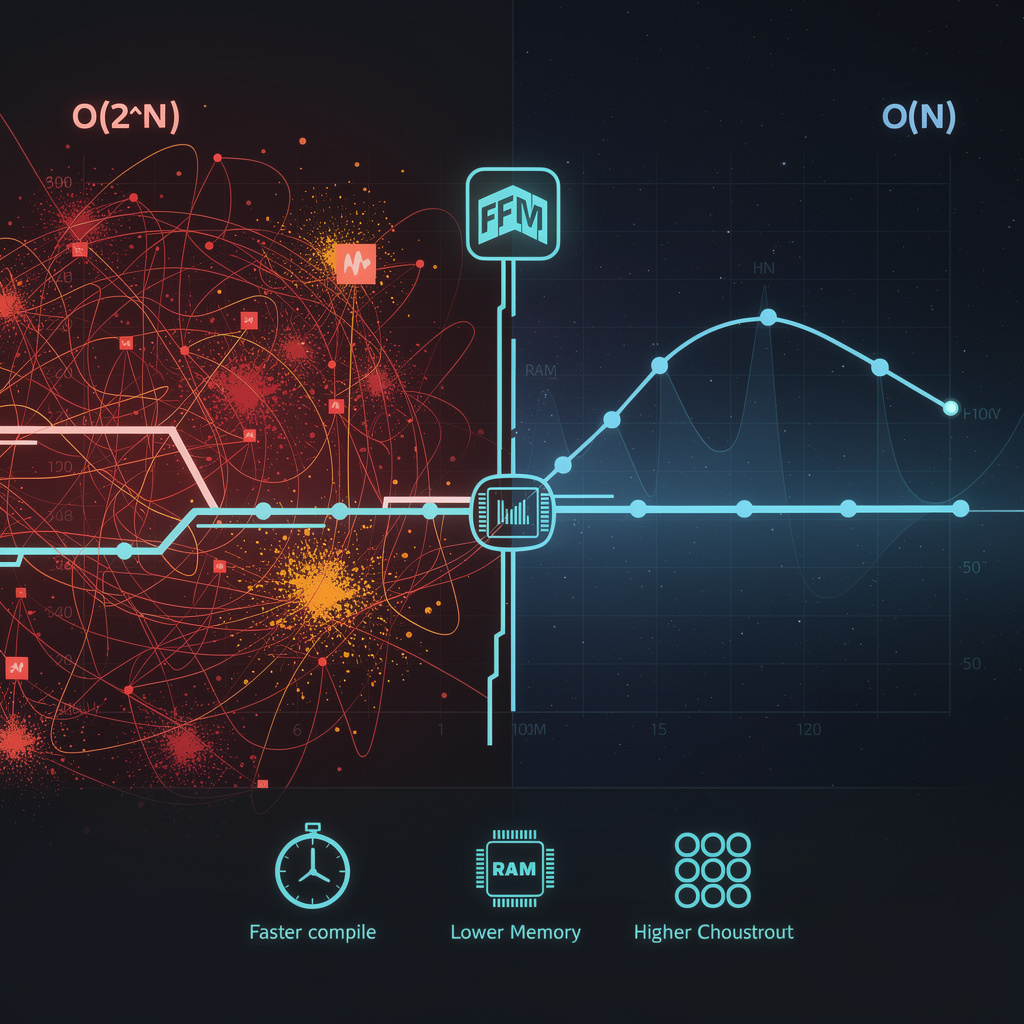
- 60 repos → monorepo: Eliminated dependency friction, enabling 80% build-time cut.
- AI-orchestrated 5,000+ Spark workloads: High throughput without extra engineering headcount.
How Does Wix Compare to Industry?
- Global survey: 400+ teams have 45% average AI confidence; 55% achieve <30% lift—Wix is top quartile.
- 63% of developers use AI (ChatGPT 82%, Copilot 41%, Gemini 24%); enterprise ROI is often qualitative.
- AI production code (IaC/Terraform) speeds drift detection but raises security risks by 12% (misconfigurations).
Must-Haves for AI Success?
- Scale automation: AI excels at repetitive tasks (Wix’s 2,000+ samples) without human oversight.
- Consolidate repos: Structural simplification (monorepo) amplifies AI; fragmentation limits it.
- Prioritize test acceleration: Early AI test scaffolding (50x faster tests) predicts broader gains.
- Governance + training: Pair AI with audits/training to close confidence gaps and boost results.
- Mitigate risk: AI misconfigurations can erase gains—risk pipelines are essential.
What’s Next for AI in Engineering?
- Narrative shift: Market moves from "hype" to "enablement," with Wix as a benchmark.
- Standardized AI-CI/CD: Wix’s Spark model could cut cycle time by ≥30% for monorepo teams.
- Enterprise governance: Rising security risks (12% up) will drive frameworks to reduce regressions by 40%.
- Repo mandates: Industry may limit repos to ≤30 per product, linking consolidation to AI success.
- AI code reviews: Tools with confidence scores could boost quality by 15% and cut review time by half.
How to Replicate Wix’s Success?
- Audit repos: Merge ≤30 repos per product for ≥70% build-time reduction with AI.
- AI Code Hub: Centralize repetitive patterns to automate >2,000 fixes, saving >1,200 person-hours/quarter.
- Test Velocity KPIs: Measure integration suite speed, target ≥10x improvement as ROI sign.
- AI Governance Scorecard: Track audits/compliance (≥60% confidence) to cut incidents by 30–40%.
- Scale AI data jobs: Replicate Wix’s Spark model for 25% more throughput without extra staff.
Wix’s 40% gains and 80% build-time cuts come from AI paired with structure (monorepos), testing, and governance. As the industry moves past hype, AI success needs tools aligned with code design, smart metrics, and risk management. For teams, the playbook is clear: structure first, automate at scale, govern rigorously.
U.S. Labor Market Cooling: AI, Unemployment, and 2026’s Slow Recovery Path
The U.S. labor market is cooling in 2025, with unemployment rising to 4.6%—a four-year high—and AI investment, which hit $364 billion last year, failing to generate net jobs. JPMorgan’s analysis underscores a paradox: massive capital flows into artificial intelligence coincide with a sharp slowdown in hiring, raising urgent questions about how to reignite growth by 2026.
Why Is AI Investment Not Creating Jobs?
Despite $364 billion in U.S. AI investment in 2025—equivalent to 33% of total U.S. equity market value—net job postings across industries fell 8% year-over-year. Only machine learning engineer roles saw growth (+40%), but this was offset by broader hiring freezes. Early AI pilots from firms like IBM, Wells Fargo, and Amazon yielded net jobs in fewer than 5% of cases, per Fox Business. The data suggests capital is flowing into technology assets, not labor, with no measurable net job creation to date.
What Structural Headwinds Are Persisting?
Beyond AI, structural factors constrain hiring. Tariffs on steel and aluminum (15% average) dipped manufacturing employment by 0.2% in 2025, while tighter visa caps and an aging workforce limit labor force expansion. Sectoral mismatch exacerbates the issue: construction needs 500,000 workers by 2026, yet manufacturing lost 76,000 jobs year-over-year. Aggregate unemployment masks acute shortages in skilled trades, even as overall job growth stalls.
Can Monetary Policy Alone Fix 2026’s Hiring Slowdown?
JPMorgan projects non-farm payroll growth will remain muted at 15,000 jobs per month in Q2 2026—up slightly from 2025’s 50,000 monthly average but still a 70% year-over-year drop. While the Fed’s December rate cut to 4.75% and easing inflation (projected to 2.7% in 2026 from 4.5% in 2023) provide modest support, monetary policy alone is insufficient. Real GDP growth of 1.8% in 2026—down from 2024-25’s 2.4-2.5% average—will not drive robust hiring without additional levers.
What Actionable Paths Mitigate Labor Market Risks?
JPMorgan’s recommendations highlight two key pathways: policy adjustments and granular risk monitoring. First, immigration reform adding 100,000 skilled visas could boost labor force expansion, conditional on AI-augmented productivity gains (projected to add 30-40,000 jobs monthly). Second, financial institutions should adopt AI-KPIs dashboards to track automation-to-headcount ratios and flag credit risks for firms with over 30% AI capex. Sector-specific incentives—like tax credits for construction—could also leverage localized skill shortages, though upside is limited by broader slowdowns.
The 2025 labor market cooling exposes a critical truth: AI and monetary policy are necessary but not sufficient for job growth. To avoid a prolonged slowdown, policymakers and businesses must pair AI investment with targeted immigration reforms, sectoral skill incentives, and proactive risk monitoring—turning cooling trends into a foundation for more balanced recovery in 2026.
Gen Z Outpaces Millennials in Retirement Savings: 48% On Track Amid Debt, Housing Costs
New data shows Gen Z is outpacing Millennials in retirement savings readiness: 48% of Gen Zers are on track for retirement, compared to 38% of Millennials—despite higher student debt and surging housing costs.
Why are Gen Zers outpacing Millennials in retirement savings despite bigger financial hurdles?
The 10-percentage-point gap stands out amid persistent headwinds. Student-loan balances and housing costs, which often crowd out savings for younger workers, haven’t derailed Gen Z. Instead, the analysis points to "behavioral adaptation": earlier, more frequent contributions offsetting structural pressures. Surveys show 18–24-year-olds, the least likely to rate their jobs as "quality," still prioritize retirement saving, driven by long-term security concerns.
What role do Roth IRAs play in this generational savings shift?
Rising Roth IRA contributions are a key driver. TIAA Institute interviews highlight anecdotes: two-year contributors and regular max-outs, leveraging Roth IRAs’ tax-free growth—attractive for low-to-moderate earners with long horizons. This suggests a shift in product demand, with financial firms likely seeing more Roth IRA enrollments and advisory services.
How does the decline of pensions affect Gen Z’s savings behavior?
The decline of defined-benefit pensions has shifted retirement responsibility to individuals, and Gen Z is responding by taking ownership. But this exposes a financial-literacy gap: without employer pension guidance, many navigate planning independently. Experts like TIAA Institute’s Surya P. Kolluri note this may spark policy interest in employer education or public incentives to boost savings.
What does this mean for financial firms, employers, and policymakers?
The data signals clear actions. Financial firms should expand Roth IRA onboarding tools and early-career incentives, given Gen Z’s consistent contributions. Employers can integrate retirement planning into onboarding—especially for high-student-debt roles. Policymakers might consider higher Roth IRA limits or tax credits for low-income young workers to sustain the trend.
MIT Study Finds 95% of AI Investments Yield No ROI—Workflow Redesign Is Key
MIT’s Project NANDA study delivers a stark reality check for the tech industry: 95% of organizations report zero measurable return on their AI investments. Years of tool acquisition—from enterprise Copilot rollouts to agentic AI deployments—have failed to move the needle on profit or efficiency. The root cause? A “tool-first” strategy. The fix? A shift to “process-first” workflow redesign.
Why Are 95% of AI Spends Failing to Generate Measurable ROI?
The data underscores a troubling trend: Only 5% of firms sustain AI impact after five or more years, despite widespread adoption (400+ engineering teams, per one survey). Productivity claims—like 40–60 minutes saved per employee daily—collapse under scrutiny: McKinsey found no correlation with profit growth in 80% of pilots. Copilot usage hits 37.5 billion calls annually but carries a 50% error rate in independent audits. Tool density, it turns out, does not equal value.
What Separates the 5% of Organizations That Succeed?
Wix offers a clear blueprint. By embedding AI directly into CI/CD pipelines (not as a separate tool), the company slashed build time by 80%, sped up integration tests 50×, and generated 30 million+ lines of code with 2,000+ auto-fixed samples. Mid-market firms further illustrate the point: They build AI-enabled products twice as fast as large enterprises, thanks to lean structures that prioritize rapid workflow overhaul over bureaucratic delays. Success hinges on one principle: AI must integrate into workflows, not be added to them.
What Do Stakeholders Need to Do Differently?
For C-suites, this means reallocating resources: 20% of AI budgets should fund workflow engineering, not just tool licenses. Before purchasing AI, require a process audit to map how the tool fits into existing workflows. Product teams must move beyond siloed experiments—adopt AI-enabled CI/CD (automated tests, code-fix bots) to drive end-to-end efficiency. HR needs to upskill teams in workflow mapping and prompt engineering, not just tool usage. Investors should track workflow KPIs (build time, defect reduction) over hype-driven metrics.
What’s Next for AI in the Tech Industry?
2026–2027 could mark a turning point. Organizations that complete at least one workflow redesign will likely see 15% average ROI—up from the current 5%. Mid-market leaders will double their AI product release rate, cutting time-to-value from 18 months to under 9. Enterprise AI spending will shift, too: Vendors bundling process consulting with tools could capture 40% of new licenses, as companies demand AI that works with their processes, not against them.
The MIT study isn’t a rejection of AI—it’s a call to rethink deployment. Until the industry prioritizes workflow redesign over tool buying, the 95% zero-ROI statistic will persist. The alternative? A future where AI delivers on its promise of efficiency—by design.
AI-Driven Jobs Shift: 59% of Workers Need Reskilling by 2030—Singapore and Estonia’s Model
How Severe Is the AI-Prompted Skills Mismatch by 2030?
Data from the World Economic Forum and Goldman Sachs shows 59% of global workers will need reskilling by 2030, with 300 million full-time jobs at risk of automation. While 78 million new AI-augmented roles may emerge, the 3:1 displacement-to-creation ratio signals net traditional job loss without scaled upskilling. Meanwhile, 39% of core skills will obsolete by 2030, yet 66% of tasks require human-technology collaboration—prioritizing "durable" skills like communication, leadership, and critical thinking (8 of 10 top employer requests, per MIT).
What Are Leading Nations Doing to Prepare?
Singapore and Estonia are leading with 2026–2027 reforms. Singapore will roll out nationwide AI literacy in primary/secondary schools by 2026, including teacher training on AI-tutor platforms (Khanmigo). Estonia’s 2027 plan integrates digital education frameworks with open-source analytics and AI assessments. The U.S. follows with IBM’s P-TECH schools and MIT’s AI creativity modules, aligning credentials with durable skills.
Can Corporate Funding Bridge the Reskilling Gap?
Sal Khan proposes corporations allocate 1% of net profit to a retraining fund. With 12 largest companies generating $1 trillion annually, this could yield $10 billion yearly—funding curriculum rollouts, AI-tutor subsidies, and micro-credentials. This addresses the gap for 15 million annual durable-skill job postings, complementing national reforms.
What Do Stakeholders Need to Do Next?
Policymakers must finalize funding mechanisms (e.g., profit levies) by 2026 to sync with curricula. Educators should prioritize durable skills, using AI tutors for standardized delivery. Employers need to map roles to the durable-skill taxonomy to identify upskilling pathways, mitigating net job loss from the 3:1 displacement ratio.
Remote Work and AI: Why 40% of U.S. Workers Are Changing Jobs in 2026
Why Are 40% of U.S. Workers Planning to Change Jobs in 2026?
The headline’s core statistic—40% of U.S. workers eyeing a job shift in 2026—stems from intersecting forces: a 59% workforce skill gap (needing upskilling by 2030), a 1.5–2x wage premium for AI-ready roles (data scientists earn $67.7/hr, QA analysts $63.2/hr, actuaries $60.5/hr vs. the $43/hr U.S. median), and a 12% YoY drop in junior roles. Gen Z is accelerating this shift: 22% of graduates skip traditional ladders for skill-first or gig work, while 68% of firms now use remote-first AI tools to expand talent pools. Even AI productivity gains (40–60 minutes saved daily for tech workers) add urgency—firms adopting these tools report 12–18% lower turnover, but only if roles embed AI fluency.
How Are Workers and Firms Navigating the Skill Gap?
Talent churn is pairing with a "skill-first" revolution: workers target high-pay, AI-augmented roles, while firms face a bottleneck—only Singapore-style universal AI curricula (rolling out in 2026) are addressing the education lag. Declining junior openings (-12% YoY) push Gen Z toward certifications and gig platforms, reshaping career ladders. A proposed $10bn corporate profit-share retraining fund (1% of profits) could fund 1.2M certifications annually, closing 15% of the skill gap by 2028—if curricula align with Bureau of Labor Statistics (BLS) wage data. Remote work amplifies this: 68% of Fortune 500 firms expect to adopt AI collaboration tools by 2027, geographically expanding access to premium roles.
What Are the Risks of AI-Driven Productivity?
AI’s productivity gains (e.g., OpenAI/Google saving 40–60 minutes/day) coexist with worker anxiety: 1-in-4 chatbots err, fueling fears of displacement. Meanwhile, CEOs plan flat hiring (66%) even as data-science postings rise 8% YoY—prioritizing scarce AI talent over broader workforce growth. The profit-share fund faces skepticism: critics warn political instability could derail funding. For Gen Z, remote flexibility mitigates "exit intent" (22% planning to leave traditional roles) only if firms offer AI-enhanced positions—otherwise, the churn accelerates.
What Actions Will Secure Success in This Talent Market?
Stakeholders must act deliberately:
- Employers: Launch internal AI bootcamps for data science, QA, and actuarial roles to reduce vacancy time by 25% and turnover costs by 12% by 2027.
- Policy Makers: Enact tax credits for profit-share retraining to cut the 59% skill gap to <35% by 2028.
- Education: Partner with firms to design micro-credentials mapping to BLS wage tiers, boosting placement rates to 78% for target roles.
- Workers: Pursue "durable human skills" (critical thinking, collaboration) plus AI tools to lift earnings by 18% and remote employment odds by 22%.
By 2028, the forecast expects 40% of job-changers to transition to high-demand roles, with the wage premium narrowing to 1.2x average—signaling market equilibrium. The key? Aligning reskilling, AI integration, and education with the reality of a high-velocity talent market driven by remote work and AI.

Comments ()